Wednesday, April 26, 2006

The Englishman Who Went Up a Hill But Came Down a Mountain


1995, UK, directed by Christopher Monger

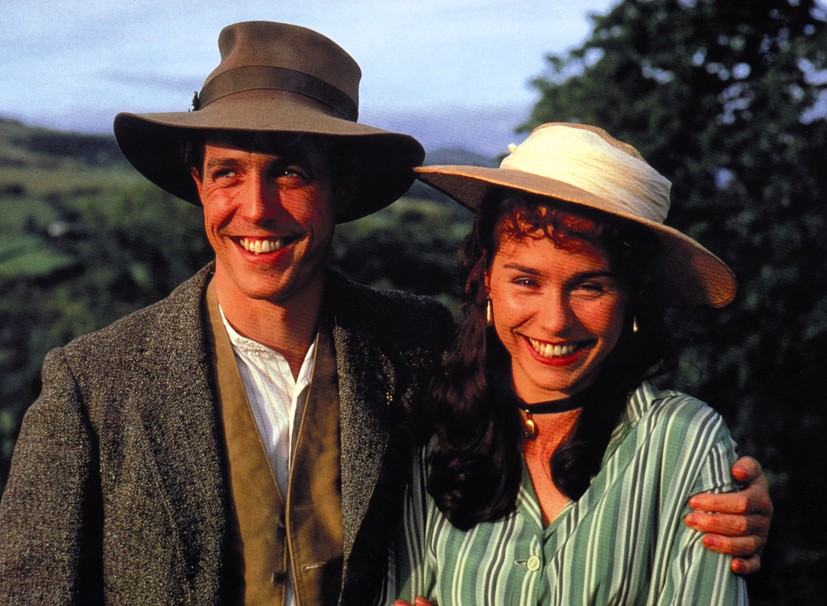
Part of the post-Four Weddings wave of Hugh Grant films, Englishman is the tale (based on a true story) of a London-based surveying team dispatched to the Welsh border, where they discover that a local 'mountain' is in fact a few feet short of that designation, and is instead a humble hill - news that the locals take great exception to. With a streamlined plot (the villagers hear the bad news and implement a scheme to deal with it), the film's running time is mostly devoted to the local characters (or indeed caricatures): the randy publican; the moralizing reverend; the feisty local lass, and so forth. It's not entirely light-hearted, though, for the film takes place against the backdrop of the First World War, and most of the younger men are absent. The villagers' efforts to reclaim the mountain are with the absent soldiers very much in mind, lending a melancholic note to cut through the whimsy, while the real-life echo in the closing minutes has a surprising power.

Monday, April 24, 2006

The Proposition

2005, Australia, directed by John Hillcoat

It's pretty reductionist simply to pigeonhole The Proposition as an "Australian Western", since it adds layers of local meaning to the usual Western tropes, not least an exploration of the relationship between man and landscape that is a recurring theme in Australian cinema, whether dealing with Aboriginal or white characters. Set in the 1880's, the film tells two parallel stories, one involving a British officer (Ray Winstone) reflecting on the meaning of his job in the sweltering Queensland outback (where he and his wife - Emily Watson - attempt to preserve some measure of civility) and the other centered on two outlaw brothers, player by Guy Pearce and Danny Huston. 

Huston's character is an out-and-out psychopath (quite a contrast to the more insidiously nasty character he played in The Constant Gardener), whose brutality is depicted unflinchingly, as befits a film determined to cast aside any romantic notions of frontier life (most of the actors look absolutely filthy throughout the film). Director Hillcoat expertly cuts between the two stories, relieving the thuggery with cool interludes in the Winstone-Watson home (Watson looks as though she's about to float away most of the time), while effectively raising the tension as we move towards an inevitable final confrontation. The performances are very strong: Pearce is elemental underneath the layers of grime, while Winstone is simply outstanding, conveying a moving sense of his character's innate decency and moral dilemmas. Although Nick Cave's script is pared down to the point of mythology, his dissection of the wilder fringes of the colonial era in Australia rings true; the use of old photos over the credits underlines the sense of realism.

Sunday, April 23, 2006

Brief Encounter


1945, United Kingdom, directed by David Lean

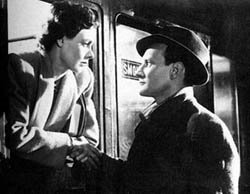
Although much beloved, particularly in England, Brief Encounter is rather wearing 60 years on. A stagy account of a short affair between two married people, it all seems astonishingly passionless. For all the frantic devotions of love, there's little sense of real physical attraction: it's the least appealing side of British stuff upper lip mythology. While there's something appealingly ordinary about Trevor Howard and Celia Johnson, their characters rarely create the sparks that a tale like this requires, while the supporting cast, mostly colourful English 'types', is often quite distracting. The film came out just months after the end of the Second World War, and yet there's little, here, to celebrate about the English way of life; that war, too, is completely, and oddly, absent from any of the conversations around which the film is centered.

Saturday, April 22, 2006

Infamy


2005, US, directed by Doug Pray

While it's nothing special as a contribution to the documentary format - given the subject matter, it's aesthetically disappointing - Infamy does feature some highly entertaining, eloquent graffiti artists and select examples of their work (on walls, railway cars and more or less every urban surface imaginable). It's hard to know how representative these particular artists are of the wider tagging/graffiti milieu - some of them are clearly at the top of the game artistically (like Saber, based in California), while all are effective commentators on their work and motivations - but there's no doubting their (sometimes misguided) devotion to their work. While artists like Saber or Toomer focus on murals - some of them tours de force of skill and impact - others, particularly Earsnot and Claw, seem to have an obsession with self-publicity, writing their names on everything they see like so much visual litter (Claw, too, gives off the impression of a middle-class girl nursing an obsession with the streets). Whatever you think of them, though, director Doug Pray has found some fascinating raconteurs, often witty and occasionally, unexpectedly wise.

Thursday, April 20, 2006

Flightplan


2005, US, directed by Robert Schwentke

Flightplan starts out as a surprisingly spooky, consciously Hitchcockian movie, only to end up as something far more conventional. It's disappointing, really, that script-writers almost never think beyond the obvious resolution: there's an intriguing idea buried in this film, and it's sustained for two-thirds of the film (to its credit, Flightplan doesn't overstay its welcome, with a lean 86-minute running time). Jodie Foster is quite effective as a woman who's just been widowed, and who is travelling back to the US from Germany in the company of her young daughter (one of the spookier moppets to appear on screen of late); she also just happens to be an airplane engineer who helped design the plane she's traveling on. When she falls asleep, her daughter disappears, and the crew and other passengers give the impression that they've never seen the child on board (her name doesn't even appear on the manifest). Foster doesn't tend to play characters who give up easily, though, and she doesn't go quietly here. In support, Peter Sarsgaard has a rather thin role, but Sean Bean is excellent as the captain, while there's a vein of post-9/11 social commentary that's, thankfully, laid on reasonably lightly.

Saturday, April 15, 2006

Return to Me


2000, US, directed by Bonnie Hunt

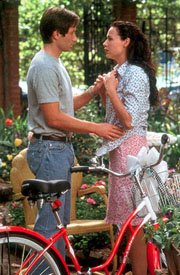
Since the average romantic comedy is chock-full of coincidence and contrivance, it's critical that two things go right: one, make the lead couple appealing, and two, throw in some entertaining supporting characters. Return to Me does both, and the result is a generally charming film, which does a half-decent job of dealing with the more morbid aspects of its initial set-up. Building designer Bob Rueland (David Duchovny) is devastated when his zoologist wife is killed in a traffic accident. It's not until he meets Grace (Minnie Driver) that he begins to take an interest in life again, but Grace just happens to be enjoying her own new lease on life since she received a new heart from Bob's wife. There's no denying the hokey premise, but the performers are so enjoyable to watch that it really doesn't matter. Duchovny and Driver are perfectly serviceable in the lead roles, and the rest of the cast is tremendous. Usually there are two or three key supporting acts, but here there's an entire Greek chorus, with the grumpy old men (including Grace's grandad, played by Carroll O'Connor) especially amusing.

Friday, April 14, 2006

Man on Fire


2005, US, directed by Tony Scott

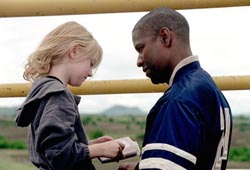
A fearsome revenge flick, Man on Fire is a little like Death Wish for the new millennium, with Denzel Washington as a bloody righter of wrongs. He plays Creasy, a washed-up ex-military security professional whose love affair with the bottle has affected his employment prospects. Down in Mexico, an old friend (Christopher Walken enjoying the good life) sets him up with a job as a bodyguard for the daughter of a young businessman. The daughter, Pita, is played by the precocious Dakota Fanning, who steals pretty much the entire movie despite the presence of Washington, some exceedingly overwrought camerawork, and an arsenal of high-powered weaponry. After a tranquil set-up during which we wonder if Creasy might finally have found peace, Pita is, inevitably, kidnapped and Creasy goes on the rampage to ensure that everyone associated with her abduction pays an appropriately gruesome price, sowing havoc on the streets of Mexico City. The film motors along swiftly enough, particularly once the gunplay starts, but the attempts to portray Creasy as some kind of noble samurai are less than convincing. Washington doesn't do a whole lot apart from looking tired; the noise and chaos around him are, indeed, quite wearing.

Thursday, April 13, 2006

On a Clear Day


2004, UK, directed by Gaby Dellal

An enjoyable entry in that peculiarly British genre that mixes kitchen-sink realism with whimsy, On a Clear Day is a modest film set in working-class Glasgow, with a fine lead performance from Peter Mullan. He plays Frank Redmond, who's been made redundant from his shipyard job after a foreign takeover. Like many a unemployed man (or woman) before him, Frank is lost until he hits on the unlikely plan of swimming the English channel - a plan that he assiduously conceals from his wife (played by Brenda Blethyn) and family. The swim is not simply a means to filling in the days, however, for it's also Frank's awkward way of coming to terms with a long-ago family tragedy and with his own communication problems (Peter Mullan spends much of the film looking silently into the middle distance). While the swim is ultimately loaded with a bit too much psychological meaning to be entirely convincing, there's tremendous pleasure along the way from the able cast: Mullan is surrounded by a host of semi-familiar faces, with Billy Boyd (one of the hobbits from The Lord of the Rings), Sean McGinley and Benedict Wong especially enjoyable as several of Frank's pals. There's something appealingly Rocky-esque about the whole enterprise - but give me a thick Scottish accent over the incomprehensible Stallone any day.

Sunday, April 09, 2006

North Country


2005, US, directed by Niki Caro

Notwithstanding a strong echo of the 1983 film Silkwood, North Country is an engrossing, well-acted account of one woman's wrenching battle against a big company - in this case a mine in rural Minnesota where women are a rarity on the workforce; those few women are subjected to the most extreme of sexual harassment on a daily basis. Charlize Theron plays Josey Aimes, whose response to the catalog of harassment is, ultimately, to file a lawsuit (which becomes a class action). The film is a loose fictionalization of a case that took over a decade to settle (and whose origins go back to the mid-1970's), and it's a powerful indictment of an especially egregious environment of harassment, although the legal decision helped women in thousands of less openly hostile places of employment. Theron does excellent work in the lead role; she's as convincing here as she was in the even lower-rent role that won her an Oscar in Monster, while getting to play someone a whole lot more sympathetic. As is so often the case in depictions of rural America, the supporting cast is outstanding, with great smaller turns from Frances McDormand and Richard Jenkins in particular. New Zealand director Niki Caro shows herself to have a keen sense of the particularities of this slice of American life, too, even though it's a less obviously personal film than her compelling Whale Rider.

Tuesday, April 04, 2006

Bewitched


2005, US, directed by Nora Ephron

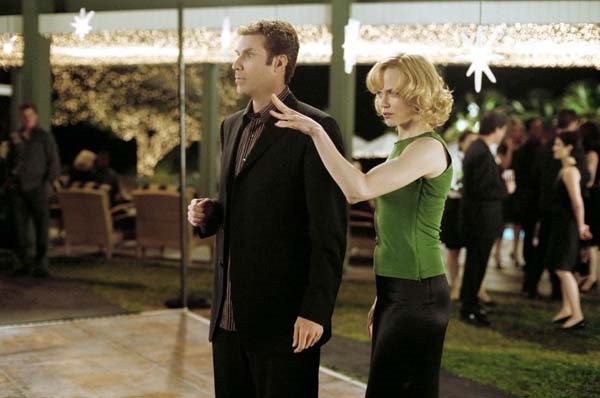
I normally have plenty of time for Jonathan Rosenbaum, the movie critic for The Chicago Reader, though his approach to movies is a whole lot more intellectual than mine. He must have been on crack, though, when writing his review of Bewitched. Rosenbaum opines that director Nora Ephron handles her material "with grace and confidence", whereas I hard a time telling that there was a director involved at all. There's a good idea in here - instead of a straight retread of the show, the plot revolves around the cast of a Bewitched remake - but the resulting script is nowhere near funny enough, the romantic spark between the leads is entirely absent, Will Ferrell is plain annoying, and Nicole Kidman is miscast. The supporting cast does the heavy lifting - Hollywood is blessed with an abundance of acting talent to fill in the gaps - so most of the (minimal) fun to be had comes from Michael Caine, Shirley MacLaine and Jason Schwartzman.

Tuesday, March 28, 2006

In & Out


1997, US, directed by Frank Oz

Kevin Kline plays beloved small-town English teacher Howard Brackett who, just three days before his wedding, finds himself outed on national TV by a former student making his Oscar acceptance speech. Howard's life is, of course, turned upside-down by this 'revelation', as he and everyone else in town tries to figure out whether he is, in fact, gay - and whether it even matters to them (with the exception of his fiancée, for whom it matters more than most). Kline is thoroughly entertaining, all awkward gestures and confusion, while the script sparkles at times (especially in the scenes featuring Howard's students and at his bachelor party, where arguments break out over the Barbra Streisand movies Howard has been showing). The supporting cast, too, is generally strong - although Joan Cusack, as the fiancée, is wearing. As my wife said , though, it's remarkable, given the set up, how completely sexless the story is. In some ways, it's as though the film completely misses the point by avoiding anything remotely sexual - and yet in other ways, that's exactly the point, that it doesn't really matter what someone does, as long as they attempt to be a decent human being.

Friday, March 03, 2006

Domino


2005, US, directed by Tony Scott

While it's not exactly original -- the structure, if not the hyper-kinetic visual style, owes much to Quentin Tarantino -- I'm still surprised that Domino wasn't a bigger box-office hit given the sheer amount of energy with which Domino Harvey's story is (fictionally) told. The movie never, ever slows down (which is lucky, because the details of the central crime spree are well-nigh incomprehensible), Keira Knightley is appealingly and convincingly spunky, and there's a liberal dose of humor, particularly at the expense of two Beverly Hills, 90210 cast members. 


Tony Scott's color scheme and frenzied editing are a bit of a trip at times, but that's the whole point of conveying the lives of three bounty hunters hopped up on adrenaline and nicotine, bending and breaking the law at every turn. The characters at the heart of the movie might be complete moral basket cases, but they sure look like they're having fun, and it's nice to see Mickey Rourke get his teeth into a role again.

Sunday, February 26, 2006

Gandhi


1982, UK, directed by Richard Attenborough

Gandhi is a respectful but unadventurous bit of historical filmmaking, which nonetheless created quite a stir when it was first released. Today it's perhaps most enjoyable for its outstanding central performance, a star-making turn by Ben Kingsley. It's still hard to credit how inexperienced he was when Gandhi went into production (while the film may be lacking as historical commentary, there's no faulting the scale of the enterprise). The real flaw here is how schematic the life of Gandhi becomes in the hands of a stolid director like Richard Attenborough. We lurch from incident to incident with little of the imaginative input a more creative director might have employed. There's an unavoidable element of repetition, too, since the political activism of Gandhi's South African years is reiterated, in more resonant fashion, after his return to India. That said, the film does become more involving as the minutes tick by, mostly by virtue of India's fascinating and tumultuous history. The highly credible transformation of Kingsley from vigorous young lawyer to frail elder statesman helps hugely, while fans of British or Indian actors will have a field day name-checking the supporting cast.

Wednesday, February 22, 2006

Fast Times At Ridgemont High


1982, US, directed by Amy Heckerling

A high school classic, Fast Times at Ridgemont High has no plot to speak of: it's just a collection of vignettes capturing life in a Southern California high school in the early 1980's, before the ubiquity of computers, cell phones, MTV and, on the darker side, the spectre of AIDS. Fast Times reveals that teenagers Like Cars! Have Sex! and Do Drugs! It seems a little quaint after years of media obsession with school violence and hard drug use in the intervening period, but what ensures that the film continues to work is the performances - including that of the casting director, who unearthed an extraordinary variety of young actors on the verge of success: Sean Penn, Jennifer Jason Leigh, Judge Reinhold, Phoebe Cates, Eric Stoltz, Forest Whitaker and, in the blink-and-you'll-miss-'em department, Anthony Edwards and Nicolas Cage (under the name Nicolas Coppola). Most of the talent does a good job with the various high school types, but the undoubted standout is Sean Penn as stoner Spicoli. He's hilarious and endearing - so good that you wonder at the almost complete lack of comic fare in his subsequent resume.

Wednesday, February 15, 2006

Just Like Heaven


2005, US, directed by Mark Waters

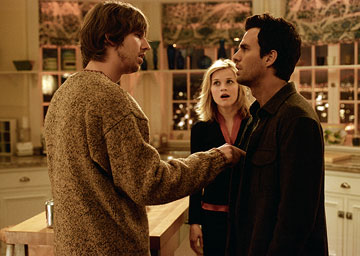
Like any romantic comedy, Just Like Heaven lives or dies on the appeal of its lead actors, and fortunately Reese Witherspoon and Mark Ruffalo have charm to spare. Witherspoon plays Dr Elizabeth Lawrence, a dedicated pro with no time for a private life who is involved in a terrible accident. Months later, dreamy but depressed Mark Ruffalo moves in to her apartment, only to find that the place is haunted by the spirit of the previous resident. As he showed in 13 Going On 30, Ruffalo is extremely adept at the kind of comic tomfoolery required in a situation like this. He's especially amusing when the spirit of the good doctor enters his body to try and reassert some control. Of course, notwithstanding the boundaries between the real and spirit worlds, sparks fly in all senses, although the film steers clear of anything morbid. While Witherspoon and Ruffalo alone are great value, there are also some enjoyable supporting turns, especially from Jon Napoleon Dynamite Heder, who's very amusing as an occult bookstore employee.

Tsotsi

2005, South Africa/UK, directed by Gavin Hood

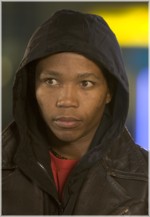
Tsotsi travels some well-worn ground in presenting the tale of a hoodlum who is given a chance at redemption, but the setting and the performances elevate the film well above the average. 'Tsotsi' means 'gangster' in South African street slang, and the title character, played by newcomer Presley Chweneyagae, comes across as an especially nasty piece of work. Living in Soweto, his life is a fitful mess of drinking and criminality, including murder. Tsotsi's shot at changing his life comes when he carjacks a woman who is trying to get into her high-security home. He escapes with the car, and, as he discovers moments later, a small baby on the back seat. He takes the child in, making ham-fisted attempts to care for the baby before he enlists - at gunpoint - a local mother to assist him. While the story has all the hallmarks of sentiment, the film makes no attempt to gloss over the unpleasant realities of life in Soweto and the final scene, as a consequence, has a tremendous power, in which the relative nature of redemption becomes absolutely clear. Chweneyagae delivers a performance of great conviction, as do most of the Soweto crew, conveying the continued hopelessness of the vast black underclass in the new South Africa (the novel on which the film is based, incidentally, was set in apartheid-era South Africa, and Tsotsi escaped with a white woman's child; here the baby is a product of the black upper-middle class, and the only white face in the film is a sympathetic, Zulu-speaking cop).

Monday, February 13, 2006

Crash

2005, US, directed by Paul Haggis

Rating: **

The title of this film is unusually apt: every encounter in seems to have a self-conscious rawness and a violence that mirrors the jarring effects of the various auto incidents that punctuate the action. Writer-director Haggis uses his large cast to explore race relations in contemporary Los Angeles, and the results aren't pretty. At its heart, the film argues that there's a little of the racist in all of us - black, white, Chinese, Iranian, Hispanic - and tries to upset expectations with interweaving storylines that bring the different races together in varying combinations. The stories are uneven and sometimes less than convincing, with Haggis's wordy script coming across as rather stilted, while the overall impression is of something very contrived. It's hard, too, to know whether, in voicing some thoughts usually kept well-concealed, the film really says a whole lot that's new about the problem of race in the US; Haggis certainly seems to think so, but that's not quite the same thing. The film's real resource is its exceptional cast, ranging from the ever-reliable Don Cheadle to Ludacris to Matt Dillon (excellent), Terrence Howard and Sandra Bullock, playing an especially obnoxious Angelena.

Saturday, February 04, 2006

Charlie and the Chocolate Factory


2005, US, directed by Tim Burton

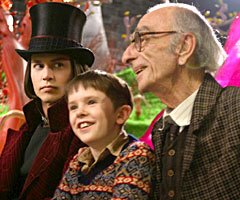
It's hardly original to note that Tim Burton seems more at ease with set design than human emotions, but it's no less true in this film. What's especially striking here is the fact that he doesn't seem incapable of telling an interesting human story. The early scenes, depicting life in the Bucket household before Charlie (played by the precocious Freddie Highmore) finds the Golden Ticket which guarantees him a day in Willy Wonka's factory, are surprisingly warm and tender. Charlie is the least remarkable of the five children who win the chance to visit the factory, but because the others are remarkable entirely in a negative sense the outcome of the tale is hardly in doubt. Roald Dahl's narrative creates great potential for wild and extravagant visuals, and Burton indulges himself as much as any Wonka-bar lover. At times the visuals are genuinely bewitching - especially in the musical sequences - but sometimes they seem like poor copies of the imaginative backdrops for the 1971 film version. As Willy Wonka himself, Johnny Depp is plain weird, even in the context of a surreal fairy tale. By contrast, Freddie Highmore does a creditable job, and it's fun to see veteran Irish actor David Kelly getting some decent screen time as Charlie's grandad.

Monday, January 30, 2006

Syriana


2005, US, directed by Stephen Gaghan

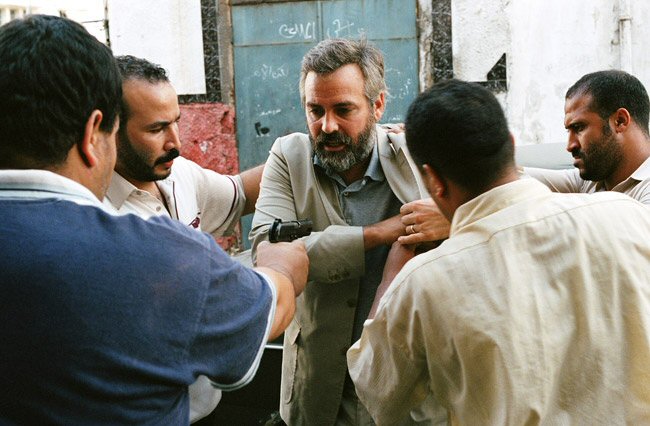
There's not a lot to send you home smiling after a viewing of Syriana, irrespective of your politics. It's hard, though, to dispute the central thesis that the vast sums of money to be made in the oil business create great temptations to bend the rules (not a highly original thought, of course). The focus of this film is squarely on the Middle East, and there are multiple storylines, interweaving boardroom shenanigans with the schemes of Saudi princes, as well as the realities, on the ground, for Middle Eastern oil workers. For good measure, there's a CIA plotline, too, with assassinations and under-the-counter arms sales. If all this sounds like Traffic with oil instead of drugs, it's no accident. Stephen Gaghan scripted that earlier film, too, and clearly picked up a few directorial pointers from Steven Soderbergh. At times, it's clear that Gaghan has bitten off more than he can chew: at least one of the plotlines could profitably have been dropped. It's refreshing, nonetheless, to see a mainstream film grappling with big issues and avoiding happy endings (the film also makes excellent use of its location footage). There are several standouts in the large cast, including Chris Cooper, Jeffrey Wright, and George Clooney. The latter's willingness to look bad on camera, particularly in a truly brutal scene of violence, is part of a convincing attempt to chronicle the impact of an especially dirty war on one individual.

Sunday, January 29, 2006

Želary


2003, Czech Republic/Slovakia/Austria, directed by Ondrej Trojan

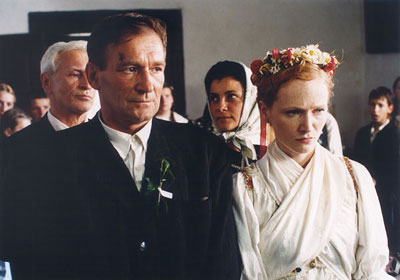
Although it frequently flirts with predictability in its plotting, there's much to be enjoyed in this portrait of rural Czechoslvakia during World War II: there's a kind of well-worn charm that goes down very easily, belying the film's two-and-a-half-hour running time. The film opens in 1943 Prague, where medical student Eliska (Anna Geislerová) is involved in resistance activities. When her network is discovered she is ordered to depart for the countryside, in the company of a mill worker, Joza (György Cserhalmi), who lives in the middle of nowhere. Eliska is told that she must marry him in order to remain above suspicion (she's also changed her name to Hana) - as well as to be accepted by the villagers of Želary. She, of course, has no affection whatsoever for this burly stranger. The two fine central performances add considerable depth to what might otherwise be a rather thin affair, at least in its early stages, while director Trojan has an undeniable feel for the rhythms and intersecting personalities of the village. The camerawork throughout is excellent, with the gorgeous rural locations cast in the handsomest of lights. Incidentally, Želary seems to be the latest in a series of films (the best known, though not necessarily the best, being Dark Blue World) in which Czechs examine - or re-examine - their country's role in World War II; it's genuinely interesting to see how the country is portrayed onscreen against the wartime backdrop.

Index

List of all movies

Most of the images here are either studio publicity stills or screen captures I've made myself; if I've taken your image without giving you credit, please let me know.

About Me

Boston, Massachusetts, United States