Showing posts with label Hong Kong. Show all posts

Sunday, April 14, 2019

Police Story 2


1988, Hong Kong, directed by Jackie Chan

A letdown -- the film opens with a summary of the exceptional stuntwork of the first film, but very little of what follows has the same rhythm and verve.

Monday, March 12, 2018

Police Story


1985, Hong Kong, directed by Jackie Chan

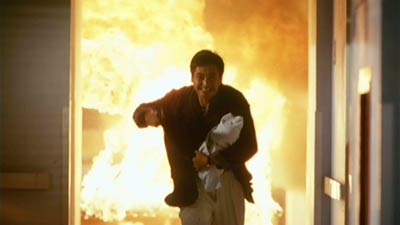
A film I hadn't seen since a UK TV outing 25 or more years ago, with an intro designed to educate the viewer as to the wonders of Hong Kong action cinema. The set-pieces are as jaw-dropping as ever, but the connective tissue is harder work, especially since Hong Kong humour is very much an acquired and/or locally-specific taste. Still, the chutzpah and Keaton-esque physical grace linger long in the mind. 

Saturday, June 25, 2016

Come Drink With Me


1966, Hong Kong, directed by King Hu

The first of King Hu's wuxia films, in which he developed the template on which he'd expand (in every sense: Come Drink With Me is a good deal shorter than Hu's subsequent career highlights, especially the epic A Touch of Zen). Given that Hu had little enough experience behind the camera, never mind in this specific genre, it's a strikingly confident film, making exceptional use of both exterior and, especially, interior spaces: one sequence set in an inn is a masterpiece of staging, the frame alive with action at various depths (it's also an especially satisfying sequence as Golden Swallow, memorably played by Cheng Pei-pei, showcases her abilities).

Sunday, October 20, 2013

Drug War


2013, Hong Kong/China, directed by Johnnie To

Though it's as tightly constructed as most of Johnnie To's Hong Kong-based crime films, with an exceptionally intricate plot that rewards careful attention, the overall aesthetic is much less slick than usual, and the early going in particular is thoroughly deglamorized, with grim landscapes and a nothing-left-to-the-imagination depiction of the work of drug mules. Indeed, at no time is the drug business seen to be especially rewarding -- even those who've made it big seem to have serious problems, whether it's the consequences of their activities on family life, their inability to stop themselves dabbling in their own product, or simply the gnawing tension that comes with a life lived constantly in fear of it all coming to an end. All this is not to suggest that the usual To pleasures are absent, though: the pacing is both expert and breakneck, not least because the action is compressed into a couple of restless days. There is also a standout extended set-piece wherein the police manage the many moving parts of a major drug deal to allow themselves to intervene in the action and pass themselves off as criminals, with Sun Honglei, who plays the head police officer, wryly amusing in his dual roles.

Monday, September 23, 2013

Enter the Dragon


1973, Hong Kong/US, directed by Robert Clouse

Utterly absurd stuff, but of course wildly popular in its day; the hybrid format of American financing and Asian setting is as uneasy as you might expect, with the resourcefulness and visual dexterity of much Hong Kong cinema replaced by a fairly routine James Bond-style setup (all fake ultra-villain lairs and comely, disposable young women). Bruce Lee himself doesn't get caught up in such distractions: he's the single-minded man in the midst of it all, and for the most part the film succeeds in giving his extraordinary physical skills their due, particularly in the scenes with nunchaku. The extended early fight/chase sequence featuring Angela Mao is also quite skilfully done, and the scenes in and around the harbour have a certain degree of historical interest, but much of the subsequent filler is painful.

Thursday, August 23, 2012

The 36th Chamber of Shaolin


1978, Hong Kong, directed by Chia-Liang Liu

This was a bit of a shock after so many films from the 1930s -- it's been ages since I dipped a toe into Hong Kong action, particularly of the kung fu variety, and I'd forgotten just how busy the folio artists are kept, with every absurd swish and kick amped up to eleven. On this set, at least, the camera operator must have earned overtime for all the zoom work -- in the early sequences, the zoom seems to function as a kind of visual exclamation point to direct our attention to the key participants in a big fight scene.

The opening sequences are pretty standard quasi-historical-injustice stuff -- I'd forgotten just how generic these films can be in structural terms -- but the film really comes alive in the training sequences: indeed, where many kung fu films are essentially structured as a series of escalating battles, Liu throws the viewer off by adhering to the standard template only to set his story up, and then we're off to an imaginative and often very funny succession of training chambers, where our hero, Gordon Liu, hardens his abs and hones his skills in order to throw off the yoke of political subjugation. It's a template then re-worked many times over by subsequent filmmakers -- down to The Karate Kid, though where the Hong Kong film links kung fu training to a series of apparently abstract tasks, The Karate Kid turns that same exercise into a series of Tom-Sawyer-esque chores.

It was an absolute pleasure to see this on the big screen -- not the best print ever, with the colours a little off, but the vocal enthusiasm of the audience gave a little hint of what it must have been like to watch these films in crowded, bantering theatres on a Saturday night in the 1970s.

Thursday, February 11, 2010

Election

2005, Hong Kong, directed by Johnnie To

Beautifully controlled and steering a wide berth around the standard tropes of Triad gunplay, Johnnie To’s film focuses on issues of loyalty and empire-building, and the constant tension between tradition and modernity in a world which pays lip service to the former while embracing the neon dollars of the latter. The narrative centres on a literal passing of the baton – an object that grants power to the Chairman of the Wo Sing organization for a two-year period – but also more symbolically on a progression from one generation to the next; the “Uncles” may be consulted but they are no longer in power, and they disappear from the screen as the new boss consolidates his power in increasingly brutal fashion. Where other Johnnie To films are filled with carefully staged gun violence, here he emphasizes hand-to-hand deaths that are both more personal and more violent, extending over several minutes and drained of any glamour. This is success at the price of humanity, with the multiple plotlines, so carefully interwoven earlier in the film, finally pared down to a revelatory tale of Shakespearean ambition and ruthlessness.

Saturday, October 13, 2007

Shaolin Soccer

2001, Hong Kong, directed by Stephen Chow

Shaolin Soccer is built on spectacle rather than tight plotting, with Stephen Chow using digital effects to give a new spin (in every sense) to the traditional kung fu film. As in previous generations of martial arts films, the key here is the big "fight" scenes rather than the sometimes less-than-fully-coherent filler material, which is scattershot and, not incidentally, often very amusing. Much of this material disappears in the heavily edited American version of the film, which loses in charm much more than it gains in streamlined narration. There's a fine wit at work throughout the film, playing with the traditions of martial arts films in affectionate ways, whether it's the goalkeeper who channels the spirit of Bruce Lee or the characters who, when confronted with another multi-talented team, are convinced the trickery must be the result of "wires".

Like Jean-Pierre Jeunet, Chow is a great connoisseur of oddball faces: there's quite a gallery of unusual physiognomies on display here, with the camera often just inches from the visages in question. Those more naturally cartoonish elements are often more successful than some of the CGI effects, which are less than seamlessly integrated with the "real" action, seeming to occupy different physical spaces (similarly, the CGI crowds at the soccer matches are devoid of atmosphere). Beyond all of the trickery, though, is a concern with those who are being left behind in a modern, upwardly mobile society; there's a surprisingly serious core to the portrait of the soccer players in bustling Shanghai, and the final sequence makes their triumph the more satisfying.

Saturday, April 14, 2007

The Mission

1999, Hong Kong, directed by Johnnie To

Johnnie To removes everything extraneous to focus almost exclusively on the loyalties -- often conflicting -- between a group of killers hired to protect a gang boss in the wake of an assassination attempt. Although the set-up is ostensibly simple, To makes the viewer join the dots rather than filling in the details in plodding fashion; there is minimal dialogue as the group of men is brought together, and later in the film To extracts some surprising moments of humour from their wordless interactions (most notably in a scene involving an improvised game of soccer).

As befits the stripped-down style, To shoots the action sequences as though he had to account for each bullet: the shoot-outs are the antithesis of John Woo, with each movement precisely choreographed, each weapon carefully aimed at its target, the actors moving with precise, economic gestures. The almost exaggeratedly disciplined style reaches its zenith with a brilliantly shot scene in a deserted mall, where the motley collection of men becomes a disciplined unit before our eyes. To is always conscious of exactly where each actor appears in his frame, and the compositions with multiple actors have a geometric precision; what's crucial, though, is that these theatrical constructions enhance rather than detract from the storyline, concerned as it is with the exact shades of loyalty that prevail at any given moment in time. To also uses several of his actors in atypical parts, particularly Anthony Wong, who is unusually reserved, barely cracking a smile until his final scene.

Tuesday, December 19, 2006

Once Upon a Time in China

1991, Hong Kong, directed by Tsui Hark

Like many a Western viewer, I first discovered the Chinese/Hong Kong epic genre through Crouching Tiger, Hidden Dragon. Although exceptionally entertaining, it isn't really representative of the genre as a whole: this 1991 entry gives a much better impression, including with regard to the specifics of Hong Kong filmmaking style (all of the dialogue, for example, has been dubbed in post-production; it's amazing to me that this was still true for high-profile films in 1991, although that changed soon after). The Westernisation of Crouching Tiger, Hidden Dragon is also, in retrospect, obvious in the tightly plotted action and character development, whereas I confess I was occasionally confused by the developments here, especially in the twenty minutes immediately after the opening credits (the pre-credits sequence sets up what sounds suspiciously like a major plotline quite efficiently, but the film then goes in other directions, spiced up by brilliantly choreographed set pieces). The film is a mix of historical commentary (with a nationalistic flavour: plenty of derogatory references to the colonial masters and equally rapacious American traders, and I'm sure better knowledge of Chinese history would have helped me), spectacular sword and kung fu action and, almost improbably, melancholy reflection on the changes occasioned by the modern world. Though the film as a whole is sometimes scattershot, Tsui Hark has an extraordinary gift for filming action sequences: no matter how complicated the action, it's always clear who's doing what to whom, and he makes great use of the acrobatic skills of his performers, most obviously Jet Li at the height of his powers but also, among others, the excellent Biao Yuen.

Wednesday, December 13, 2006

Days of Being Wild

1991, Hong Kong, directed by Wong Kar-wai
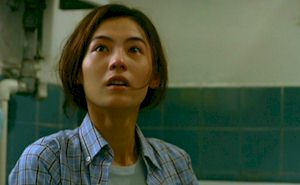
Much of the aesthetic that is familiar from Wong Kar-wai's later films is already present in this, his second feature; although the projected sequel to Days of Being Wild was never made, it's not hard to see In the Mood for Love as a kind of surrogate follow-up, especially given the way that Tony Leung pops up so mysteriously at the end of this film. As in his subsequent work, Wong's control of mood and pace is absolute: he's a master at atmospherics, especially a kind of languid dreaminess that proves almost overpowering for his characters, as if they're perpetually trapped in hot, clammy torpor. Wong uses music especially effectively in establishing and sustaining mood, here employing local versions of various Western classics that underline the period setting (the early 1960s) while keeping the viewer off-balance. It's hard not to see a kind of nostalgia for that period in Wong's work, especially given that he's returned to the era subsequently. The Hong Kong of 1960 comes across as strangely empty - surely at odds with the reality of the time - and is contrasted here with a version of the Philippines which is generally bustling and vibrant, though at least some of the characters carry their anomie with them (as did the players in Happy Together, despite their Buenos Aires setting). The cast is something of a who's-who of Hong Kong cinema of the period: Leslie Cheung, Maggie Cheung, Andy Lau, Carina Lau and Jackie Cheung all get to display a more downbeat side.

Friday, November 24, 2006

Lost in Time

2003, Hong Kong, directed by Derek Yee
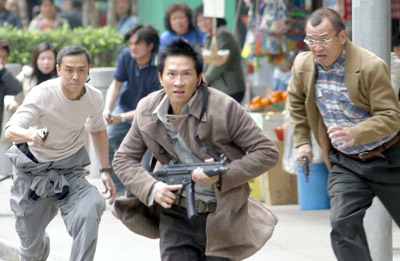
I'm not all that familiar with the 'relationship drama' genre of Hong Kong cinema, but this is a well-regarded 2003 entry, and if the set-up is a little contrived it still features two fine lead performances. Cecilia Cheung gets her first really meaty dramatic role as a young woman dealing with the consequences of her fiancé's death (particularly caring for his young son and trying to pay the bills on his minibus servcie), and she acquits herself well: the sense of frustration and confusion her character experiences is palpable, though there's also a vein of grit that's very appealing. She has able support from Lau Ching-Wan, more familiar from action and comedy roles, as a sympathetic minibus driver who takes her under his wing; his unconventional looks are especially charming in this film. Lost in Time doesn't do anything radically new - although the very slow romantic burn is a nice contrast to the wham-bam style of Hollywood - but the gentle pacing allows us to build up a credible sense of the two main personalities, and director Derek Yee has a nice eye for the small details of the minibus trade (that, in itself, is a nice contrast to the usual movie professions, and adds considerable local colour). The film also looks extremely good: Kwon-Man Keung's cinematography has the clean appearance of a much bigger budget.

Tuesday, November 14, 2006

Breaking News

2004, Hong Kong, directed by Johnnie To

Perhaps Johnnie To was working, even by his standards, to an especially demanding schedule when making Breaking News, for it's a truly stripped-down affair, with a perfectly-paced 90-minute running time and action that takes place over the course of just a few hours (although it can be confusing to keep track of the various branches of the Hong Kong police that move in and out of the story, the plotting is generally pretty solid as well). To indulges himself with an eye-catching seven-minute opening shot that must have required a great deal of careful choreography, but doesn't relax afterwards: his command of the material is assured throughout, deploying cramped space to great atmosphere-building effect, and marshalling knots of police and reporters in clever formation. The film unspools, for the most part, inside an apartment building where some gangsters have taken a family hostage and in the police command station where the spin doctors are hard at work selling their version of the story to the assembled cameras. While the film is occasionally a touch simplistic in its commentary on the machinations of the media machine, the general point that such manipulations aid little in the construction of a truly participatory democracy is sharply made given the local context. To rarely lingers, though, on such ideas, given the headlong pacing and tightly-constructed action sequences.

Friday, November 10, 2006

Fulltime Killer

2001, Hong Kong, directed by Johnnie To and Wai Ka Fai

Early in Fulltime Killer, one of the protagonists mentions a film he had seen a few years previously. "Not the best movie, but I like the style," he opines, and it is as good a way as any to summarize the present film. Explicit movie references abound - everything from Le Samouraï to El Mariachi by way of Léon - in a cheerful acknowledgement of the constant borrowing that characterizes Hong Kong cinema (with the favour returned by Hollywood, France and other movie producers). The film boasts a top-notch opening in a Malaysian train station, swiftly followed by an over-the-top-notch entrance from the second lead (Andy Lau), who wreaks havoc in a Thai police station. Throughout the film, there's a self-conscious effort to formulate the bloody assassinations as opera, a leaf taken from the John Woo playbook. If Fulltime Killer never quite lives up to the promise of that pair of opening sequences, it's still got style to spare and directors To and Wai never allow the action to flag, which helps to paper over the flimsy plotting, while co-lead Takashi Sorimachi (also, like Lau, a pop star) is excellent. This is, incidentally, the first Hong Kong movie of any stripe that I've seen since reading David Bordwell's Planet Hong Kong. I can't recommend the book highly enough as a tool for thinking about that territory's film production; that it's also a supremely enjoyable read is a huge bonus.

Monday, June 05, 2006

Running Out of Time


1999, Hong Kong, directed by Johnnie To

Johnnie To has proved to be something of a critical darling in the Western press over the past couple of years, with writers desperate to locate the latest auteur in Hong Kong's rampantly commercial cinema (although To hasn't made the job easy by switching between crime thrillers and the kind of Hong Kong comedy that doesn't translate as well to overseas markets). Running Out of Time belongs to the first wave of To crime pics, and like many similar genre entries, the weak, sometimes laughable, plotting is far less important than the often stylish action. The core of the picture is a cat and mouse intrigue involving a crime 'mastermind' (played by Andy Lau) and an unconventional cop (Lau Ching-Wan); their interaction, never especially realistic, becomes actively incredible as the film progresses. To saves things, though, with his fine pacing, never allowing the action to flag, and sharp cinematography (his slick take on Hong Kong's streets was re-cycled, to even better effect, by the directors of Infernal Affairs); both lead actors are strong, too, although some of the comic support is pretty weak from this outsider's perspective.

Monday, January 16, 2006

Infernal Affairs III


2003, Hong Kong, directed by Andrew Lau and Alan Mak

A disappointing conclusion to the Infernal Affairs trilogy: the drop-off from the creditable second installment is precipitous despite the return of the key actors from the first film. The taut action scenes and narrative economy are replaced here by an interminable series of scenes designed to add 'surprises' to the original plot, with some of the developments just plain confusing, even by the standards of this complex series. The greater sins, however, are the insistence on punctuating what minimal tension is created by constantly cutting between plots (skipping months and even years in the process), as well as leaving outstanding supporting players like Anthony Wong and Eric Tsang with so little to do this time around. The slick style of the picture outweighs the much more acute sense of the bustle and drama of Hong Kong that was such an integral part of the first two movies.

Sunday, December 18, 2005

Infernal Affairs II


2003, Hong Kong, Andrew Lau and Alan Mak

While Hong Kong films are best known for their gunplay, this one engages the brain, too, if only to keep track of the serpentine plot developments. A worthy prequel to the 2002 smash hit, the second part fills in much of the background, adding layers of intrigue as we navigate the years from 1991-1997 (and the impending handover to Chinese control). The film interweaves the experiences of Yan, a police mole in the triads, with those of Lau, a gang member who has infiltrated the police, and who has begun to work his way up the ladder. There are multiple cross-cutting plotlines and revelations, shedding new light on the events of the first film, although it can be quite a challenge to keep the various characters straight, particularly given the 'double mole' plot at the heart of the film. The young actors who play the youthful Yan and Lau do a fine job, although the real enjoyment comes from watching veterans like Anthony Wong and Eric Tsang, while several of the smaller roles, especially on the gangland side, are also well-played. While this sequel isn't quite as slick as its predecessor, co-directors Lau and Mak are absolutely at home with the mechanics of film tension, and ratchet things up to extremely enjoyable effect in several bravura sequences, with cross-cutting action as the various plot strands unfold in parallel; their camerawork is as polished and mobile as before. For a franchise film, there's also a surprisingly vivid sense of place, whether it be the homes of wealthy gangsters, or the back alleys of Hong Kong, filled with small restaurants and shops.

Wednesday, August 10, 2005

Hard-Boiled


1992, Hong Kong, directed by John Woo

I've come to the conclusion that John Woo made one great movie -- The Killer -- and a whole lot of pictures that don't live up to the hype generated by action-movie nerds. Hard-Boiled is a case in point, particularly given that the (now out-of-print) DVD was given the full Criterion Collection treatment. Like most high-profile Woo movies, Chow Yun-Fat is front and centre here, waving around more artillery than Rambo on a bad-hair day. He plays a trigger-happy cop -- and they say John Woo is original! -- who's usually as much of a danger to his own side as he is to the bad guys; he teams up with an undercover cop (Tony Leung) who works inside the Triads, to take down a gun-running operation. The plot is incredibly disjointed, as befits a film whose only raison d'être is the use of as many bullets as possible. In other Woo films, the action scenes advance the plot to some degree, whereas here they stop things in their tracks: many of the sequences are needlessly protracted and, even by HK standards, wildly over the top. The key scenes, such as a shootout in a hospital, dispense with ridiculous numbers of people (even with the requisite suspension of disbelief, it's impossible to accept that World War III could take place in a hospital without a more robust police/military response in colonial Hong Kong). The obligatory 'quiet moments' are pretty ham-fisted, too, with horribly soft-focus music and clichéd buddy material. Contrasted with a film like Infernal Affairs, this is pretty poor stuff to be getting excited about.

Thursday, January 20, 2005

Infernal Affairs

2002, Hong Kong, directed by Andrew Lau and Alan Mak

This one is a real find. While Hong Kong cop/robber flicks tend to be wall-to-wall action (not a bad thing if it's well done), Infernal Affairs quickly reveals itself to be a far more interesting creature as it explores the trials and tribulations of two moles, one an undercover cop in the Triads, the other a Triad who kept his nose clean and went through the police academy. If that sounds far-fetched, the directors do a skilful job of making it seem perfectly logical, helped enormously by the quality of the acting, from the stars to the supporting parts (it's a huge improvement on some similar HK flicks, with their inane comedy interludes). The directors have a great eye for detail, whether the planning of a drug trade or a police bust, and there's one fabulous scene that brings cops and crims together for a face-off in the police station. Since this is HK cinema, the bullets still fly now and then, but the plot is the real action here.

Index

List of all movies

Most of the images here are either studio publicity stills or screen captures I've made myself; if I've taken your image without giving you credit, please let me know.

About Me

Boston, Massachusetts, United States