Friday, August 04, 2006

Cure


1997, Japan, directed by Kurosawa Kiyoshi

Like many J-horror movies, Cure is concerned as much with atmosphere as it is with conventional narrative logic. Although it has an obvious affinity with the American film Seven, it lacks that film's ruthlessly unspooling plotline, preferring to concentrate on shadings of mood and background. The who and the how of the film's crimes are revealed early on, with director Kurosawa focusing instead on the far more unsettling 'why?' after a wave of inexplicable murders hits an unnamed Japanese city (the Seven comparison is heightened with the use of an anonymous but grimly run-down location: the decrepit buildings, cold weather and trash-covered beaches are the antithesis of the usual cinematic images of Japan). The agent of the killings comes to see like a kind of urban terrorist, arming new weapons in the most insidious and inexplicable of fashions, such that everyone is suddenly a suspect. Although Cure shares a few too many traits with other J-horror films to be truly original - the pacing and atmosphere are similar to films like Ringu, while there's even a video at the center of the mystery - the chilly camerawork and unsettling use of industrial sounds lift the film well above the standard genre confines, while Kurosawa displays a subversive sense of humor at times, perhaps most notably in his perverse choices of music at certain key moments.

Thursday, August 03, 2006

The Break-Up


2006, US, directed by Peyton Reed

Rating: ***

After seeing The Break-Up I had to go back and watch the trailer again, having formed the impression that this was the usual 90 minutes of problems and all's-well-that-ends-well template; apart from noting that much of the trailer never made it into the movie, it didn't seem like an unreasonable assumption. Instead, this is about as close to the bone as mainstream Hollywood fare gets - and not necessarily the funnybone, although there are some extremely amusing sequences (often of The Office variety: funny and yet painfully embarrassing at the same time). There's real fire and vitriol here as Jennifer Aniston and Vince Vaughn go their separate ways (onscreen) after two years under the same roof, with extended and nasty fights that showcase Aniston's acting skills (already seen in films like The Good Girl and Friends With Money) and Vaughn's ability to deliver astounding chunks of text with nuance and rhythm (part of what made Wedding Crashers so manically funny). There's good support - and consistent fun - from Jon Favreau and Judy Davis (though you'd wish that an actress as fine as Davis had better parts, she has fun with this one), while Vincent D'Onofrio brings his full bag of tics to the part of Vaughn's older brother, and Jason Bateman does well by the role of the one rational friend the pair has left between them. Some fawned over director Peyton Reed's last effort, Down With Love (enjoyable though hardly original: haven't these critics seen the musical episode of Buffy the Vampire Slayer?), but this is much flatter; the script and a bunch of actors who know their stuff do the heavy lifting.

Tuesday, August 01, 2006

Maria Full of Grace


2004, US/Colombia, directed by Joshua Marston

A stripped-down story of a Colombian woman's experience as a drug mule, Maria Full of Grace is a grimly believable account of the realities of the drug industry at the ground level (we never see beyond those immediately involved with preparing the drug-couriering women). Whether in Colombia or in the US, the film rarely leaves the side of Maria (played with great conviction by newcomer Catalina Sandino Moreno), deftly sketching in small-town Colombian life in the opening stages, and giving an equally vivid picture of Queens's Litte Colombia neighborhood later on. First-time director Joshua Marston has a documentary eye for detail, and it's fascinating to be brought into parts of the world (distant and near) that are usually invisible (the intricacies of the mule's tasks are also conveyed unflinchingly). If the film is lacking in any respect, it's perhaps in its unwillingness to more rigorously reflect on Maria's motivations; the drug-running experience comes to seem like a bizarre kind of self-affirmation, as if the consequences can be shrugged off in the headlong pursuit of the American Dream. That somehow seems like a slap in the face of the truly decent people she encounters.

Thursday, July 27, 2006

Ugetsu Monogatari


1953, Japan, directed by Mizoguchi Kenji

One of those rare films that fully lives up to its advance billing, Ugetsu Monogatari is a unique blend of realism and fantasy, told with great cinematic virtuosity. Set in the 16th century against a backdrop of civil war, the film opens, nonetheless, in a bucolic village, and the first 40 minutes are an exquisite depiction of peasant and family life, focused on tiny details of craftsmanship and family relations; the cooperation between farmer/potter Genjuro and his wife Miyagi is both convincing and deeply moving. Even as her husband senses the opportunities for enrichment created by the still-distant war, Miyagi makes clear her own contentment at her small family's place in the world; Mizoguchi delicately conveys the sense that there's much to lose even in this apparently simple way of life.

The carefully rooted realism of the village sequences ensures that the ensuing developments - as the film departs in directions both mysterious and and tragic - are all the more effectively disturbing. Genjuro's encounter with the mysterious Lady Wakasa (played, to startling effect, by Machiko Kyo) is a wrenching viewing experience; that the depths of Genjuro's betrayal can only be revealed by a fatal obsession says much about Mizoguchi's unsentimental world-view. Visually, the film is a feast, with gorgeously composed shots and a camera that seems constantly on the move, rising high over the action, then prowling at ground level, perhaps never more effectively than in the beautiful shot that accompanies Genjuro's return home, and which perfectly encapsulates the film's otherworldly feel. The Criterion Collection treatment underlines, again, what a shame it is that more of Mizoguchi's films aren't available on DVD [this situation has, happily, improved a good deal since 2006, not least through the efforts of the Criterion Collection].

Tuesday, July 25, 2006

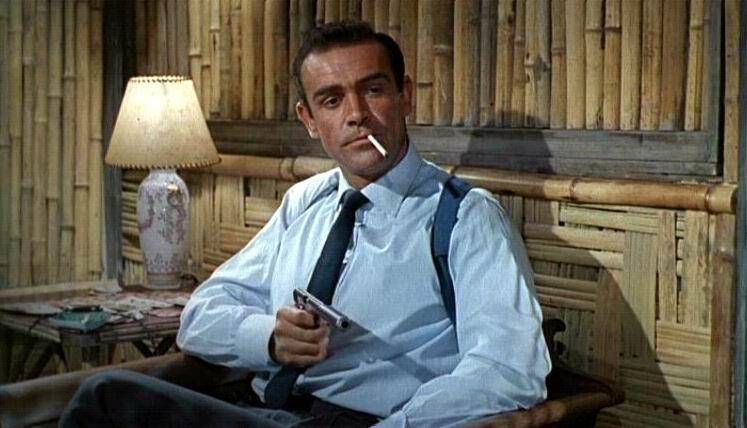
Dr. No


1962, UK, directed by Terence Young

The first Bond movie, despite its exotic trappings, is one of the most restrained in scale: almost all of the action takes place in relatively tiny Jamaica (or on Pinewood sets), rather than the near constant jet-setting that often proved confusing in later movies. While the overall template is already firmly in place - Bond takes on a sinister megalomaniac intent on world domination - many of the flourishes that would later prove so critical to the franchise (Desmond Llewellyn's turns as Q, for instance) have not yet been grafted on.

While the supporting structure is thus not quite as comfortingly familiar, Sean Connery, as Bond, appears to have been born fully formed into the part: from the first moment he appears onscreen, he exudes a charm and assurance that transcends the often rickety plot and the archly incredible villain. Though Ian Fleming's first Bond book had appeared almost a decade previously, Bond seems a perfect 60's hero: he embodies the attractions of the golden age of jet travel, apparently possessed of infinite resources and resourcefulness, and engages in casual sex and even more casual violence in a manner that seems to typify that decade, throwing off the comfortable but dreadfully unexciting 50's with glee. The first 'Bond, James Bond' and the familiar Bond theme remain as stirring as ever, while Ursula Andress's emergence from the sea is one of the franchise's most iconic and enjoyable moments.

Monday, July 17, 2006

Poisson d'avril


1954, France, directed by Gilles Grangier

It’s odd that the disc this film appears on is marketed as part of a collection of films featuring the hugely popular French comic Louis de Funès, since he appears in just two scenes, and his performance, the broadest of caricatures, is hardly his best work. The star of the film is the subtler Bourvil, cast, as so often, in a salt-of-the-earth part; the actors would be reunited a decade later in Le Corniaud and La Grande vadrouille, two of the French box-office’s biggest all-time hits. Although Poisson d'avril is exactly the kind of simple, production-line fare that prompted so much dismissive comment by the nouvelle vague critics and filmmakers (often one and the same) just a few years later, Bourvil’s easygoing charm and the often witty script (with dialogue by the great Michel Audiard, whose phrasing and rhythms cast a long shadow over French popular filmmaking of the 1950’s and 1960’s) ensure that the film remains very watchable. Gilles Grangier, who directed many of Jean Gabin’s later films, gives his actors room to savour the script’s best lines, while there’s a surprising vein of commentary on attitudes to the wartime experience.
Saturday, July 15, 2006

De battre mon coeur s'est arrêté


2005, France, directed by Jacques Audiard (The Beat That My Heart Skipped)

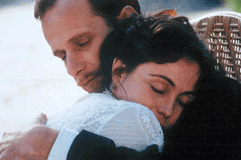
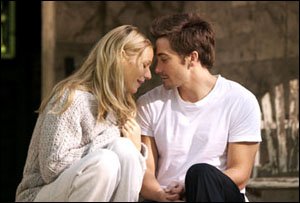
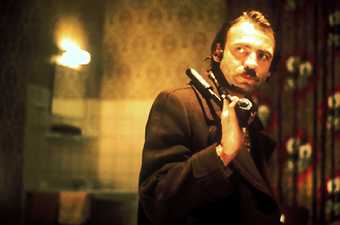
Director Jacques Audiard has carved out one of the most interesting resumes in recent French film, with his own very particular take on noir themes of violence and redemption, and fine skills as both a wordsmith (hardly surprising given that his father was the great dialoguist Michel Audiard) and a director of actors, especially of younger actors like Mathieu Kassowitz, Emmanuelle Devos and, here, Romain Duris. Though Duris has taken on edgy material before, he’s never been more convincing than in this film; the conflict between his professional violence and the calm he seeks in music is brilliantly conveyed in a performance of control mixed with explosive aggression. The plot is taken from James Toback’s 1978 film Fingers, but the adaptation is so seamless that it feels as though it was conceived in the underbelly of Paris, while the addition of a subplot involving a piano tutor who speaks no French is highly effective. Duris's Thomas should be exceptionally unsympathetic, given his unpleasant work in the employ of his slumlord father, but his desire for a better life, and his dedication to what seems like a foolish dream, not to mention the actor’s energy, render the character complex, confusing and appealing. There’s able support, too, from a rumpled Niels Arestrup, the underused Emmanuelle Devos, and Linh Dan Pham (who reveals her own capacity for anger to startling effect) as the piano tutor.
Friday, July 14, 2006

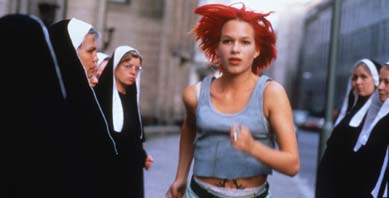
Lola rennt


1998, Germany, directed by Tom Tykwer (Run Lola Run)

Though it's nowhere near as profound as its philosopophical trappings would like you to believe, this remains one of the most sheerly enjoyable European movies of the 1990's. Director Tom Tykwer's fascination with coincidences, intertwined fates and split-second decisions (all present in earlier work like Winter Sleepers) is given full reign here, where the same tale (of a frantic 20-minute search for 100,000 Deutschmarks) is told three times, with the devil in the minor variations, and three profoundly different outcomes. Each version is separated by a brief interlude that fills in some of the back story between Lola (Franka Potente, who burns up the screen) and Manni (Moritz Bleibtreu), the boyfriend she's attempting to get out of trouble. While the pauses take themselves too seriously, they do help to make Manni, in particular, a more appealing character than his ne'er-do-well behaviour might otherwise allow (Moritz Bleibtreu's reserves of charm also help). Tykwer employs a full bag of cinematic tricks, switching camera styles, throwing in amusing photo-journal montages to outline the fates of minor characters, and adding a dash of split-screen action, all set to a frenetic techno beat. Lola rennt is also an essential Berlin film: although Tykwer's fictionalizes the geography (Lola's route is comical to anyone familiar with the Berlin map), the streetscapes of the post-Wall city are appealingly chronicled.

Tuesday, July 11, 2006

The Matchmaker


1997, UK/US, directed by Mark Joffe

Rating: ***

A hefty slice of cliché, The Matchmaker sends Janeane Garofalo, a political staffer, on a wild-goose chase to Ireland in search of her boss's Irish roots. However, she ends up at a local matchmaking festival (yes, they do exist), thereby enabling the filmmakers to lay on the Paddywhackery and loud Yank stereotypes with the thickest of trowels. Since it's a romantic comedy, though, the plot and realism (the Irish love interest is clearly Scottish) are beside the point: like most of its kind, this survives on the peformances, especially those of the supporting characters. While the US actors have pretty thankless roles (with the exception of Garofalo, whose usual spiky wit keeps things just off-balance), there's a small galaxy of fine Irish talent on hand, with Milo O'Shea and Rosaleen Linehan both enjoyable as rival matchmakers, a succession of nerdy looking men playing, well, nerdy men, and Jimmy Keogh performing some scene thieving of the most enjoyable kind as a wildely eccentric Aran islander.

Monday, July 10, 2006

Jaws


1975, US, directed by Steven Spielberg

More than 30 years on, Jaws remains the reference point for the summer movie: virtually nothing since has managed to marry the film's commercial success with the same level of cinematic virtuosity, and surely no other warm-weather blockbuster has had such a profound impact on the language of cinematic thrills. The fact that the big, bad shark looks like an overgrown bathtub toy (once Spielberg decides to reveal the beast: he's sensibly kept under wraps for most of the film, further ratcheting up the tension) is rendered irrelevant by the sense of panic and fear so expertly created. It's all the more disappointing, then, that too many of Spielberg's subsequent movies are beset with a sense of schmaltz that's almost entirely absent from this film; even the film's domestic scenes have a feeling of realism rather than the sentimental gloss so familiar in his later work. The sequences of macho bravado, too, seem to belong more to the work of Spielberg contemporaries like Scorsese or Coppola; beautifully played by Roy Scheider, Robert Shaw and Richard Dreyfuss, they add great depth to the undersea thrills, while Shaw's speech, scripted by John Milius, about the sinking of the USS Indianapolis remains one of the great movie soliloquies.

Sunday, July 09, 2006

Pirates of the Caribbean: Dead Man's Chest


2006, US, directed by Gore Verbinski

Rating: ***

There was much derisory comment when the first Pirates of the Caribbean movie was announced, given that the film was based on a theme park ride, and much surprise when it actually turned out to be quite a decent blockbuster movie. The sequel returns to the theme park origins, proposing thrills and spills aplenty, but a confusing plot and a laundry list of incidents and characters that's less than coherent. That's almost beside the point, however, since these flaws are brushed aside by the headlong action, and the often spectacular set-pieces (as outraegous as it might be to spend $200 million on a movie, it sure looks as though it all ended up onscreen, with stunning locations, large-scale shipboard battles, and the proverbial cast of thousands); my brain knows it's not good cinema, but the rest of me thinks it's too much fun to bother listening to my brain. While Johnny Depp's take on Captain Jack Sparrow inevitably loses some of its freshness this time around, there's a worthy villain in the shape of Davy Jones. The character is an amalgam of traditional and CGI effects, all wrapped around actor Bill Nighy, and the filmmakers do a remarkable job of preserving Nighy's distinctive, and often hilarious, facial expressions despite all of the makeup. Stellan Skarsgård also turns in a decent performance, as Orlando Bloom's old man, underneath layers of repellent sea-bottom materials.

Thursday, July 06, 2006

The Devil Wears Prada


2006, US, directed by David Frankel

Rating: ***

Behind the chiffon and the heels, this is age-old story of a small-town girl making it big in the city - though not always on her own terms. It's the kind of thing that Hollywood excels at - after all, the entire industry is built on dream-chasing - and The Devil Wears Prada is a worthy addition to the genre. Like most films set in the fashion industry, it does try to have things both ways, ridiculing the culture's self-obsessed denizens, yet delighting in the spectacular outfits. Similarly, while there's much comment on the stick-figure imagery of the fashion magazines, it's occasion for celebration when the already lithe Andy Sachs (Anne Hathaway) drops a dress size. Still, it's impossible to dislike a film that elevates cattiness to such heights, especially in the person of Miranda Priestly, a magazine editor who initially appears to be of Cruella de Vil proportions, played with tremendous gusto by Meryl Streep. Ms. Streep has plenty of fun with the character, pursing her lips and issuing orders with the most dismissive of waves (there's also a beautifully played scene of distress that showcases the actress's subtler side, and which provides a fine commentary on the strains and unreasonable expectations imposed on professional women). Ms. Hathaway does fine with the lead role - she's more than capable with fairytale material like this - while Stanley Tucci gives a lovely performance as Andy's one confidant in the cutthroat magazine business. There's a little too much musical montage - at times, it's like Pretty Woman on steroids - but otherwise this is pretty polished fare from a director who cut his fashion teeth on Sex and the City episodes.

Tuesday, July 04, 2006

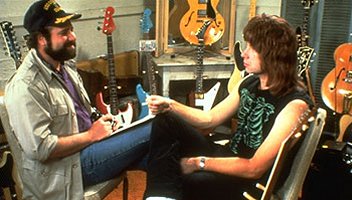
This is Spinal Tap


1984, US, directed by Rob Reiner

Rating: **

Proof that not everything ages well, This is Spinal Tap these days seems horribly dated and, unfortunately, nowhere near as consistently amusing (never mind flat-out funny) as its reputation might indicate. Even at 82 minutes, it sometimes seems tortuous, especially in the repetitive middle patch (when the semblance of a plot is introduced, late on, things pick up somewhat). The fact that the clichés of rock documentaries are so accurately skewered seems almost beside the point: since they are generally so tedious to start with, the notion of replaying them to comic effect is hardly welcome. There are intermittent moments of brilliance (the scene in which they discuss amplifiers that "go up to eleven" remains as funny as ever, for instance), but the characters (unlike those in Christopher Guest's later mockumentaries) are generally so unsympathetic that it's really an effort to remain in their company. Ultimately, too, the filmmakers aren't quite sure what effect they're looking for: the marriage of po-faced interview spoofery and absurdly puerile song lyrics is less than effective.

Monday, July 03, 2006

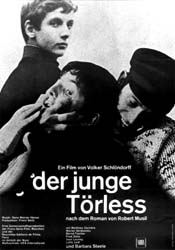
Young Törless


1966, West Germany, directed by Volker Schlöndorff (original title: Der Junge Törless)

Although it's the film that launched the New German Cinema as a critical movement, Young Törless paradoxically has its deepest roots in French cinema; that owes much to director Volker Schlöndorff's cinematic education on the other side of the Rhine (he studied in Paris and worked on films by Resnais and Malle). The scenes of philosophical discussion are the stuff of many a Parisian drama, although in the context of a story of systematic and disinterested bullying in a conservative Austrian boys' school, there's an unavoidable and immediate reference point in recent German history. While the Third Reich hangs over the film, it doesn't obscure the acute dissection of the social order in schools the world over, and the toxic behaviour therein. As the film progresses, the action takes a back seat to lengthy musings on the reasons behind the bullying, discussions that sometimes seem beyond the years of the boys in question. The philosophizing is open-ended enough that it's hard to decipher whether Schlöndorff is making a brave (in 1966) point about the ability of even the mild-mannered to behave in aberrant ways given the right circumstances, or a rather more controversial point (to say the least) about the abject victims of bullying bringing it on themselves; either way, there's no escaping the power of the latter scenes, in which Törless tries to explain his own reasons for participation in the film's key events, and which compel the viewer to examine how he or she would behave in the same situations.

Thirteen Conversations About One Thing


2003, US, directed by Jill Sprecher

Rating: ***

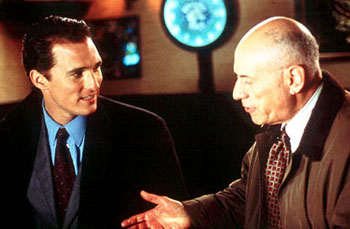
There must be a screenwriting program somewhere that generates movie templates: this film and Crash are cut from remarkably similar interwoven-tales cloth, although the latter film's often coruscating take on race and racism is replaced here with gentler musings on the nature of happiness. Like Crash, the performances raise this film a notch above the ordinary: Alan Arkin, as an often unpleasant cynic, and Matthew McConaughey, who plays that rare beast, the screen lawyer with a conscience, are especially strong, but there is ample support from familiar and unfamiliar players. While the film is interested in exploring what constitutes happiness, there's remarkably little of that emotion on display; indeed, these characters are defined primarily by their ennui and even outright sadness (particularly the character played by John Turturro, whose performance, no doubt prompted by the director, is rather insipid). There's more than a hint of artificiality in the set-up that requires regular interactions between these very different characters, but the pacing is decent and the characterizations generally compelling enough to distract from the credibility issues.

Sunday, July 02, 2006

Ice Age: The Meltdown


2006, US, directed by Carlos Saldanha

Oh, the things you watch when trapped in a plane for four hours. With Pixar setting the bar so high in the age of computer animation, Ice Age: The Meltdown's lack of narrative and visual invention is all the more apparent. The main voice cast is almost completely wasted (why Denis Leary agreed to this sequel is a mystery, since he barely gets a single interesting line), while the funniest sequences in the film generally have little to do with the main action; the running joke about an acorn-obsessed squirrel is far more diverting than the actual plot, while the film only really bursts into life with an inspired vulture-sung rendition of "Food, Glorious Food". Given the success of the Pixar features, it's extraordinary that the Ice Age filmmakers don't make even a cursory effort to ensure their film is interesting to both children and adults, but then again, the near $200 million in box office is dispiriting evidence that they didn't need to bother.

Tuesday, June 27, 2006

Shopgirl


2005, US, directed by Anand Tucker

Rating: ***

It's unfortunate that Shopgirl is pigeonholed as a romantic comedy, since it's far more about mood and tone than ticking off the standard plot elements of that genre. Like the (Steve Martin) novella it is based on, Shopgirl is a slight affair, with the slenderest of plots, but Anand Tucker's careful direction and several appealing performances elevate the film; the limpid shots, carefully constructed colour schemes, musical background and acute sense of big-city loneliness are reminiscent at times of Wong Kar-Wai's In the Mood for Love, in a minor key. Claire Danes delivers her best big-screen performance as a Vermonter transplanted to Los Angeles; while she rejects the life her parents have chosen, she's living in a rut of her own on the West Coast, leaving her prone to the attentions of oddballs. Her suitors are played by Jason Schwartzman (who straddles the fine line between annoying and amusing with some skill) and Steve Martin (who seems determined to eradicate the last traces of the wild and crazy guy with his often unsympathetic sugar daddy portrayal). The air of quiet despair and the gorgeous cinematography create a haunting sense of the anonymity of Los Angeles; while Martin has always been a booster of that city, he's also acutely aware of its human failings.

Monday, June 26, 2006

The Lake House


2006, US, directed by Alejandro Agresti

A preposterous, and very enjoyable, time-travel romance involving a letterbox that connects two people - Keanu Reeves and Sandra Bullock - inconveniently separated by two years, The Lake House is made with the kind of old-fashioned craftsmanship that often seems to have disappeared from Hollywood. The filmmakers are aware of the inherent absurdity of the central conceit and acknowledge this head-on in several amusing early scenes, as if to challenge the viewer to suspend his or her disbelief; the effort is more than repaid, with Reeves and Bullock proving the Speed chemistry was no fluke. While the central story remains consistently engaging, it's in the details that the picture shines: the elegant photography (with gorgeous shots of Chicago's architecture); the well-cast supporting players (Shohreh Aghdashloo, as Bullock's boss, delivers the film's wittiest lines in a lovely bar scene); the shot of Bullock in the hospital corridors, cribbed from the beginning of La Baie des anges, that perfectly underlines the sense that events are spiralling out of control. For all the mediocre movies they've appeared in, Bullock and Reeves have retained their charm; it's nice to see them play actual adults, with adult careers and concerns, while still injecting a hint of Hollywood romance.

Saturday, June 24, 2006

X-Men: The Last Stand


2006, US, directed by Brett Ratner

Rating: **

Although it's easy to dismiss most comic book films as popcorn junk, it's not until you see the work of a journeyman like Brett Ratner that you can finally appreciate what director Bryan Singer brought to the first two films: coherence; effects generally at the service of the action rather than for their own sake; even a reasonably well-worked philosophical underpinning and some decent performances. Here most of that disappears, and, worse, characters who had been developed in the first two films are either given short shrift or disappear entirely (only Ian McKellen seems to have more screen time; Hugh Jackman, Famke Janssen and Halle Berry look like they're there for the paychecks and nothing more, and who could blame them when the script is so bland). Although are there are undoubted moments of entertainment, the action is so absurdly over the top at times (and the body count exponentially higher) that the core of humanity (or mutantity) from the first two films is lost, plus the frisson generated by the conclusion of the second film is wasted in this sequel (the attempts to generate a similar frisson here, both before and after the credits, are far less successful).

Tuesday, June 20, 2006

La Noire de...

1966, Senegal/France, directed by Ousmane Sembène

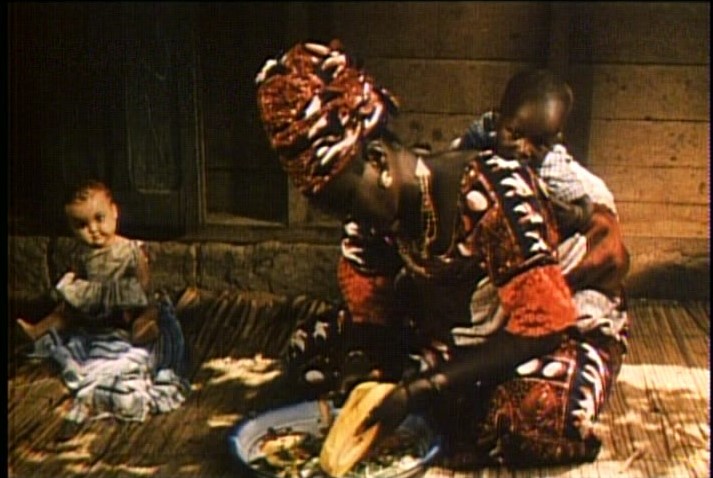
Generally recognized as the first feature film (at just over an hour) made by a black African director, La Noire de... arrives fully formed, with an angry political conscience and ambitions to critique the colonial and post-colonial experience that are, by and large, met. Of course, Ousmane Sembène was hardly a neophyte, having already published several novels that shed light on colonial, and immediate post-independence, African life. The brief tale of a young African woman who travels to the French Riviera to work as a nanny for a French family who had also employed her in Senegal, the film is an outraged coming-to-consciousness tale, as the young woman evaluates her own self-worth in light of the treatment she experiences at the hand of her employer. Although her ultimate fate is perhaps rather extreme, there's nothing unusual, even today, in some of the daily humiliations experienced; if Sembène's vision is disheartening, that's perhaps especially because little has changed in the relationship between colonizer and colonized in the intervening 40 years. Although Sembène received his formal cinematic training in the USSR, the film is shot through with the influence of the early nouvelle vague films, lending the film an immediacy and power that belie its relative technical limitations.

Monday, June 19, 2006

The Best of Youth

2003, Italy, directed by Marco Tullio Giordana (original title: La Meglio gioventù)

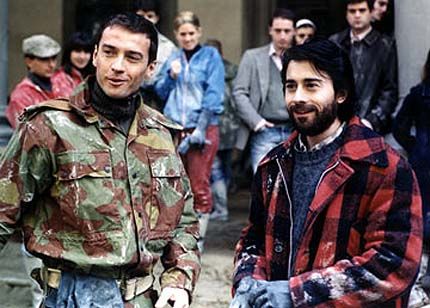
Originally conceived as a mini-series for Italian television, and then given a theatrical release instead, The Best of Youth is a remarkable family saga set against the changes in Italy over the period from 1966 to 2003. While the factual backdrop - the 1966 Florence floods, 1970's student activisim in Turin, the Red Brigades, the assassination of Judge Falcone in Sicily, and so on - is fascinating, the film is ultimately more interested in domestic affairs, most specifically in the portrait of two brothers, Nicola and Matteo, and their divergent careers and outlooks. It's an exceptionally warm, generous piece of work: generous in running time, but also in its view of its main characters, who are given the time and latitude to make mistakes, without ever losing their essential dignity. Over the course of six hours, those characters are so appealing that it's hard to immediately accept the film's most shocking moment: I wasn't able to process that development for several seconds, so jarring was its effect. As with most family dramas, there are inevitable moments of soap opera given the need for continual plot development, while the ending isn't all that hard to predict, but those are minor quibbles given the overall skill and care with which the story is told; the direction has all the hallmarks of old-fashioned craftsmanship. For the most part, the acting, too, is excellent (although some of the actors are a little too fresh-faced to entirely convince in the later stages), while the rich vein of humour conveys the bonds of family and friendship in deeply rewarding fashion.

Wednesday, June 14, 2006

X2


2003, US, directed by Bryan Singer

Less focused than its predecessor, and perhaps a shade less political in the aftermath of 9/11, X2 steps up the sheer popcorn value with a couple of new characters - Alan Cumming as Nightcrawler is an especially strong addition - and several highly entertaining set-pieces. Although director Bryan Singer isn't able to inject the depth he clearly hankers after, he's adept at pacing the action, and as a consequence the film mostly justifies the two-hour plus running time. The us-against-the-world set-up is given a new twist this time around, forcing 'good' and 'bad' mutants to cooperate when faced with an especially nasty human (Brian Cox), with questions of loyalty abounding. Ian McKellen has some lip-curling fun - he teeters on the edge of self-parody, enjoying the vaguely Hannibal Lecter aspects of his imprisonment - but Patrick Stewart's role is underwritten this time around in favor of the younger set; their fight scenes show a clear post-Matrix influence. The conclusion is an odd combination of the deeply unsetttling wrapped in the guise of reassurance, but there's no doubting the atmospheric effect.

Monday, June 12, 2006

Bay of Angels


1963, France, directed by Jacques Demy (original title: La Baie des anges)

Rating: ***

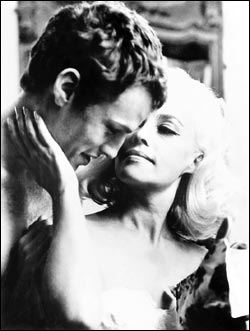
A light concoction whipped up in a couple of days and shot rapidly by Jacques Demy while he dealt with a production delay, La Baie des anges has little of the insight of either his previous Lola or his subsequent, glorious Les Parapluies de Cherbourg. That's not to say the film is without its pleasures: there's nothing wrong, after all, with 80 minutes in the company of Jeanne Moreau, although her character's girlish affectations are occasionally tiresome. She plays a compulsive gambler who links up with the youthful Claude Mann for a spree on the Riviera, in which vast-sounding sums are won and lost; I suspect that the amounts are given in old francs, about as meaningful as being an Italian millionaire in the days of the lira. The film attempts, with some success, to mirror the highs and lows of the gambler's life, although the transformation of the coquettish Moreau into an unpleasantly grabbing gambler each time she passes a roulette table (the effect is quite extraordinary) hardly makes the lifestyle appealing. Mann, for his part, is oddly emotionless, especially given that he's in the company of such a stunning woman; the final shot is quite unconvincing as a consequence, and no match for the wonderful seafront opening, with Michel Legrand's music in full over-the-top flight.

Sunday, June 11, 2006

X-Men


2000, US, directed by Bryan Singer

One of the few consistently absorbing comic-book adaptations of the past decade, X-Men tries to inject an extra layer or two of meaning to the sci-fi action, and while the effort doesn't entirely come off, there's more intelligence here than in the vast majority of popcorn fare (even though the Holocaust allusions don't seem to have been entirely thought through). Although it's a pre-9/11 movie, it's hard, now, to see the film without reference to the climate of fear created since 2001, particularly given the conflict of values that lies at the heart of the film, pitting ordinary humans against their mutant (and thus possessed of unique skills) brethren. While there's plenty of action, particularly near the conclusion, the film is far more concerned with motivations and personal relations than with explosions, which lends the outbreaks of fighting, when they do come, that much more charge. Hugh Jackman is excellent as Wolverine, a conflicted yet (of course) noble mutant, while both Patrick Stewart and Ian McKellen do the English thesp thing with their usual aplomb; Anna Paquin's Rogue is outstanding, both as a character and a performance.

Saturday, June 10, 2006

Zoolander


2001, US, directed by Ben Stiller

Rating: **

The Ben Stiller-Owen Wilson-Vince Vaughn-Will Ferrell axis seems to dominate US film comedy these days, to scattershot effect; the hits (like Wedding Crashers) can be excellent, while the misses (Anchorman) are plain dreadful. Zoolander falls somewhere in the middle, taking a sketch idea and stretching it to feature length. There are sequences of inspired madness in this tale of vacant male models (Stiller and Wilson play rivals), as well as some very funny send-ups of the fashion world (which seems like it's already beyond parody), mixed with less successful patches, particularly most of the scenes involving Will Ferrell (whose character looks like it was one of the models for Tim Burton's new version of Willy Wonka). Stiller's gormless Derek Zoolander is an amusing creation - perhaps especially when he goes home to his family in the coal-mining country of southern New Jersey - with just enough charm to keep him on the right side of annoying, while Wilson's consistently hilarious turn keeps things watchable once the central premise becomes wearing.

Wednesday, June 07, 2006

Les Destinées sentimentales


2000, France/Switzerland, directed by Olivier Assayas

The usual ponderous conventions of the period picture are thrown out the window in director Olivier Assayas's absorbing saga of provincial upper-class Protestant life in the first decades of the twentieth century. Assayas's exceptionally mobile camera - so swift-moving that it's almost disorientating, especially in the first hour, which sketches life for the younger set in exuberant fashion - is a counterpoint to the more leisurely set-up favoured by most directors faced with period material (Alain Corneau's series of fixed tableaux in his beautiful but chilly Tous les matins du monde provides a useful contrast). The sense of constant motion is especially heightened when following the character of Pauline Pommerel (Emmanuelle Béart), an independent-minded young woman who acts as a catalyst for change in the set, even staid existence of Jean Barnery (Charles Berling), the son of an industrialist who has chosen a career as a pastor. Although the narrative is occasionally elliptical (Assayas chooses to have more than one key event take place offscreen), and the music is sometimes rather too obvious (particularly in underlining the 'happy' periods in the characters' lives), the sense of a veryparticular time and place (centered around the porcelain industry in Limoges) is exceptional. The film, like Bergman's Fanny and Alexander, wears its period trappings lightly, ensuring they don't get in the way of the action - never better, perhaps, than in the wonderful early scenes at a gala evening, shot with the same immediacy as the central party scene in Assayas's brilliant 1994 film L'Eau froide. The performances are solid to outstanding: Béart has perhaps never been more radiant, such that when her character experiences a downturn, it's like a light going out.

Monday, June 05, 2006

Running Out of Time


1999, Hong Kong, directed by Johnnie To

Johnnie To has proved to be something of a critical darling in the Western press over the past couple of years, with writers desperate to locate the latest auteur in Hong Kong's rampantly commercial cinema (although To hasn't made the job easy by switching between crime thrillers and the kind of Hong Kong comedy that doesn't translate as well to overseas markets). Running Out of Time belongs to the first wave of To crime pics, and like many similar genre entries, the weak, sometimes laughable, plotting is far less important than the often stylish action. The core of the picture is a cat and mouse intrigue involving a crime 'mastermind' (played by Andy Lau) and an unconventional cop (Lau Ching-Wan); their interaction, never especially realistic, becomes actively incredible as the film progresses. To saves things, though, with his fine pacing, never allowing the action to flag, and sharp cinematography (his slick take on Hong Kong's streets was re-cycled, to even better effect, by the directors of Infernal Affairs); both lead actors are strong, too, although some of the comic support is pretty weak from this outsider's perspective.

Tuesday, May 30, 2006

Mandabi

1968, Senegal/France, directed by Ousmane Sembène

The first full-length feature from the great Senegalese director Ousmane Sembène, Mandabi gives free rein to his strain of humanism, and his eye for the details of the everyday. While his more recent films - Faat Kiné and Moolaadé - are explicitly about the status of women in Africa, that concern is also clearly in evidence here, and Sembène is quick to credit women with providing the backbone of family - and by extension community - life. The core of this film, though, is a satire on bureaucracy, greed and corruption, a biting indictment of Senegal's post-independence direction (his political commentary was even sharper in 1974's Xala), told through the experiences of a middle-aged man who receives a bank draft from a nephew in Paris. His attempts to cash the draft bring him into the contact with the worst of Senegal's bureaucracy, and not a few thieves; while the lead character is often spiky and sometimes foolish, his inherent decency in the face of continued opportunism gives him a quiet dignity, a value in short supply. Sembène doesn't hector us, though - at elast not until the very end - reminding us, subtly but insistently, that even the opportunists need to make a crust in a society always teetering on the verge of disaster.

Sunday, May 28, 2006

The Final Cut


2004, US, directed by Omar Naïm

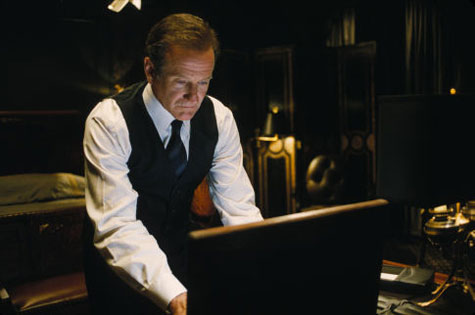
The least successful of a string of more 'serious' movies that Robin Williams made a couple of years ago, The Final Cut boasts a reasonably interesting sci-fi premise - imagining a future in which humans can have their memories implanted on a chip, with the creation of a final, sanitised version after death - that is betrayed by poor execution. Given the short running time and the plot confusions, there's a strong sense that the film was trimmed from a more expansive version, although another 30 minutes of this stuff hardly seems appealing. Williams plays a 'cutter', someone who does the post-mortem memory editing, but it's almost impossible to care about someone who spends the entire film with one fixed expression (Williams's standard 'melancholy' face; it takes a much stronger director to coax a proper performance from him). Various larger themes are raised, but given little serious exploration, and the end result is a frustrating might-have-been.

Friday, May 26, 2006

Kinamand


2005, Denmark, directed by Henk Ruben Genz

Rating: ***

A slight but agreeable entry in the cross-cultural encounters genre, Kinamand (the Danish word for Chinaman) is powered by a fine central performance from Bjarne Henriksen, and often witty observations on the meeting between an unhappy Danish plumber and the extended family of a Chinese restaurant owner. In structure and tone, it's similar to the excellent Norwegian/Swedish production Kitchen Stories, without that film's ring of more universal truth; both films employ an episodic structure and feature the rehabilitation of lonely, closed men. Like that film, Kinamand also inhabits a hermetic world, in which outside developments are almost irrelevant: until the end of the film, there's barely a month when the action shifts away from the grey city block where the plumber and restaurateur live and work. While the film has some sharp-edged marital commentary in its early sections, ultimately it's a warm-hearted affair, although there's an emotional honesty to the final scenes that ensures the film stays away from excess sentiment.

Thursday, May 25, 2006

Pickpocket


1959, France, directed by Robert Bresson

Bresson's Pickpocket is a salutary reminder that the directors of the nouvelle vague didn't entirely emerge from the ether, nor did they have a monopoly on artistic innovation (indeed, by the time Godard, Truffaut and others emerged at the end of the 1950's, Bresson had already matured as an artist), although given Bresson's asceticism it's no great surprise that he took a back seat in terms of public visibility (and no great surprise that the sheer charm of a film like A Bout de souffle led to its over-valuation). 

While superficially simple, Pickpocket tends to raise as many questions as it does answers, for the motivations of the characters are opaque and even inexplicable - in this, the lead character certainly evokes Camus's anti-hero Meursault, although Bresson's notion of redemption is rather different. The director pares the dialogue down to an absolute minimum; words, unlike in so many French films, provide little explanation for the characters' state of mind, and the actors sometimes deliver startling information in the blankest of tones, very much part of Bresson's unique style. The (swift-moving) action -- particularly in the virtuoso re-creations of various pickpocketing techniques -- effectively draws the viewer in, but even given the film's brief running time it proves hard to sustain the air of near-existential mystery, while the lack of any psychological insight makes the ending hard to swallow; there's no sense of the context from which the resolution abruptly emerges.

Wednesday, May 24, 2006

The Insider


1999, US, directed by Michael Mann

The Insider is the best marriage to date between a strong storyline and Michael Mann's striking visual imagination. By Hollywood standards, Mann is an authentic visual artist, here employing a cool, glistening palate (greys, blues, overcast skies and rain), and elegantly composed shots with the occasional, startling flash of colour (his use of music, too, is unsettling and often so insistent that it becomes a character in its own right). It's no great surprise to see Mann take on, once again, a claustrophobic, male world, telling the interwoven stories of malfeasance in the tobacco industry and the network television attempt to expose that malfeasance (the script is exceptional, expertly shifting the emphasis between storylines without creating distractions). Hollywood loves the kind of tale wherein big corporations get their comeuppance (Erin Brockovich, North Country, A Civil Action), but The Insider is far more complex, dealing in shades of grey and probing as insistently at the compromises of network television news (and particularly 60 Minutes, which still likes to think of itself as a serious news outlet, but which is ill-equipped to tell this particular tale, given CBS's own business interests) as it does at the evils of Big Tobacco. Russell Crowe and Al Pacino (as, respectively, a tobacco whistle-blower and a 60 Minutes producer) are both exceptional; in acting terms, Crowe gets the showier role, and his transformation after the hulking cop of LA Confidential is arresting. The supporting cast, too, is generally strong: Christopher Plummer channels Mike Wallace (who comes off as hypocritical opportunist) to eerie effect, while Bruce McGill and Colm Feore have fun playing that rare thing, the good lawyer. By contrast, the female roles - as so often in Mann's films - are of minimal interest; Gina Gershon has an especially thankless role as a bitchy CBS attorney.

Friday, May 19, 2006

Empire of the Sun


1987, US, directed by Steven Spielberg

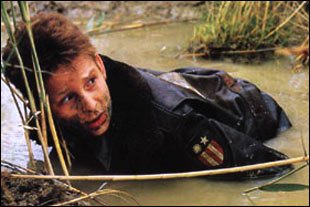
Spielberg takes so much flak - especially from "serious" critics - for his sentimentality and infantilization that his telling of more adult, complex tales often comes as something of a surprise, no more so than in Empire of the Sun, a pretty clear-eyed adaptation of the rigorously unsentimental J.G. Ballard autobiographical novel. The theme, ultimately, is that of the descent of man, particularly in the prison camp context, where even otherwise 'good' people make moral compromises in order to maxmize their own chances of survival (a theme that doesn't really appear in Schindler's List, although the topic would be considerably more explosive in the context of the Holocaust). Despite Spielberg's clear affection for his youthful protagonist, Jim (Christian Bale) descends as far as anyone; the skills he acquires to charm his way out of any situation come at a heavy psychological price (indeed, by the end of he film, he seems like a literal shell), where the notion of loyalty to something beyond oneself is entirely subsumed by the need to get through each day. Even where Spielberg veers towards mawkishness, the film is kept on the rails through strong supporting performances, and the inherent interest in this relatively little-known corner of World War II history. Christian Bale, incidentally, is extraordinary.

Monday, May 15, 2006

Friends with Money


2006, US, directed by Nicole Holofcener

Rating: ***

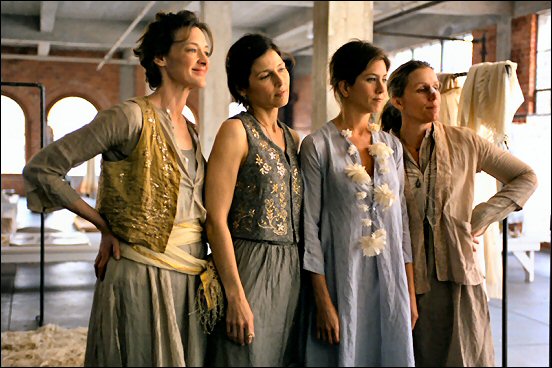
With all of her bubblegum success, it's easy to forget that Jennifer Aniston has some tricks up her acting sleeve; she's the best thing in Nicole Holofcener's engaging and often very funny film, quite a trick when the company includes Frances McDormand and the ever-luminous Catherine Keener; Aniston's lack of vanity here is especially notable. The three actresses - and Joan Cusack, to whom I've never warmed - play a quartet of Los Angeles pals, who, along with their various significant others, lead intertwined lives in which - hence the title - money or the lack thereof plays a major role. Of course, Aniston's cause is immeasurably helped by the fact that she plays much the most pleasant of the four women, even with a vein of mania; McDormand in particular has to mine a vein of unpleasant pettiness that's the antithesis of her more accustomed salt-of-the-earth types (particularly post-Fargo). While Holofcener creates a galaxy of strong, interesting female roles, she's not interested in white-washing her characters, which lends the film considerable dramatic tension, even when things start out civilized. Structurally, the writer-director also does a fine job of interweaving the very different stories, never allowing any one character to spend too much time either on or off screen, while still ensuring that the changes of tempo aren't distracting.

Friday, May 12, 2006

The Graduate


1967, US, directed by Mike Nichols

Rating: ***

Nearly 40 years on, The Graduate remains energetic and frequently amusing, although as the film's running time slips by, it's hard to avoid the sense that it have as much to say as it would like us to think, despite its status (some of it quite conscious) as a commentary on a generation. The observation that upper-middle-class Southern California might be superficial and obsessed with financial or social status is hardly an original thought (nor was it original in 1967); the social world of the film is so oppressive that only a fool wouln't want to rebel against it (even so, the final scene is surprisingly liberating). Dustin Hoffman's star-making performance mostly consists of looking startled by the events going on around him - things seem to happen near him rather than to him - but his fixed expression is so amusing that it carries him throughout the film, while his hesitant line-readings brilliantly capture his character's many confusions. While she's as much icon as actual character, it's hard not to think that Mrs. Robinson gets the short end of the stick: while she's undeniably manipulative and hypocritical, she's also, quite clearly, a troubled, unhappy woman, but the film isn't really all that interested in her fate.

Monday, May 08, 2006

Before Sunrise


1995, US/Austria/Switzerland, directed by Richard Linklater

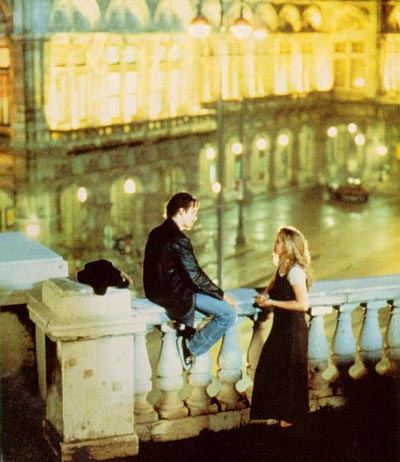
With a set-up as simple as this - two travelers, one American (Ethan Hawke), one French (Julie Delpy) meet on a train and spend most of a day wandering Vienna - it's easy to assume that director Richard Linklater simply turned his camera on and pointed it at the actors. In fact this a very artfully constructed film, with carefully modulated highs and lows, paralleling the process by which the two leads get to know one another, alternately drawn in and pushed back with each series of personal revelations. In sensibility, the film is more French than American, in that these characters get to know one another through words rather than deeds; their attempts to impress each other verbally occasionally fall flat, but that's ultimately key to the charm of the film, which never tries to shade the characters' imperfections (both are also convincingly aware of their excusable flaws). While the core of the film is the blossoming human romance, Linklater also delivers a love letter to Vienna, seeking out some of the city's quirkier corners and inhabitants, and conveying the sense of a city with mysteries hidden around every corner. Both actors are strong; while their sprawling conversations are beautifully played, they also have fun with the silences, never more so when they share a music listening booth and aren't quite sure where to look.

Friday, May 05, 2006

Spanglish


2004, US, directed by James L. Brooks

Rating: **

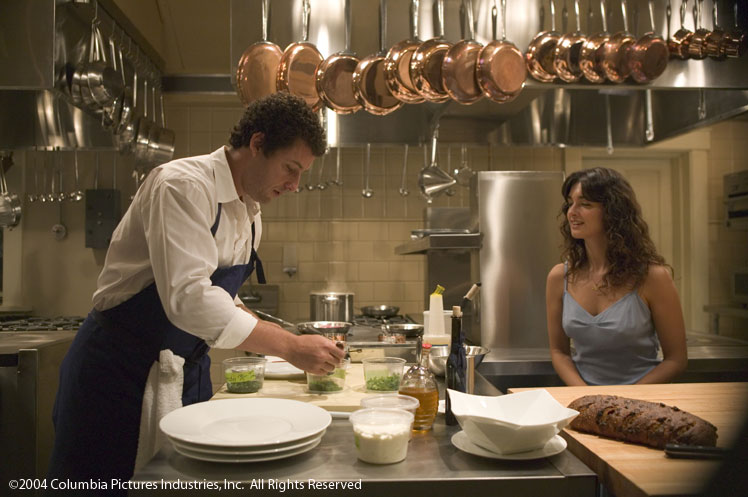
While James L. Brooks has made some fine, entertaining fare (Broadcast News and As Good As It Gets, in particular), here he seems incapable of deciding whether he's making a heartwarming drama or a pointed social satire - which is a shame, especially since he coaxes an excellent, understated performance from Adam Sandler. Sandler plays John Clasky, a successful LA chef with an overbearing wife (Tea Léoni) who hires a Spanish-speaking maid, Flor (Paz Vega), and life lessons ensue. Given Brooks' background in small-screen fare, it shouldn't be a great surprise that he crafts a setup straight out of sitcom central, but it's still astonishing to be presented with the scenario of a wise (and winsome) maid teaching a family of wealthy professionals a thing or two about honour and, well, the right way to live. Thankfully for Brooks, Vega and, especially, Sandler (along with the two young actresses playing their respective daughters) are both very watchable (more so than the trite story deserves), but poor Léoni is saddled with a truly obnoxious role with not a redeeming grace note in sight.

Tuesday, May 02, 2006

Proof


2005, US, directed by John Madden

Rating: ***

A solid adaptation of the Pulitzer-winning play, Proof features a fine performance from Gwyneth Paltrow; it's a major step-up from the overrated Shakespeare in Love (also directed by John Madden). Paltrow plays Catherine, a young woman who has lived in the shadow of her mathematician father (Anthony Hopkins), a man who was a genius in his youth, but who was later ravaged by psychiatric illness. In the aftermath of his death, Catherine has to deal with an overbearing sister (Hope Davis, playing successfully against type) and a young mathematician in search of 'lost' work (the very un-nerdy Jake Gyllenhaal). Director Madden does a decent job taking the play beyond its stage origins, although the house around which the action is centered does have a certain theatricality; the price of movie realism is the loss of several longer speeches, particularly from the father (though Hopkins seems so sleepy, it's perhaps no great loss). Paltrow shows skill in playing an often unsympathetic central character, caught between her commitment to her father and her desire to develop an independent existence.

Thursday, April 27, 2006

The American Friend


1977, Germany, directed by Wim Wenders (original title: Der Amerikanische Freund)

While The Talented Mr. Ripley gave Patricia Highsmith's character some mainstream cinematic exposure, European directors have had much more fun with Tom Ripley, whether in René Clément's Plein Soleil or here, in Wenders' take on the amoral but really rather entertaining anti-hero. Ripley (played by Dennis Hopper, still clearly recovering from the 1960's) isn't front and center here, though, in this tale of an ailing German picture-framer (Bruno Ganz, terrific) who is drawn into a murky netherworld when a crime boss convinces him that he is actually dying, and promises money to care for his family in exchange for a spot of murder. Ripley plays a kind of go-between, sniffing out especially vulnerable souls, and charming them into performing the most extraordinary crimes; there's a tremendous frisson every time Hopper appears on screen, and yet his Ripley remains utterly beguiling even after the knowledge of his actions. Like many of Wenders's movies, The American Friend spends much time on the move, as if the characters are constantly trying to outrun their own moral inadequacies. Wenders has fun casting his cinematic heroes in small roles (Sam Fuller, Nicholas Ray, Jean Eustache), while the DVD features one of those great 1970's-era Euro-trailers that reveals almost nothing about the movie.

Wednesday, April 26, 2006

The Englishman Who Went Up a Hill But Came Down a Mountain


1995, UK, directed by Christopher Monger

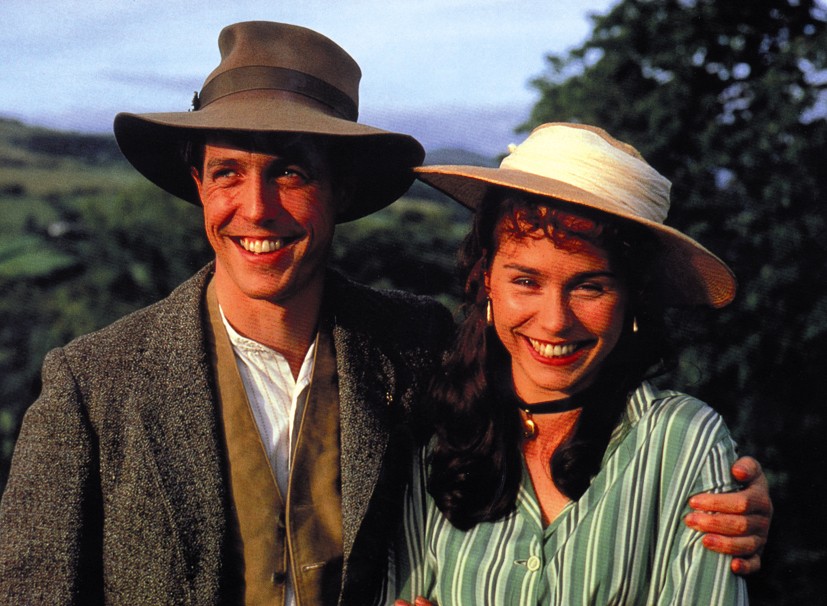
Part of the post-Four Weddings wave of Hugh Grant films, Englishman is the tale (based on a true story) of a London-based surveying team dispatched to the Welsh border, where they discover that a local 'mountain' is in fact a few feet short of that designation, and is instead a humble hill - news that the locals take great exception to. With a streamlined plot (the villagers hear the bad news and implement a scheme to deal with it), the film's running time is mostly devoted to the local characters (or indeed caricatures): the randy publican; the moralizing reverend; the feisty local lass, and so forth. It's not entirely light-hearted, though, for the film takes place against the backdrop of the First World War, and most of the younger men are absent. The villagers' efforts to reclaim the mountain are with the absent soldiers very much in mind, lending a melancholic note to cut through the whimsy, while the real-life echo in the closing minutes has a surprising power.

Monday, April 24, 2006

The Proposition

2005, Australia, directed by John Hillcoat

It's pretty reductionist simply to pigeonhole The Proposition as an "Australian Western", since it adds layers of local meaning to the usual Western tropes, not least an exploration of the relationship between man and landscape that is a recurring theme in Australian cinema, whether dealing with Aboriginal or white characters. Set in the 1880's, the film tells two parallel stories, one involving a British officer (Ray Winstone) reflecting on the meaning of his job in the sweltering Queensland outback (where he and his wife - Emily Watson - attempt to preserve some measure of civility) and the other centered on two outlaw brothers, player by Guy Pearce and Danny Huston. 

Huston's character is an out-and-out psychopath (quite a contrast to the more insidiously nasty character he played in The Constant Gardener), whose brutality is depicted unflinchingly, as befits a film determined to cast aside any romantic notions of frontier life (most of the actors look absolutely filthy throughout the film). Director Hillcoat expertly cuts between the two stories, relieving the thuggery with cool interludes in the Winstone-Watson home (Watson looks as though she's about to float away most of the time), while effectively raising the tension as we move towards an inevitable final confrontation. The performances are very strong: Pearce is elemental underneath the layers of grime, while Winstone is simply outstanding, conveying a moving sense of his character's innate decency and moral dilemmas. Although Nick Cave's script is pared down to the point of mythology, his dissection of the wilder fringes of the colonial era in Australia rings true; the use of old photos over the credits underlines the sense of realism.

Sunday, April 23, 2006

Brief Encounter


1945, United Kingdom, directed by David Lean

Although much beloved, particularly in England, Brief Encounter is rather wearing 60 years on. A stagy account of a short affair between two married people, it all seems astonishingly passionless. For all the frantic devotions of love, there's little sense of real physical attraction: it's the least appealing side of British stuff upper lip mythology. While there's something appealingly ordinary about Trevor Howard and Celia Johnson, their characters rarely create the sparks that a tale like this requires, while the supporting cast, mostly colourful English 'types', is often quite distracting. The film came out just months after the end of the Second World War, and yet there's little, here, to celebrate about the English way of life; that war, too, is completely, and oddly, absent from any of the conversations around which the film is centered.

Saturday, April 22, 2006

Infamy


2005, US, directed by Doug Pray

While it's nothing special as a contribution to the documentary format - given the subject matter, it's aesthetically disappointing - Infamy does feature some highly entertaining, eloquent graffiti artists and select examples of their work (on walls, railway cars and more or less every urban surface imaginable). It's hard to know how representative these particular artists are of the wider tagging/graffiti milieu - some of them are clearly at the top of the game artistically (like Saber, based in California), while all are effective commentators on their work and motivations - but there's no doubting their (sometimes misguided) devotion to their work. While artists like Saber or Toomer focus on murals - some of them tours de force of skill and impact - others, particularly Earsnot and Claw, seem to have an obsession with self-publicity, writing their names on everything they see like so much visual litter (Claw, too, gives off the impression of a middle-class girl nursing an obsession with the streets). Whatever you think of them, though, director Doug Pray has found some fascinating raconteurs, often witty and occasionally, unexpectedly wise.

Thursday, April 20, 2006

Flightplan


2005, US, directed by Robert Schwentke

Flightplan starts out as a surprisingly spooky, consciously Hitchcockian movie, only to end up as something far more conventional. It's disappointing, really, that script-writers almost never think beyond the obvious resolution: there's an intriguing idea buried in this film, and it's sustained for two-thirds of the film (to its credit, Flightplan doesn't overstay its welcome, with a lean 86-minute running time). Jodie Foster is quite effective as a woman who's just been widowed, and who is travelling back to the US from Germany in the company of her young daughter (one of the spookier moppets to appear on screen of late); she also just happens to be an airplane engineer who helped design the plane she's traveling on. When she falls asleep, her daughter disappears, and the crew and other passengers give the impression that they've never seen the child on board (her name doesn't even appear on the manifest). Foster doesn't tend to play characters who give up easily, though, and she doesn't go quietly here. In support, Peter Sarsgaard has a rather thin role, but Sean Bean is excellent as the captain, while there's a vein of post-9/11 social commentary that's, thankfully, laid on reasonably lightly.

Saturday, April 15, 2006

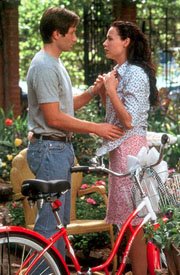
Return to Me


2000, US, directed by Bonnie Hunt

Since the average romantic comedy is chock-full of coincidence and contrivance, it's critical that two things go right: one, make the lead couple appealing, and two, throw in some entertaining supporting characters. Return to Me does both, and the result is a generally charming film, which does a half-decent job of dealing with the more morbid aspects of its initial set-up. Building designer Bob Rueland (David Duchovny) is devastated when his zoologist wife is killed in a traffic accident. It's not until he meets Grace (Minnie Driver) that he begins to take an interest in life again, but Grace just happens to be enjoying her own new lease on life since she received a new heart from Bob's wife. There's no denying the hokey premise, but the performers are so enjoyable to watch that it really doesn't matter. Duchovny and Driver are perfectly serviceable in the lead roles, and the rest of the cast is tremendous. Usually there are two or three key supporting acts, but here there's an entire Greek chorus, with the grumpy old men (including Grace's grandad, played by Carroll O'Connor) especially amusing.

Friday, April 14, 2006

Man on Fire


2005, US, directed by Tony Scott

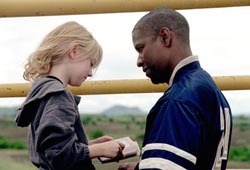
A fearsome revenge flick, Man on Fire is a little like Death Wish for the new millennium, with Denzel Washington as a bloody righter of wrongs. He plays Creasy, a washed-up ex-military security professional whose love affair with the bottle has affected his employment prospects. Down in Mexico, an old friend (Christopher Walken enjoying the good life) sets him up with a job as a bodyguard for the daughter of a young businessman. The daughter, Pita, is played by the precocious Dakota Fanning, who steals pretty much the entire movie despite the presence of Washington, some exceedingly overwrought camerawork, and an arsenal of high-powered weaponry. After a tranquil set-up during which we wonder if Creasy might finally have found peace, Pita is, inevitably, kidnapped and Creasy goes on the rampage to ensure that everyone associated with her abduction pays an appropriately gruesome price, sowing havoc on the streets of Mexico City. The film motors along swiftly enough, particularly once the gunplay starts, but the attempts to portray Creasy as some kind of noble samurai are less than convincing. Washington doesn't do a whole lot apart from looking tired; the noise and chaos around him are, indeed, quite wearing.

Thursday, April 13, 2006

On a Clear Day


2004, UK, directed by Gaby Dellal

An enjoyable entry in that peculiarly British genre that mixes kitchen-sink realism with whimsy, On a Clear Day is a modest film set in working-class Glasgow, with a fine lead performance from Peter Mullan. He plays Frank Redmond, who's been made redundant from his shipyard job after a foreign takeover. Like many a unemployed man (or woman) before him, Frank is lost until he hits on the unlikely plan of swimming the English channel - a plan that he assiduously conceals from his wife (played by Brenda Blethyn) and family. The swim is not simply a means to filling in the days, however, for it's also Frank's awkward way of coming to terms with a long-ago family tragedy and with his own communication problems (Peter Mullan spends much of the film looking silently into the middle distance). While the swim is ultimately loaded with a bit too much psychological meaning to be entirely convincing, there's tremendous pleasure along the way from the able cast: Mullan is surrounded by a host of semi-familiar faces, with Billy Boyd (one of the hobbits from The Lord of the Rings), Sean McGinley and Benedict Wong especially enjoyable as several of Frank's pals. There's something appealingly Rocky-esque about the whole enterprise - but give me a thick Scottish accent over the incomprehensible Stallone any day.

Sunday, April 09, 2006

North Country


2005, US, directed by Niki Caro

Notwithstanding a strong echo of the 1983 film Silkwood, North Country is an engrossing, well-acted account of one woman's wrenching battle against a big company - in this case a mine in rural Minnesota where women are a rarity on the workforce; those few women are subjected to the most extreme of sexual harassment on a daily basis. Charlize Theron plays Josey Aimes, whose response to the catalog of harassment is, ultimately, to file a lawsuit (which becomes a class action). The film is a loose fictionalization of a case that took over a decade to settle (and whose origins go back to the mid-1970's), and it's a powerful indictment of an especially egregious environment of harassment, although the legal decision helped women in thousands of less openly hostile places of employment. Theron does excellent work in the lead role; she's as convincing here as she was in the even lower-rent role that won her an Oscar in Monster, while getting to play someone a whole lot more sympathetic. As is so often the case in depictions of rural America, the supporting cast is outstanding, with great smaller turns from Frances McDormand and Richard Jenkins in particular. New Zealand director Niki Caro shows herself to have a keen sense of the particularities of this slice of American life, too, even though it's a less obviously personal film than her compelling Whale Rider.

Tuesday, April 04, 2006

Bewitched


2005, US, directed by Nora Ephron

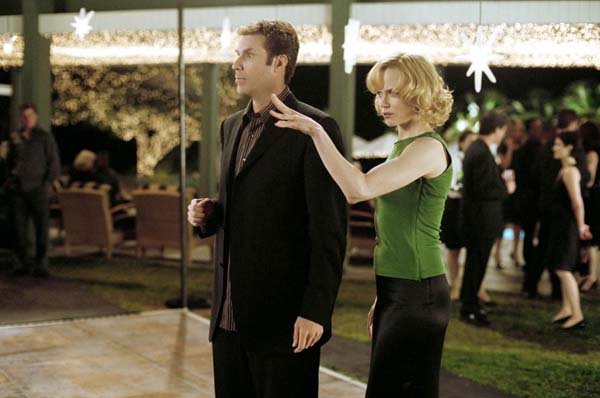
I normally have plenty of time for Jonathan Rosenbaum, the movie critic for The Chicago Reader, though his approach to movies is a whole lot more intellectual than mine. He must have been on crack, though, when writing his review of Bewitched. Rosenbaum opines that director Nora Ephron handles her material "with grace and confidence", whereas I hard a time telling that there was a director involved at all. There's a good idea in here - instead of a straight retread of the show, the plot revolves around the cast of a Bewitched remake - but the resulting script is nowhere near funny enough, the romantic spark between the leads is entirely absent, Will Ferrell is plain annoying, and Nicole Kidman is miscast. The supporting cast does the heavy lifting - Hollywood is blessed with an abundance of acting talent to fill in the gaps - so most of the (minimal) fun to be had comes from Michael Caine, Shirley MacLaine and Jason Schwartzman.

Tuesday, March 28, 2006

In & Out


1997, US, directed by Frank Oz

Kevin Kline plays beloved small-town English teacher Howard Brackett who, just three days before his wedding, finds himself outed on national TV by a former student making his Oscar acceptance speech. Howard's life is, of course, turned upside-down by this 'revelation', as he and everyone else in town tries to figure out whether he is, in fact, gay - and whether it even matters to them (with the exception of his fiancée, for whom it matters more than most). Kline is thoroughly entertaining, all awkward gestures and confusion, while the script sparkles at times (especially in the scenes featuring Howard's students and at his bachelor party, where arguments break out over the Barbra Streisand movies Howard has been showing). The supporting cast, too, is generally strong - although Joan Cusack, as the fiancée, is wearing. As my wife said , though, it's remarkable, given the set up, how completely sexless the story is. In some ways, it's as though the film completely misses the point by avoiding anything remotely sexual - and yet in other ways, that's exactly the point, that it doesn't really matter what someone does, as long as they attempt to be a decent human being.

Index

List of all movies

Most of the images here are either studio publicity stills or screen captures I've made myself; if I've taken your image without giving you credit, please let me know.

About Me

Boston, Massachusetts, United States