Saturday, November 26, 2005

Walk the Line


2005, US, directed by James Mangold

It's hardly a surprise to see this film compared to last year's Ray, what with the similarities in raw material, at least as presented onscreen: two dirt-poor southerners who have faced tragedies of one kind or another head out on their own, and break into the music business in semi-miraculous fashion. Their rise to stardom is fuelled by substance abuse and infidelity - followed by redemption and elevation to the status of national icons. That, at least, is the Hollywood version of things, although the movie format doesn't allow for much in the way of biographical nuance in two hours, even where the focus has been reduced to a fifteen-year span of Cash's life, childhood scenes apart. Given the constraints of the form, this a creditable bit of pseudo-biography, filling in the major incidents of Cash's rise to fame, especially the long flirtation, and eventual relationship, with June Carter. They first met when both were married - not something that cramped Cash's style anyway - and the film does a decent job of sketching in the emotional complexities of their relationship, without excusing them overly. In this, the film is greatly helped by its stars: Joaquin Phoenix is exceptional as Cash, inhabiting the character in convincing fashion, his face showing the wear and tear of hard living as the film progresses, while Reese Witherspoon, after years of froth, looks as though she's finally fulfilling some of the dramatic promise she showed as a teenage actress. Both actors do their own singing, imitating Cash and Carter with considerable accuracy (Jamie Foxx did a fine job of channelling Ray Charles's tics and twitches, but Phoenix and Witherspoon lend real fire to proceedings with their own energetic renditions of the greatest hits), and there's an unmistakeable chemistry between the two. It's no surprise to see Cash 'saved' from himself by the love of a good woman - Carter - but there's a twist, in that her relationship with Cash is clearly a form of redemption, too, after years of unhappiness: in many ways, this is a biopic of a couple rather than an individual, as befits the bond the two shared.

Friday, November 25, 2005

Hostage


2005, US, directed by Florent Emilio Siri

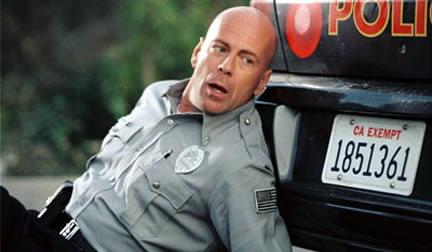
Hostage reminds me of Wes Craven's Red Eye: a B-movie set-up played with great conviction and given an injection of directorial panache for a satisfyingly twisted payoff (although the action isn't as pared-down here as it is in Red Eye). Bruce Willis - who could do this kind of thing in his sleep but instead looks as though his life depended on it - plays an LA hostage negotiator who retreats to small-town California after a standoff goes terribly awry. As any alert movie-goer knows, the calm won't last long, although Bruce's bucolic existence is punctured in especially jarring fashion: three miscreant teens (one of them a standard-issue homicidal nutcase) end up under siege in the high-security house of a wealthy, but morally bankrupt, local citizen, and the man's underworld connections (who appear to have near unlimited resources) become involved in order to recuperate an incriminating DVD. There are multiple plot strands at work here, which would be fatal in the hands of a less accomplished director, but Siri, making his US debut, ably juggles the competing storylines to ratchet up the tension, making effective use of his star, who (happily) looks as though he wandered in from the set of Die Hard. The core of the film is the siege of the house, and the multiple attempts to break in - with no regard whatsoever for standard police practice, naturally. Siri employs a highly mobile camera - prowling, swooping and swishing its way along roads, over houses and along corridors - to great effect, although the colour scheme, all ochre and orange, is a little over the top. There's a great opening credits sequence that comes as a surprise in a film like this, and which sets the scene rather effectively for the bravura tone of what's to come.

Thursday, November 24, 2005

Anchorman

2004, US, directed by Adam McKay

Rating: *.5

I may be doomed never to fully appreciate the comic talents of Will Ferrell, but it's a burden with which I can live. Ferrell was amusing in Elf, although credit should also be given to a half-decent script, but in other fare, like Wedding Crashers, he's invariably the least amusing element of the film (I'm glad no-one was tempted to give him a 'surprise' cameo in The 40-Year-Old Virgin). As writer and star of Anchorman, he should take the lion's share of the blame for the unfunny shenanigans: the first 30 minutes are flat-out painful, with cast and director apparently convinced their set-up is uproariously funny in and of itself, whereas it's really a pretty tired recycling of 70's pastiche (even the weak film version of Starsky and Hutch did it better). Like so many movies from the Saturday Night Live crew, even when individual scenes amuse the whole film barely hangs together; there are many extraneous bits that, no doubt, proved wildly amusing to the makers while constituting an endurance test for audiences. Fortunately, there are several excellent supporting performances, most notably from Fred Willard and Steve Carell, both of whom are consistently hilarious, while one or two scenes - the epic fight between competing news teams, for example - raise the humour level several notches.

Wednesday, November 16, 2005

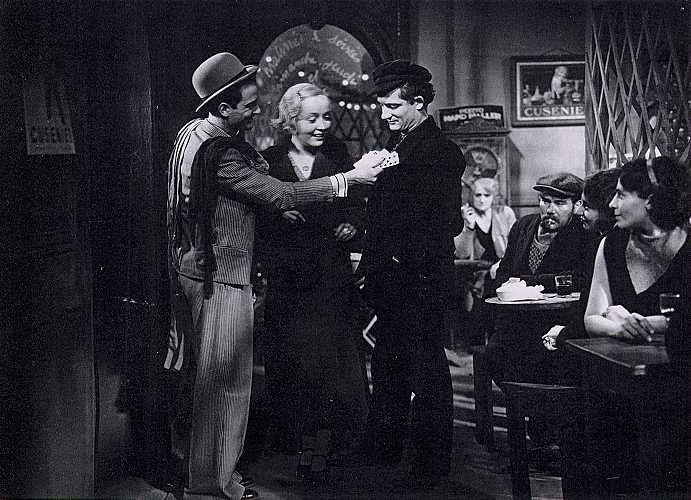
Sous les toits de Paris

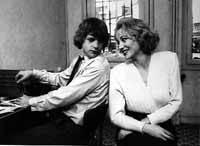
1930, France, directed by René Clair


Like many films at the beginning of the 1930s, Sous les toits de Paris still has one foot firmly in the silent days, something that inevitably dates the picture for modern audiences. Many scenes, even those in which the actors are clearly speaking to each other, have a musical accompaniment alone, while the dialogue is not especially memorable (a few years later, Jacques Prévert and others would ensure that snappy dialogue became a cornerstone of French filmmaking). The performances, too, are reminiscent of silent days: the actors' movements are frequently exaggerated and wide-eyed, in contrast to the more naturalistic acting style that developed later, particularly once the possibilities of dialogue were better exploited. However, notwithstanding these limitations - which have as much to do with the modern audience perspective as with the film itself - Sous les toits de Paris retains great charm, from the elegant opening shot (filmed in a studio, and paired with a similarly graceful parting shot) which takes us down to street level, and into a crowd singing the title song, as a young man (Albert Préjean) attempts to sell sheet music. Préjean's character is, like everyone else, a creature of the streets, hard-scrabble but honest, living in an attic-room (hence the film's title), and hoping for a little cash and love. The story is very slight, and director Clair is indulgent with the running time, but there's no denying the director's affection for his characters: as poetic realism goes, he certainly errs on the side of the poetic, to mostly enjoyable effect (and the theme song will remain in your head for days afterwards).

Saturday, November 12, 2005

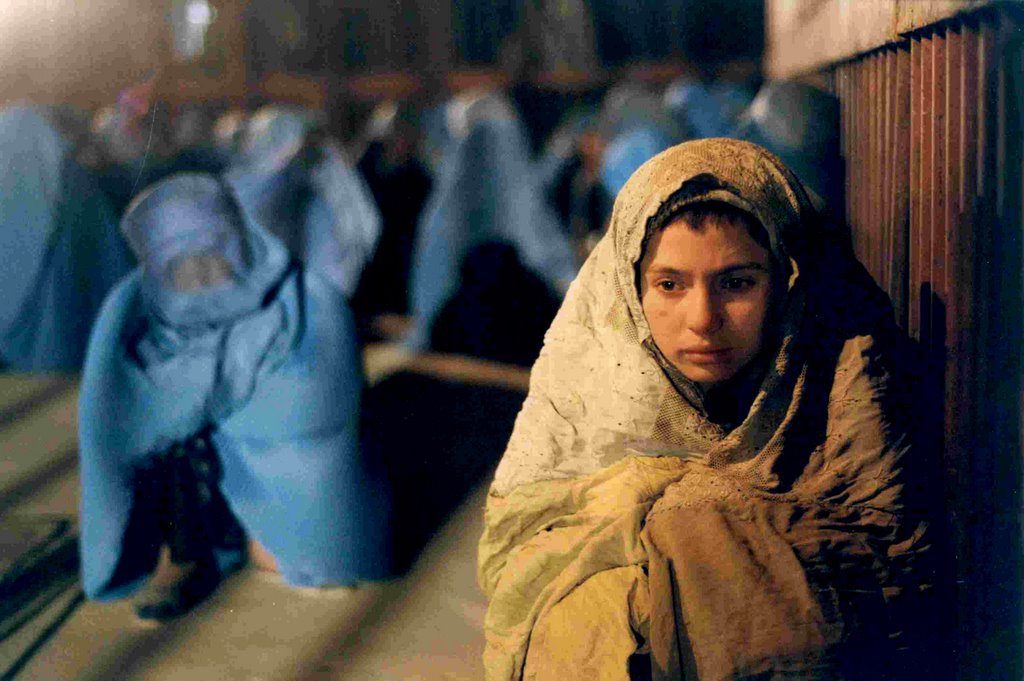
Osama

2003, Afghanistan/Iran/Japan, directed by Siddiq Barmak

When Osama was released, most of the focus was on the simple fact that it was the first film made in Afghanistan since the fall of the Taliban (not that the pre-Taliban list of films was long; there was never a movie industry to speak of in Afghanistan, unlike in neighboring Iran or Pakistan), but it also happens to be a fine bit of filmmaking, a carefully crafted miniature of considerable power. Like several key recent films from Iran, Osama adopts a child's perspective to reveal the wider society, in this case following a young girl whose mother compels her to dress as a boy in order to gain employment (the mother, who is a medical professional, is restricted to her house under Taliban rule: as a widow, she doesn't have a man to accompany her anywhere). The decision seems a good one initially but once the girl - re-baptised Osama - is removed from her place of work by the local mullahs in order to attend a madrassa, things spiral out of control. Director Siddiq Barmak keeps the action absolutely pared down, rarely straying from the main story, yet using background detail to develop a rich portrait of an astonishingly controlled society (with women the most visibly, and most brutally, repressed victims). It's a society from which the Taliban has leached almost all of the joy, in which even small acts of childish exuberance become dangerous. The non-professional actors are, for the most part, excellent, while the visuals are accomplished, with striking images throughout - the young girl skipping in prison, or the rows of covered women, not even their eyes visible. To paraphrase a friend, Osama is one of those worthy films that also happens to be good, which shouldn't be too much to ask.

Friday, November 11, 2005

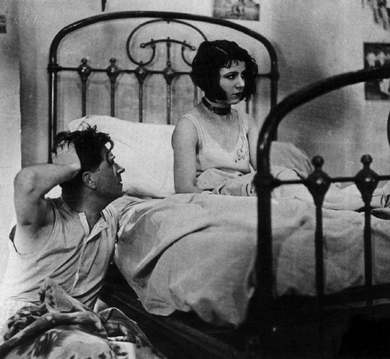
L'Atalante


1934, France, directed by Jean Vigo

Vigo's second and final film was so under-appreciated on release that the producers cut 25 minutes from the running time and gave it a new title, and it wasn't until years later, and more than a decade after his early death, that his critical reputation was born. It's ironic, then, that the passage of more years hasn't been kind to L'Atalante, which appears very dated in parts, and whose underlying slightness is ever more apparent. It's a romance, following the early wedded months of a barge captain and his new bride on the canals; the barge's wildly eccentric mate, played by Michel Simon, is a key figure in both their lives. More than most talking pictures, the link with silent days is very apparent: it's not hard to imagine the film without dialogue, particularly in the scenes between the married couple, whose acting style is as wide-eyed as in many a silent. For the most part, their story is rather routine: the film comes alive when Simon (one of the least handsome actors ever to achieve stardom) is on-screen, despite the fact that his gruff line readings are almost incomprehensible at times. His character's colourful personal history is rendered in vivid, amusing detail. While the plot is of the thinnest variety, it is nonetheless possible to discern something of what made Vigo unique in his time: there's a rawness that's the opposite of all that establishment cinema of the time stood for, and a willingness to experiment formally that inevitably impressed itself on the filmmakers of the nouvelle vague in the late 1950's. There's also a frank eroticism in several scenes that remains startling even today.

Monday, November 07, 2005

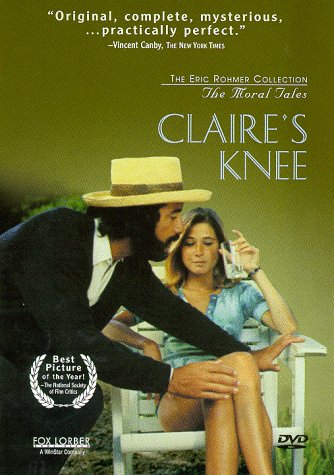
Claire's Knee

1970, France, directed by Eric Rohmer (original title: Le Genou de Claire)

One of Rohmer's best-known films, Le Genou de Claire exemplifies in many ways both the strengths and weaknesses of his approach to filmmaking. It's an especially garrulous talk-fest - the characters do little else - which is capable of considerable insight and occasional wit, but Rohmer's films are often set in an especially insular world (like the Manhattan of Woody Allen movies), which of its nature is intellectually exclusive, while it's often difficult to suspend one's disbelief at the blatantly artificial set-up. Jean-Claude Brialy plays a diplomat spending the month prior to his marriage on holiday alone - there's a scenario drawn from reality! - and while relaxing he catches up with an old friend, perhaps a former lover, who's a novelist. He spends his days 'befriending' a teenage girl and, later, becoming somewhat infatuated with her willowy, slightly older sister. His every move is recounted for the benefit of his writer friend, who goads him to more action (something the viewer might well appreciate, since his moves consist mostly of lengthy conversations). While there are scenes when, unexpectedly, all this hangs together and becomes quite compelling, Rohmer seems remarkably tolerant of some pretty poor acting, with lines delivered as if they're being read from cue cards (which wouldn't be surprising, given the large chunks of text the characters are required to deliver). As a director, he's clearly fascinated by cinema as a narrative medium, but has relatively little interest in the purely visual aspect of storytelling: the story is reminiscent of an epistolary novel, set in a very hermetic world, where other Rohmer films are a little more expansive, and considerably more charming.

Thursday, October 27, 2005

Kitchen Stories


2003, Norway/Sweden, directed by Bent Hamer (original title: Salmer Fra Kjøkkenet)

Kitchen Stories might function as an object lesson in how to make the most of unpromising - on paper - beginnings, for it's a little gem, poignant and richly detailed, with wonderfully delicate performances and direction. The film follows participants in a 1950's study run by a Swedish institute keen to explore the kitchen habits of single Norwegian men, with the object of designing the perfectly efficient kitchen. The study takes place in a rural area, and each volunteer agrees to allow an observer to sit in his kitchen, on a comically high chair, following, and logging, the daily routine. Interaction between subject and observer is strictly forbidden. The focus is on Isak, an older farmer, and Folke, his observer, two men who, it quickly becomes apparent, are no strangers to loneliness. Isak subverts the process from the very beginning, cooking in his bedroom, and turning out the light in his kitchen to render observation impossible. Slowly, inevitably, however, a bond begins to develop between the two men: the cup of coffee that breaks the silence is almost heart-breaking, and a rich friendship evolves between two fundamentally decent human beings who have lacked the opportunity to express that decency to others. With so little dialogue in the first half of the film, there's a rich vein of visual humour on display, particularly in Isak's mischief, or the brilliant sequence when the observers, each driving a car towing a little caravan, reach the Norwegian border and are forced to switch to other side of the road, since the two countries weren't coordinated at the time. What remains most sharply in the mind, however, are the two deceptively simple lead performances, restrained yet detailed, and the unhurried direction, that allows a series of vignettes to acquire a bracing power.

Sunday, October 23, 2005

In Her Shoes


2005, US, directed by Curtis Hanson

Curtis Hanson and Ron Howard must have a bet going where they're each attempting to direct a film in every genre possible, but even with that in mind, In Her Shoes seems a surprising choice, on the surface, for the director of fare like LA Confidential or Bad Influence. It's a true chick flick - the title sequence underlines the footwear fetish - with three meaty lead performances, plenty of family drama, and more than a few laughs among the tears. Look a little closer at Hanson's record, though, and it's perhaps not so odd to see him turn in a film like this: he's helped revive more than one actress's career - think Rebecca De Mornay in The Hand That Rocked the Cradle or, especially, Kim Basinger in LA Confidential and 8 Mile - and given us unexpected turns from Meryl Streep (in The River Wild) or Katie Holmes in Wonder Boys. While the drama meanders from time to time - a reflection of the two interwoven stories that keep characters offscreen for long periods - Hanson does a fine job working with the three leads, credibly bringing Cameron Diaz from irresponsible party girl to something resembling an adult, and shepherding Toni Collette through an ugly duckling transformation. Shirley Maclaine is surprisingly restrained - her scene-stealing sidekick gets the best lines - and in the process acquires an appropriately grandmotherly dignity. It's not Hanson's most distinctive work, but it's generally well-crafted stuff, with relatably flawed characters and more than a little charm around its rough edges.

Saturday, October 22, 2005

The Twilight Samurai


2002, Japan, directed by Yoji Yamada

Yoji Yamada has directed almost seventy films over the past 40 years - the kind of work ethic that puts even Woody Allen to shame - but only a handful of his movies are known outside Japan. Most of his professional career was spent on the 48 movies in the Tora-San series, which followed the picaresque adventures of the eponymous lovable loser, and which weren't big in the export market. In his own autumn years, he's turned to some more substantive material, none more so than this modest little film, set in the waning years of the samurai era. Before seeing the film, I had formed the impression that the main character, Seibei, was a rather elderly gent, so it was something of a surprise to discover that he's a vigorous fellow, more than capable of wielding a sword, though less and less interested in actually doing so. Seibei is a widow, caring, on a meagre stipend, for two young daughters and an increasingly senile mother. Like many other samurai in his clan, he works as a clerk, although he sets himself apart from his colleagues by his refusal to join them in merrymaking, preferring to care for his family. Events conspire to reveal that he retains much of his skill with a weapon, as he defends a young woman's honor, and he's forced back into action at the behest of his clan. The film ultimately is about the difficulties faced by two independent individuals - Seibei and Tomoe, the young woman who becomes a part of his life - in a society governed by a rigorous set of rules and taboos, but the film doesn't overdo the deeper themes, focusing instead on the details of Seibei's life, whether it be the making of insect boxes, fishing, the ceremonial preparation of weapons and dress, or the eating of food: these small touches rapidly draw us into his very codified world. The performances are strong - and more naturalistic than in some of Kurosawa's historical work, for example - with Hiroyuki Sanada, who appeared in the Japanese Ringu movies, especially effective. The film is let down only by its coda, which is overly sentimental even though it strives for something more clear-eyed.

Friday, October 21, 2005

Cop au vin


1985, France, directed by Claude Chabrol (original title: Poulet au vinaigre)

Despite the film's origin, there's something very English about Poulet au vinaigre: it plays like an especially well-wrought English television mystery, so it's no surprise to discover that Inspector Lavardin's adventures later transitioned to the small screen, nor that Chabrol turned to source material like Ruth Rendell's A Judgement in Stone several years later (that novel was filmed, with great force, as La Cérémonie). Like a P.D. James adaptation, the players are given plenty of time to implicate themselves in all kinds of wickedness before Lavardin (Jean Poiret) turns up to unveil the mysteries (indeed, the film is half over before Lavardin makes much of an impression; in other circumstances that might be a shame, but Chabrol has such an acute eye for small-town foibles that you barely notice his absence).

Like any good English mystery, but unlike the average French policier, except those of Chabrol himself, class is front and centre here, with postman Lucas Belvaux and his mother (a thoroughly de-glamorised Stéphane Audran) fighting off a trio of rapacious property developers (though that's but one strand in the film). While no-one emerges entirely unscathed, Chabrol has an unswerving affection for the little man - allowing a certain measure of poetic, if not literal, justice to come his way. Jean Poiret is best known as a comic actor, but Chabrol's casting was a smart move: like Hitchcock with Cary Grant or James Stewart, Chabrol understands how unsettling it is to see an apparently mild-mannered individual suddenly behave forcefully, even violently. It's not one of the director's most acid films, but Chabrol doesn't do frothy, and there's an air of menace at the most unexpected moments.

Wednesday, October 19, 2005

A Very Long Engagement


2004, France/US, directed by Jean-Pierre Jeunet (original title: Un Long dimanche de fiançailles)

One wonders if, after the enormous international success of Le fabuleux destin d'Amélie Poulain, Jean-Pierre Jeunet wanted to make something, well, important, substituting the First World War for his more usual world of bizarre happenings and brilliantly-constructed, occasionally black whimsy. There are occasional flashes of his old self - the vignettes that introduce a series of characters early on recall, quite explicitly, the various apartments in Delicatessen, for example - but something in Jeunet's approach seems ill-suited to what remains at heart pretty sombre material (and which remains much sharper-edged in Sebastien Japrisot's 1991 source novel, which gave an especially strong sense of the vast scale of the human losses of the Great War in France). While Jeunet doesn't gloss over the realities of trench combat in the Great War - indeed, he brings a rare sense of the myriad physical discomforts that were a constant of trench life, as well as of the horrors of maimed and destroyed bodies - the sepia-tinted main storyline occasionally seems to belong to an entirely different film, with a rather more Hollywood take on life (the story follows Mathilde - Audrey Tautou - as she attempts to track down her fiancé, who disappeared in the trenches in 1917 after being condemned to death for cowardice). There are, nonetheless, pleasures to be had from individual episodes, as well as the formidable cast, many of them Jeunet regulars. Ticky Holgado deploys his charmingly southern accent to great effect once again in his penultimate appearance, while Dominique Pinon has an unusually affable part; in smaller roles, Jeunet has fun with the usual panoply of unusual faces. The centre of the film is, of course, Tautou, whose gamine charms aren't as appealing here as in Amélie, but that's in large measure the fault of her director, who seems more interested in technical trickery than coaxing a strong performance from his leading lady. Jeunet is prey to the technician's flaw of forgetting the human core of the story under the many layers of digital wizardry, something that also marred La Cité des enfants perdus. It's a mistake that's less excusable in telling this particular tale.

Sunday, October 09, 2005

Head-On


Germany/Turkey, 2004, directed by Fatih Akin (original title: Gegen die Wand)

A couple of years ago, Fatih Akin directed a cute little romantic comedy by the name of Im Juli, a creditable variation on the familiar theme of boy meets girl, with a multi-ethnic twist and two appealing lead performances. To say that Gegen die Wand is a little different is rather like saying that milk and kerosene are different: Akin's new film is a ferocious exploration of two messed-up souls, and their place as immigrants/outsiders in today's Germany. The film opens, more or less, in a psychiatric hospital, as Sibel (Sibel Kekilli), a troubled young woman, of Turkish origin, tries to convince Cahit (Birol Ünel), a somewhat older Germanized Turkish man, to marry her - the only way she can see to escape the stifling confines of her family. She's not proposing a conventional arrangement, however, since the marriage is to remain a convenient fiction, for her parents' eyes only. While it's no surprise that events don't unfold as smoothly as she imagines, given the complex histories involved, the performances of Ünel and Kekilli are so thoroughly involving that they render the subsequent events both credible and moving. When a tragic accident sends the story in an entirely unexpected direction the shift is wrenching, for despite, or because of, their flaws, the couple is clearly struggling in the right direction, dealing with grief, loss, and displacement as best they can. The latter third of the action shifts to Istanbul: it's striking that both of Akin's films end up here, as if to suggest that only in the mother country can Turks truly confront their problems. It doesn't paint a rosy picture of multi-cultural Germany that even a successful Turkish-German director feels that true happiness is to be found back on the Bosphorus.

Saturday, October 08, 2005

A History of Violence


2005, US, directed by David Cronenberg

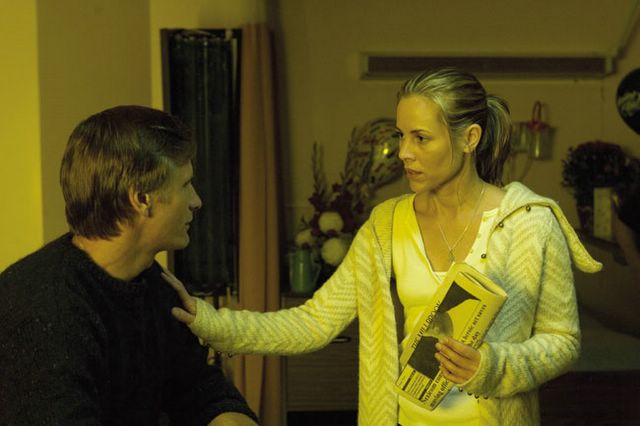
It's not often that you come across a movie that has few truly adequate points of comparison. That's perhaps because Cronenberg does such an extraordinary job of marrying two utterly different kinds of film: a viscerally gripping thriller, and a thought-provoking art movie that forces us to confront just what it is we enjoy about those visceral kicks, making us complicit, in a way, in the violence that shatters events onscreen. A History of Violence is also a brilliant riff on the Hollywood vision of smalll-town American life, the kind of dissection that perhaps only a foreigner - even a Canadian - could pull off. The little town where Tom Stall (Viggo Mortensen) lives is set up as an idyll, peaceful and beautiful, where everyone knows one another. Then men of violence come to town and Tom's method of dealing with them forces at least some people to wonder whether, in fact, they know anything at all about their friend.

Mortensen is perfectly cast, his mask slipping in slow, startling fashion, as the audience, too, attempts to reconcile Tom's salt-of-the-earth present with his dark past; Maria Bello plays his wife with a kind of ferocity that perfectly captures the maelstrom that threatens to engulf her family, while the supporting players are generally on the money, even if William Hurt chews the scenery just a little. Cronenberg's direction is carefully controlled, peeling each layer off the onion quite deliberately. Adapted from a comic book, the film has something of that medium's immediacy: there's no wasted time here, each well-composed shot advancing the action in graphic style; several brief shots evoke comic book art quite explicitly, without proving a distraction. Most of all, A History of Violence is a fully adult movie, which demands reflection, and which refuses to gloss over complex, contradictory emotions.

Thursday, October 06, 2005

Braindead

1992, New Zealand, directed by Peter Jackson (US title: Dead Alive)

Watching Braindead, I couldn't help but wonder how Peter Jackson ever persuaded people to part with another dollar in order to allow him to continue his career - never mind get from here to pre-production on The Lord of the Rings in five short years. Then again, perhaps they figured it was best to keep him occupied with movie-making than have him on the streets. There's no doubting that Jackson was already developing, and confident in, his filmmaking chops, for there's a breakneck pacing in evidence, as well as a creative, mobile camera that would come in handy both on Heavenly Creatures and, more obviously, in committing Tolkien's saga to celluloid.

Since I'm not a committed gore hound, however, the sometimes laughable special effects, constant showers of blood (and other assorted bodily fluids), and wildly over-the-top performances left me a little cold. The plot, for what it's worth, involves a Sumatran rat, whose bite apparently turns people into zombies, who naturally want to chomp on the neighbors, thereby creating more zombies. The action is set in very prim 1950s New Zealand, where a zombiefied mother is something of a social liability, as Lionel, our hero, quickly finds out, particularly when Mum nibbles on her nurse. There are more than a few similarities with Shaun of the Dead, particularly the matter-of-fact attitude of both heroes in dealing with the outlandish events around them, although the latter film deals with the arrival of zombies in polite society with considerably more wit.

Saturday, September 24, 2005

Red Eye


2005, US, directed by Wes Craven

It's nice to know that at least some people in Hollywood realize that there's no shame in turning out a well-made B-picture, rather than an overfed A-lister that fails to satisfy. There's absolutely no fat in Red Eye's 85 minutes, with Wes Craven signalling his intent in the lean, clever credits sequence. The plot swings rapidly into action as Cillian Murphy - so blue-eyed you know he's got to be wicked - bumps into hotel manager Rachel McAdams (on quite a roll after The Notebook and Wedding Crashers) as she's about to board a late-night flight home. After they share a delay-induced drink, he ends up in the seat beside her on the plane - but we're quickly aware that there's no coincidence, as he needs her management talent to assist in a nefarious plot to off a high-ranking official. It doesn't do well to examine some of the plot holes, but then there's rarely time as the film, with more than a few nods to Hitchcock in the on-plane sequences, zips along. McAdams is a credibly spunky heroine - you'll want to cheer her on as things get hairy - and Murphy seems to enjoy himself no end even when his character is being so comprehensively outsmarted. It's nice to see Craven so clearly in control of his material here: the horrors are more mundane, though no less creepy for that, but the old dog has a few tricks left in him yet, after a string of misfires.

Friday, September 23, 2005

Modern Times


1936, US, directed by Charles Chaplin

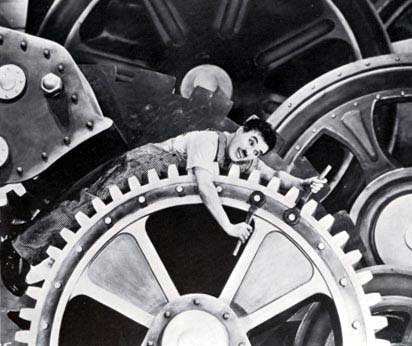
It's hard to watch Chaplin's last silent film without an awareness of almost seventy years of criticism and quotation, not to mention dozens of Chaplin biographies. There's no doubting the work of an artist - nay an auteur, given that Chaplin did more or less everything of note, and probably made the tea, too - but often the sense is of an artist frustrated by the very medium in which he excels. While it's easy to read the film as a commentary on the dehumanizing effects of industry more broadly, Chaplin himself felt very acutely the pressures to mould himself to an inflexible Hollywood system, notwithstanding his own wealth and, for the most part, artistic freedom. In a sense, he was fighting against the very collaborative nature of the film industry - a near production line at the height of the studio era - but also the industry's ceaseless pursuit of the dollar. As to the film, it's inescapably a string of - well-made - two-reelers extended to feature length; the famed sequences in the factory work brilliantly as vignettes, while the scenes with the gamin (sic) change the tone entirely. There's plenty of bite to Chaplin's portrait of the humiliations of factory life, although the buffoonish owner is a cipher, while Chaplin is never entirely sure what he thinks about the unions. The final optimistic title card, while absolutely in tune with the American Dream, seems altogether too naïve in the context of the enormous social turmoil of the Depression. It's a fascinating film as an impetus for debate, a clever piece of cinema which sends a very confused message.

Saturday, September 17, 2005

The Year of Living Dangerously

1982, Australia, directed by Peter Weir

It's hard to know quite what to make of Peter Weir's The Year of Living Dangerously more than twenty years on. There's no doubting the sincerity of the filmmaker's intentions, opening a rare window on to Asian politics with his depiction of events at the tail end of the Sukarno era in mid-1960's Indonesia. However, the realities of life for the Indonesian population generally slip into the background, with the film becoming another tale of (relatively) privileged Westerners in an exotic locale. Guy Hamilton (played by a generally bedraggled Mel Gibson) is an Australian newsman who arrives in Jakarta with a pretty limited grasp of Indonesian politics but perhaps a somewhat greater amount of moral fibre than his colleagues, and he's quickly led to some of the corridors of power by his dwarf asistant, Billy Kwan (the remarkable Linda Hunt), a half-Chinese man devastated by Sukarno's betrayal of the Indonesian population. The core of the film is a tense web of conflicting loyalties, and late-night meetings, which might seem enough on its own, but the film reverts to convention in giving considerable time to the love affair between Guy and a young British Embassy staffer (Sigourney Weaver); their antics at times make light of the very real dangers faced by both westerners and Indonesians as the country unravels. Still, even by comparison with the brilliantly jaundiced The Quiet American (the Phillip Noyce version from 2002), there's much to enjoy here: the plot is as twisted as Indonesia undoubtedly was at the time, with much to say about loyalty and betrayal, and the fine line between the two, all against a suitably sweaty backdrop (with the Philippines standing in for Indonesia).

Tuesday, September 13, 2005

Matchstick Men


2003, US, directed by Ridley Scott

Even after almost thirty years of filmmaking, there's no mistaking Ridley Scott's origins in advertising, nor his continued interest in the visuals of that medium. His Los Angeles is all slick surfaces and bright light, the city's artifice very apparent. Of course, a preoccupation with appearances is perfectly suited to a film about con men. Nicolas Cage and Sam Rockwell play hard-working con men adept at bilking the vulnerable, the gullible, and occasionally the plain greedy, out of their savings, one con at a time. Early in the film, Cage, who suffers from an obsessive-compulsive disorder, discovers that he has a teenage daughter (Alison Lohman) from a relationship that went south years previously, and he attempts to re-connect with her in an effort to add at least some meaning, and perhaps karmic points, to his life. Inevitably, she becomes caught up in some of his scheming, notwithstanding his attempts to keep her at arm's length, and his plans for one last con begin to unravel fast. Cage's part is the kind of thing actors love: the character comes off his meds and exhibits all manner of tics, but director Scott wisely doesn't allow this to become more of a distraction than necessary. Rockwell is all manic energy while Alison Lohman does a fine, lower-key job as the daughter; it's hard to believe she's in her mid-20's. There are plot contrivances aplenty here, but this is a fine bit of genre filmmaking, with performances that were under-appreciated at award time.

Wednesday, September 07, 2005

The Motorcycle Diaries


2004, US/Germany/GB/Argentina/Chile/Peru, directed by Walter Salles (original title: Diarios de motocicleta)

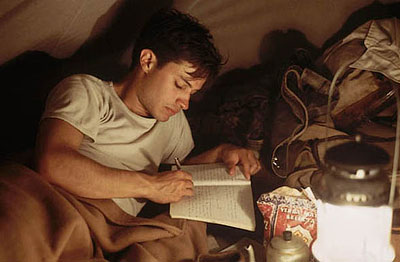
Avoiding the pitfalls of a full-blown biopic, The Motorcycle Diaries focuses more narrowly on Ernesto 'Che' Guevara''s youth, and his first trip outside Argentina, using his own diaries as the basis for the narrative. In 1952, Guevara (played by the fast-rising Gael García Bernal) and a friend, Alberto Granado (Rodrigo de la Serna), decide to take a trip on Alberto's elderly motorcycle, a journey that'll take them from one end of South America to the other. Guevara is a privileged fellow in Buenos Aires, without a whole lot of experience of the world - the fact that he's a rugby-playing medical student gives a rough idea of his social status in Argentina - and the journey functions as his political and social awakening. There's undoubtedly an element of (self-) mythologizing at work here, but the film is generally a highly convincing portrayal of the first stage of Guevara's political development, and his growing awareness of the breadth and depth of inequality and injustice on his continent. It's also a love story of sorts: Guevara becomes deeply, almost mystically attached to some of the places he visits; those feelings are summed up in a speech towards the end of the film, in which he sets forth his vision of a continent without borders, where common heritage and humanity are celebrated. Director Walter Salles doesn't allow things to become too ponderous, however: there are warm and amusing scenes that evoke the pair's less elevated adventures, with narrow escapes from drunken husbands. Bernal is excellent as the nascent Che, as charismatic here as he's ever been, and there's a large cast of wonderful character actors in support. The South American landscapes, gorgeously shot, have a key role, too, underlining the sense that travel is something that requires effort and endurance to yield its many secrets.

Index

List of all movies

Most of the images here are either studio publicity stills or screen captures I've made myself; if I've taken your image without giving you credit, please let me know.

About Me

Boston, Massachusetts, United States