Tuesday, June 27, 2006

Shopgirl


2005, US, directed by Anand Tucker

Rating: ***

It's unfortunate that Shopgirl is pigeonholed as a romantic comedy, since it's far more about mood and tone than ticking off the standard plot elements of that genre. Like the (Steve Martin) novella it is based on, Shopgirl is a slight affair, with the slenderest of plots, but Anand Tucker's careful direction and several appealing performances elevate the film; the limpid shots, carefully constructed colour schemes, musical background and acute sense of big-city loneliness are reminiscent at times of Wong Kar-Wai's In the Mood for Love, in a minor key. Claire Danes delivers her best big-screen performance as a Vermonter transplanted to Los Angeles; while she rejects the life her parents have chosen, she's living in a rut of her own on the West Coast, leaving her prone to the attentions of oddballs. Her suitors are played by Jason Schwartzman (who straddles the fine line between annoying and amusing with some skill) and Steve Martin (who seems determined to eradicate the last traces of the wild and crazy guy with his often unsympathetic sugar daddy portrayal). The air of quiet despair and the gorgeous cinematography create a haunting sense of the anonymity of Los Angeles; while Martin has always been a booster of that city, he's also acutely aware of its human failings.


Monday, June 26, 2006

The Lake House


2006, US, directed by Alejandro Agresti

A preposterous, and very enjoyable, time-travel romance involving a letterbox that connects two people - Keanu Reeves and Sandra Bullock - inconveniently separated by two years, The Lake House is made with the kind of old-fashioned craftsmanship that often seems to have disappeared from Hollywood. The filmmakers are aware of the inherent absurdity of the central conceit and acknowledge this head-on in several amusing early scenes, as if to challenge the viewer to suspend his or her disbelief; the effort is more than repaid, with Reeves and Bullock proving the Speed chemistry was no fluke. While the central story remains consistently engaging, it's in the details that the picture shines: the elegant photography (with gorgeous shots of Chicago's architecture); the well-cast supporting players (Shohreh Aghdashloo, as Bullock's boss, delivers the film's wittiest lines in a lovely bar scene); the shot of Bullock in the hospital corridors, cribbed from the beginning of La Baie des anges, that perfectly underlines the sense that events are spiralling out of control. For all the mediocre movies they've appeared in, Bullock and Reeves have retained their charm; it's nice to see them play actual adults, with adult careers and concerns, while still injecting a hint of Hollywood romance.

Saturday, June 24, 2006

X-Men: The Last Stand


2006, US, directed by Brett Ratner

Rating: **

Although it's easy to dismiss most comic book films as popcorn junk, it's not until you see the work of a journeyman like Brett Ratner that you can finally appreciate what director Bryan Singer brought to the first two films: coherence; effects generally at the service of the action rather than for their own sake; even a reasonably well-worked philosophical underpinning and some decent performances. Here most of that disappears, and, worse, characters who had been developed in the first two films are either given short shrift or disappear entirely (only Ian McKellen seems to have more screen time; Hugh Jackman, Famke Janssen and Halle Berry look like they're there for the paychecks and nothing more, and who could blame them when the script is so bland). Although are there are undoubted moments of entertainment, the action is so absurdly over the top at times (and the body count exponentially higher) that the core of humanity (or mutantity) from the first two films is lost, plus the frisson generated by the conclusion of the second film is wasted in this sequel (the attempts to generate a similar frisson here, both before and after the credits, are far less successful).

Tuesday, June 20, 2006

La Noire de...

1966, Senegal/France, directed by Ousmane Sembène

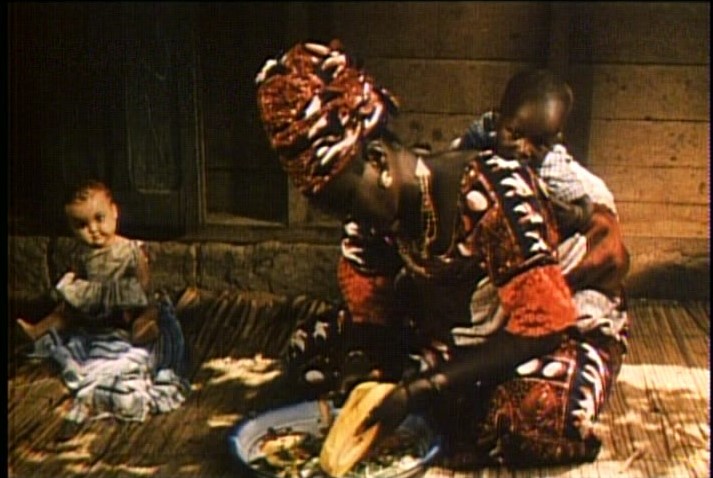
Generally recognized as the first feature film (at just over an hour) made by a black African director, La Noire de... arrives fully formed, with an angry political conscience and ambitions to critique the colonial and post-colonial experience that are, by and large, met. Of course, Ousmane Sembène was hardly a neophyte, having already published several novels that shed light on colonial, and immediate post-independence, African life. The brief tale of a young African woman who travels to the French Riviera to work as a nanny for a French family who had also employed her in Senegal, the film is an outraged coming-to-consciousness tale, as the young woman evaluates her own self-worth in light of the treatment she experiences at the hand of her employer. Although her ultimate fate is perhaps rather extreme, there's nothing unusual, even today, in some of the daily humiliations experienced; if Sembène's vision is disheartening, that's perhaps especially because little has changed in the relationship between colonizer and colonized in the intervening 40 years. Although Sembène received his formal cinematic training in the USSR, the film is shot through with the influence of the early nouvelle vague films, lending the film an immediacy and power that belie its relative technical limitations.

Monday, June 19, 2006

The Best of Youth

2003, Italy, directed by Marco Tullio Giordana (original title: La Meglio gioventù)

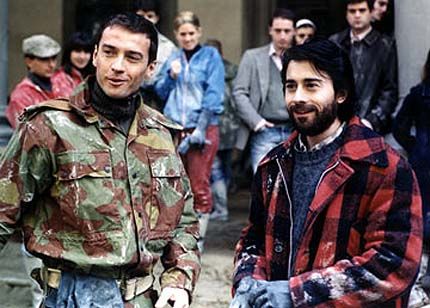
Originally conceived as a mini-series for Italian television, and then given a theatrical release instead, The Best of Youth is a remarkable family saga set against the changes in Italy over the period from 1966 to 2003. While the factual backdrop - the 1966 Florence floods, 1970's student activisim in Turin, the Red Brigades, the assassination of Judge Falcone in Sicily, and so on - is fascinating, the film is ultimately more interested in domestic affairs, most specifically in the portrait of two brothers, Nicola and Matteo, and their divergent careers and outlooks. It's an exceptionally warm, generous piece of work: generous in running time, but also in its view of its main characters, who are given the time and latitude to make mistakes, without ever losing their essential dignity. Over the course of six hours, those characters are so appealing that it's hard to immediately accept the film's most shocking moment: I wasn't able to process that development for several seconds, so jarring was its effect. As with most family dramas, there are inevitable moments of soap opera given the need for continual plot development, while the ending isn't all that hard to predict, but those are minor quibbles given the overall skill and care with which the story is told; the direction has all the hallmarks of old-fashioned craftsmanship. For the most part, the acting, too, is excellent (although some of the actors are a little too fresh-faced to entirely convince in the later stages), while the rich vein of humour conveys the bonds of family and friendship in deeply rewarding fashion.

Wednesday, June 14, 2006

X2


2003, US, directed by Bryan Singer

Less focused than its predecessor, and perhaps a shade less political in the aftermath of 9/11, X2 steps up the sheer popcorn value with a couple of new characters - Alan Cumming as Nightcrawler is an especially strong addition - and several highly entertaining set-pieces. Although director Bryan Singer isn't able to inject the depth he clearly hankers after, he's adept at pacing the action, and as a consequence the film mostly justifies the two-hour plus running time. The us-against-the-world set-up is given a new twist this time around, forcing 'good' and 'bad' mutants to cooperate when faced with an especially nasty human (Brian Cox), with questions of loyalty abounding. Ian McKellen has some lip-curling fun - he teeters on the edge of self-parody, enjoying the vaguely Hannibal Lecter aspects of his imprisonment - but Patrick Stewart's role is underwritten this time around in favor of the younger set; their fight scenes show a clear post-Matrix influence. The conclusion is an odd combination of the deeply unsetttling wrapped in the guise of reassurance, but there's no doubting the atmospheric effect.

Monday, June 12, 2006

Bay of Angels


1963, France, directed by Jacques Demy (original title: La Baie des anges)

Rating: ***

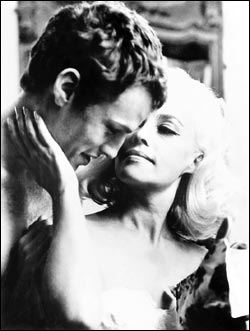
A light concoction whipped up in a couple of days and shot rapidly by Jacques Demy while he dealt with a production delay, La Baie des anges has little of the insight of either his previous Lola or his subsequent, glorious Les Parapluies de Cherbourg. That's not to say the film is without its pleasures: there's nothing wrong, after all, with 80 minutes in the company of Jeanne Moreau, although her character's girlish affectations are occasionally tiresome. She plays a compulsive gambler who links up with the youthful Claude Mann for a spree on the Riviera, in which vast-sounding sums are won and lost; I suspect that the amounts are given in old francs, about as meaningful as being an Italian millionaire in the days of the lira. The film attempts, with some success, to mirror the highs and lows of the gambler's life, although the transformation of the coquettish Moreau into an unpleasantly grabbing gambler each time she passes a roulette table (the effect is quite extraordinary) hardly makes the lifestyle appealing. Mann, for his part, is oddly emotionless, especially given that he's in the company of such a stunning woman; the final shot is quite unconvincing as a consequence, and no match for the wonderful seafront opening, with Michel Legrand's music in full over-the-top flight.

Sunday, June 11, 2006

X-Men


2000, US, directed by Bryan Singer

One of the few consistently absorbing comic-book adaptations of the past decade, X-Men tries to inject an extra layer or two of meaning to the sci-fi action, and while the effort doesn't entirely come off, there's more intelligence here than in the vast majority of popcorn fare (even though the Holocaust allusions don't seem to have been entirely thought through). Although it's a pre-9/11 movie, it's hard, now, to see the film without reference to the climate of fear created since 2001, particularly given the conflict of values that lies at the heart of the film, pitting ordinary humans against their mutant (and thus possessed of unique skills) brethren. While there's plenty of action, particularly near the conclusion, the film is far more concerned with motivations and personal relations than with explosions, which lends the outbreaks of fighting, when they do come, that much more charge. Hugh Jackman is excellent as Wolverine, a conflicted yet (of course) noble mutant, while both Patrick Stewart and Ian McKellen do the English thesp thing with their usual aplomb; Anna Paquin's Rogue is outstanding, both as a character and a performance.

Saturday, June 10, 2006

Zoolander


2001, US, directed by Ben Stiller

Rating: **

The Ben Stiller-Owen Wilson-Vince Vaughn-Will Ferrell axis seems to dominate US film comedy these days, to scattershot effect; the hits (like Wedding Crashers) can be excellent, while the misses (Anchorman) are plain dreadful. Zoolander falls somewhere in the middle, taking a sketch idea and stretching it to feature length. There are sequences of inspired madness in this tale of vacant male models (Stiller and Wilson play rivals), as well as some very funny send-ups of the fashion world (which seems like it's already beyond parody), mixed with less successful patches, particularly most of the scenes involving Will Ferrell (whose character looks like it was one of the models for Tim Burton's new version of Willy Wonka). Stiller's gormless Derek Zoolander is an amusing creation - perhaps especially when he goes home to his family in the coal-mining country of southern New Jersey - with just enough charm to keep him on the right side of annoying, while Wilson's consistently hilarious turn keeps things watchable once the central premise becomes wearing.

Wednesday, June 07, 2006

Les Destinées sentimentales


2000, France/Switzerland, directed by Olivier Assayas

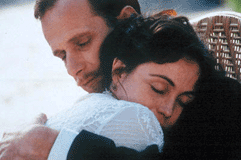
The usual ponderous conventions of the period picture are thrown out the window in director Olivier Assayas's absorbing saga of provincial upper-class Protestant life in the first decades of the twentieth century. Assayas's exceptionally mobile camera - so swift-moving that it's almost disorientating, especially in the first hour, which sketches life for the younger set in exuberant fashion - is a counterpoint to the more leisurely set-up favoured by most directors faced with period material (Alain Corneau's series of fixed tableaux in his beautiful but chilly Tous les matins du monde provides a useful contrast). The sense of constant motion is especially heightened when following the character of Pauline Pommerel (Emmanuelle Béart), an independent-minded young woman who acts as a catalyst for change in the set, even staid existence of Jean Barnery (Charles Berling), the son of an industrialist who has chosen a career as a pastor. Although the narrative is occasionally elliptical (Assayas chooses to have more than one key event take place offscreen), and the music is sometimes rather too obvious (particularly in underlining the 'happy' periods in the characters' lives), the sense of a veryparticular time and place (centered around the porcelain industry in Limoges) is exceptional. The film, like Bergman's Fanny and Alexander, wears its period trappings lightly, ensuring they don't get in the way of the action - never better, perhaps, than in the wonderful early scenes at a gala evening, shot with the same immediacy as the central party scene in Assayas's brilliant 1994 film L'Eau froide. The performances are solid to outstanding: Béart has perhaps never been more radiant, such that when her character experiences a downturn, it's like a light going out.

Monday, June 05, 2006

Running Out of Time


1999, Hong Kong, directed by Johnnie To

Johnnie To has proved to be something of a critical darling in the Western press over the past couple of years, with writers desperate to locate the latest auteur in Hong Kong's rampantly commercial cinema (although To hasn't made the job easy by switching between crime thrillers and the kind of Hong Kong comedy that doesn't translate as well to overseas markets). Running Out of Time belongs to the first wave of To crime pics, and like many similar genre entries, the weak, sometimes laughable, plotting is far less important than the often stylish action. The core of the picture is a cat and mouse intrigue involving a crime 'mastermind' (played by Andy Lau) and an unconventional cop (Lau Ching-Wan); their interaction, never especially realistic, becomes actively incredible as the film progresses. To saves things, though, with his fine pacing, never allowing the action to flag, and sharp cinematography (his slick take on Hong Kong's streets was re-cycled, to even better effect, by the directors of Infernal Affairs); both lead actors are strong, too, although some of the comic support is pretty weak from this outsider's perspective.

Tuesday, May 30, 2006

Mandabi

1968, Senegal/France, directed by Ousmane Sembène

The first full-length feature from the great Senegalese director Ousmane Sembène, Mandabi gives free rein to his strain of humanism, and his eye for the details of the everyday. While his more recent films - Faat Kiné and Moolaadé - are explicitly about the status of women in Africa, that concern is also clearly in evidence here, and Sembène is quick to credit women with providing the backbone of family - and by extension community - life. The core of this film, though, is a satire on bureaucracy, greed and corruption, a biting indictment of Senegal's post-independence direction (his political commentary was even sharper in 1974's Xala), told through the experiences of a middle-aged man who receives a bank draft from a nephew in Paris. His attempts to cash the draft bring him into the contact with the worst of Senegal's bureaucracy, and not a few thieves; while the lead character is often spiky and sometimes foolish, his inherent decency in the face of continued opportunism gives him a quiet dignity, a value in short supply. Sembène doesn't hector us, though - at elast not until the very end - reminding us, subtly but insistently, that even the opportunists need to make a crust in a society always teetering on the verge of disaster.

Sunday, May 28, 2006

The Final Cut


2004, US, directed by Omar Naïm

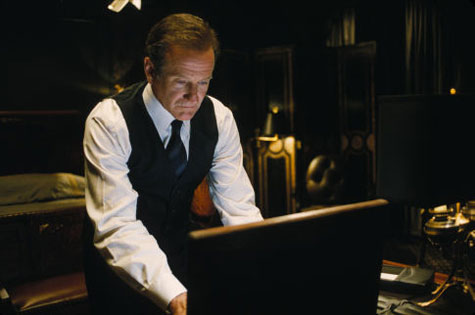
The least successful of a string of more 'serious' movies that Robin Williams made a couple of years ago, The Final Cut boasts a reasonably interesting sci-fi premise - imagining a future in which humans can have their memories implanted on a chip, with the creation of a final, sanitised version after death - that is betrayed by poor execution. Given the short running time and the plot confusions, there's a strong sense that the film was trimmed from a more expansive version, although another 30 minutes of this stuff hardly seems appealing. Williams plays a 'cutter', someone who does the post-mortem memory editing, but it's almost impossible to care about someone who spends the entire film with one fixed expression (Williams's standard 'melancholy' face; it takes a much stronger director to coax a proper performance from him). Various larger themes are raised, but given little serious exploration, and the end result is a frustrating might-have-been.

Friday, May 26, 2006

Kinamand


2005, Denmark, directed by Henk Ruben Genz

Rating: ***

A slight but agreeable entry in the cross-cultural encounters genre, Kinamand (the Danish word for Chinaman) is powered by a fine central performance from Bjarne Henriksen, and often witty observations on the meeting between an unhappy Danish plumber and the extended family of a Chinese restaurant owner. In structure and tone, it's similar to the excellent Norwegian/Swedish production Kitchen Stories, without that film's ring of more universal truth; both films employ an episodic structure and feature the rehabilitation of lonely, closed men. Like that film, Kinamand also inhabits a hermetic world, in which outside developments are almost irrelevant: until the end of the film, there's barely a month when the action shifts away from the grey city block where the plumber and restaurateur live and work. While the film has some sharp-edged marital commentary in its early sections, ultimately it's a warm-hearted affair, although there's an emotional honesty to the final scenes that ensures the film stays away from excess sentiment.

Thursday, May 25, 2006

Pickpocket


1959, France, directed by Robert Bresson

Bresson's Pickpocket is a salutary reminder that the directors of the nouvelle vague didn't entirely emerge from the ether, nor did they have a monopoly on artistic innovation (indeed, by the time Godard, Truffaut and others emerged at the end of the 1950's, Bresson had already matured as an artist), although given Bresson's asceticism it's no great surprise that he took a back seat in terms of public visibility (and no great surprise that the sheer charm of a film like A Bout de souffle led to its over-valuation). 

While superficially simple, Pickpocket tends to raise as many questions as it does answers, for the motivations of the characters are opaque and even inexplicable - in this, the lead character certainly evokes Camus's anti-hero Meursault, although Bresson's notion of redemption is rather different. The director pares the dialogue down to an absolute minimum; words, unlike in so many French films, provide little explanation for the characters' state of mind, and the actors sometimes deliver startling information in the blankest of tones, very much part of Bresson's unique style. The (swift-moving) action -- particularly in the virtuoso re-creations of various pickpocketing techniques -- effectively draws the viewer in, but even given the film's brief running time it proves hard to sustain the air of near-existential mystery, while the lack of any psychological insight makes the ending hard to swallow; there's no sense of the context from which the resolution abruptly emerges.

Wednesday, May 24, 2006

The Insider


1999, US, directed by Michael Mann

The Insider is the best marriage to date between a strong storyline and Michael Mann's striking visual imagination. By Hollywood standards, Mann is an authentic visual artist, here employing a cool, glistening palate (greys, blues, overcast skies and rain), and elegantly composed shots with the occasional, startling flash of colour (his use of music, too, is unsettling and often so insistent that it becomes a character in its own right). It's no great surprise to see Mann take on, once again, a claustrophobic, male world, telling the interwoven stories of malfeasance in the tobacco industry and the network television attempt to expose that malfeasance (the script is exceptional, expertly shifting the emphasis between storylines without creating distractions). Hollywood loves the kind of tale wherein big corporations get their comeuppance (Erin Brockovich, North Country, A Civil Action), but The Insider is far more complex, dealing in shades of grey and probing as insistently at the compromises of network television news (and particularly 60 Minutes, which still likes to think of itself as a serious news outlet, but which is ill-equipped to tell this particular tale, given CBS's own business interests) as it does at the evils of Big Tobacco. Russell Crowe and Al Pacino (as, respectively, a tobacco whistle-blower and a 60 Minutes producer) are both exceptional; in acting terms, Crowe gets the showier role, and his transformation after the hulking cop of LA Confidential is arresting. The supporting cast, too, is generally strong: Christopher Plummer channels Mike Wallace (who comes off as hypocritical opportunist) to eerie effect, while Bruce McGill and Colm Feore have fun playing that rare thing, the good lawyer. By contrast, the female roles - as so often in Mann's films - are of minimal interest; Gina Gershon has an especially thankless role as a bitchy CBS attorney.

Friday, May 19, 2006

Empire of the Sun


1987, US, directed by Steven Spielberg

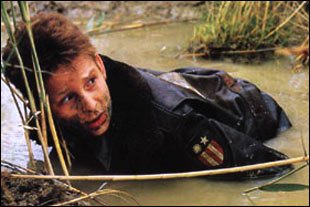
Spielberg takes so much flak - especially from "serious" critics - for his sentimentality and infantilization that his telling of more adult, complex tales often comes as something of a surprise, no more so than in Empire of the Sun, a pretty clear-eyed adaptation of the rigorously unsentimental J.G. Ballard autobiographical novel. The theme, ultimately, is that of the descent of man, particularly in the prison camp context, where even otherwise 'good' people make moral compromises in order to maxmize their own chances of survival (a theme that doesn't really appear in Schindler's List, although the topic would be considerably more explosive in the context of the Holocaust). Despite Spielberg's clear affection for his youthful protagonist, Jim (Christian Bale) descends as far as anyone; the skills he acquires to charm his way out of any situation come at a heavy psychological price (indeed, by the end of he film, he seems like a literal shell), where the notion of loyalty to something beyond oneself is entirely subsumed by the need to get through each day. Even where Spielberg veers towards mawkishness, the film is kept on the rails through strong supporting performances, and the inherent interest in this relatively little-known corner of World War II history. Christian Bale, incidentally, is extraordinary.

Monday, May 15, 2006

Friends with Money


2006, US, directed by Nicole Holofcener

Rating: ***

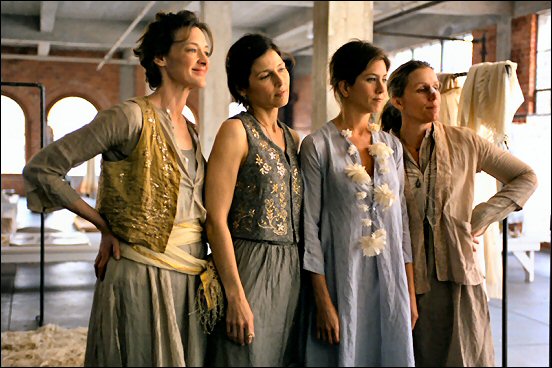
With all of her bubblegum success, it's easy to forget that Jennifer Aniston has some tricks up her acting sleeve; she's the best thing in Nicole Holofcener's engaging and often very funny film, quite a trick when the company includes Frances McDormand and the ever-luminous Catherine Keener; Aniston's lack of vanity here is especially notable. The three actresses - and Joan Cusack, to whom I've never warmed - play a quartet of Los Angeles pals, who, along with their various significant others, lead intertwined lives in which - hence the title - money or the lack thereof plays a major role. Of course, Aniston's cause is immeasurably helped by the fact that she plays much the most pleasant of the four women, even with a vein of mania; McDormand in particular has to mine a vein of unpleasant pettiness that's the antithesis of her more accustomed salt-of-the-earth types (particularly post-Fargo). While Holofcener creates a galaxy of strong, interesting female roles, she's not interested in white-washing her characters, which lends the film considerable dramatic tension, even when things start out civilized. Structurally, the writer-director also does a fine job of interweaving the very different stories, never allowing any one character to spend too much time either on or off screen, while still ensuring that the changes of tempo aren't distracting.

Friday, May 12, 2006

The Graduate


1967, US, directed by Mike Nichols

Rating: ***

Nearly 40 years on, The Graduate remains energetic and frequently amusing, although as the film's running time slips by, it's hard to avoid the sense that it have as much to say as it would like us to think, despite its status (some of it quite conscious) as a commentary on a generation. The observation that upper-middle-class Southern California might be superficial and obsessed with financial or social status is hardly an original thought (nor was it original in 1967); the social world of the film is so oppressive that only a fool wouln't want to rebel against it (even so, the final scene is surprisingly liberating). Dustin Hoffman's star-making performance mostly consists of looking startled by the events going on around him - things seem to happen near him rather than to him - but his fixed expression is so amusing that it carries him throughout the film, while his hesitant line-readings brilliantly capture his character's many confusions. While she's as much icon as actual character, it's hard not to think that Mrs. Robinson gets the short end of the stick: while she's undeniably manipulative and hypocritical, she's also, quite clearly, a troubled, unhappy woman, but the film isn't really all that interested in her fate.

Monday, May 08, 2006

Before Sunrise


1995, US/Austria/Switzerland, directed by Richard Linklater

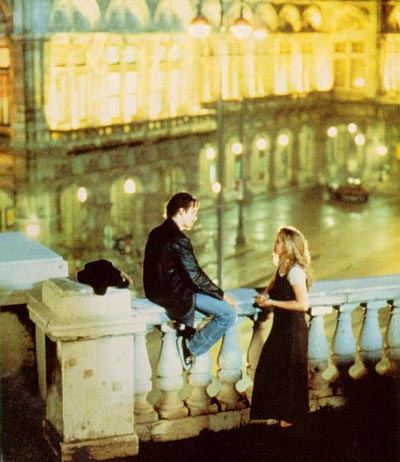
With a set-up as simple as this - two travelers, one American (Ethan Hawke), one French (Julie Delpy) meet on a train and spend most of a day wandering Vienna - it's easy to assume that director Richard Linklater simply turned his camera on and pointed it at the actors. In fact this a very artfully constructed film, with carefully modulated highs and lows, paralleling the process by which the two leads get to know one another, alternately drawn in and pushed back with each series of personal revelations. In sensibility, the film is more French than American, in that these characters get to know one another through words rather than deeds; their attempts to impress each other verbally occasionally fall flat, but that's ultimately key to the charm of the film, which never tries to shade the characters' imperfections (both are also convincingly aware of their excusable flaws). While the core of the film is the blossoming human romance, Linklater also delivers a love letter to Vienna, seeking out some of the city's quirkier corners and inhabitants, and conveying the sense of a city with mysteries hidden around every corner. Both actors are strong; while their sprawling conversations are beautifully played, they also have fun with the silences, never more so when they share a music listening booth and aren't quite sure where to look.

Index

List of all movies

Most of the images here are either studio publicity stills or screen captures I've made myself; if I've taken your image without giving you credit, please let me know.

About Me

Boston, Massachusetts, United States