Wednesday, November 01, 2006

Touki-Bouki

1973, Senegal, directed by Djibril Diop Mambéty

Although it's an exceptionally challenging, and provocative, piece of work, Touki-Bouki retains an extraordinary freshness and power more than 30 years after its release; there's still a palpable sense of anger at Senegal's post-colonial circumstances. The country's relationship with its former 'master', France, is at the core of the film, particularly expressed in the conflicted hopes and dreams of young Africans, torn between tradition and the promises (or illusions) of wealth and opportunity as embodied in the idea of France (or more specifically Paris; Josephine Baker sings "Paris, Paris, Paris" to ironic effect on the soundtrack). Although Diop Mambéty's vision is disorienting and experimental, the tale at the heart of his film is simple, with two young lovers figuring out how to get ahead. The film is shot through with a vein of rich, black humour, and if it lacks the perfect humanist simplicity of his beautiful final work, La Petite vendeuse du Soleil, it does nonetheless have a sense of visual poetry that's often quite mesmerizing. In many ways, too, the film is a keystone to understanding Diop Mambéty's later works, especially Hyènes. Those who are sensitive about the conversion of animals into meat should probably give the film a wide berth, though; the film is blunt about the realities of life in both broad and specific terms.

Friday, October 27, 2006

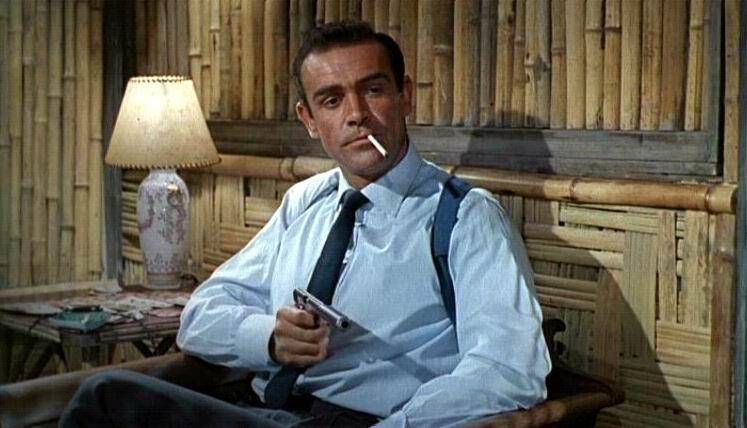
Goldfinger


1964, UK, directed by Guy Hamilton

The Bond franchise really swung into high gear with Goldfinger, which features some of the most memorable moments of the series as a whole: the Korean killer Oddjob, with his lethal hat; Gert Fröbe's tremendously villainous Goldfinger; and perhaps most of all, the sight of Shirley Eaton covered head to toe in gold paint, and draped, dead, on a bed. The plot features the usual control-the-world megalomania (although Goldfinger's desire for economic rather than military control is an interesting wrinkle), while Connery looks to be having as much fun as ever delivering smart one-liners (others, too, get their share of enjoyable zingers). He also gets to take advantage of a large complement of Bond girls, who are treated with spectacular disdain -- with the possible exception of Honor Blackman's Pussy Galore, whose name hardly helps her to be taken seriously, but who makes a case as more than just eye-candy. Despite some dodgy back-projection, the stunt work is entertaining, especially in the car-chase sequences, while Ken Adam's sets are, as ever, excellent: the Goldfinger house, with its secret panels and moving walls, is particularly fun.

Thursday, October 26, 2006

Le Corbeau

1943, France, directed by Henri-Georges Clouzot

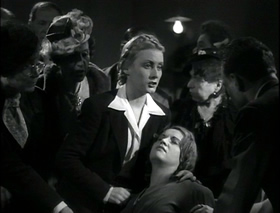
A spectacularly bitter piece of work from one of cinema's great pessimists, Le Corbeau is also a fascinating allegory about Occupation France, made for a German-controlled company in 1943. The film is set in a small town in the Paris region, where a writer of poison-pen letters has created a toxic atmosphere of suspicion; the epistles implicate virtually every one of the town's public figures. Although the director's usual despair in humankind is foregrounded, the very specific wartime context also lends his portrait of incestuous small-town life unusual depth and power. The script, by Louis Chavance and Clouzot, includes a wickedly satirical portrait of petty officialdom, noxious at the best of times but especially odious in the context of collaboration with the German authorities (who remain, however, invisible; indeed, the war itself is primarily an offscreen presence), but also comments presciently on the kind of mob justice that characterized, however understandably, the period immediately after liberation. There's an especially delicious sequence subverting the French classroom experience, with an extended dictation that ropes in the town's petty dignitaries. Among a host of striking images (perhaps most notably that of a letter falling from a church gallery), Clouzot makes especially brilliant use of shadow and silhouette; although the action mostly takes place during the day, the film was a major influence on the development of film noir, both visually and in that genre's view of the human condition.

Wednesday, October 25, 2006

District B13

2004, France, directed by Pierre Morel (Original title: Banlieue 13)

Yet another French action film bearing Luc Besson's fingerprints, this is a showcase for the physical skills of athlete David Belle and stunt performer Cyril Raffaelli; the storyline, such as it is, is absolutely subordinate to the extended action sequences. Belle is the inventor of a kind of urban sport called parkour, which basically involves climbing up and jumping off large buildings, and the opening sequence is an excuse to watch him throw himself around with abandon. He plays Leïto, a good-hearted resident of a benighted neighborhood in the Paris suburbs circa 2010, enclosed behind concrete walls in the hopes that the lawlessness can be confined and that the criminals will take each other out. Events throw Leïto together with Cyril Raffaelli's supercop, who is introduced in equally spectacular fashion, for a showdown with the baddest badass in District B13 (for our viewing pleasure). Although events in the French suburbs make this seem vaguely topical, there's really no credible political commentary (the resolution is insultingly pat), just vast amounts of gunplay and stunt action. The action sequences are shot with minimal special effects work, but the editing is so frenetic that it's often hard to appreciate the physical skills on display, which short-changes Belle in particular; the sequence which introduces Raffaelli, though, is brilliantly choreographed. Still, for completely mindless action entertainment, this is about as good as it gets this side of an old-school Hong Kong action movie; the bodycount is similar, too.

Thursday, October 19, 2006

The Last King of Scotland

2006, UK, directed by Kevin Macdonald

Set in Idi Amin's court, The Last King of Scotland is Kevin Macdonald's first fiction feature after two solid documentaries (Touching the Void and Four Days in September). He's less assured here, despite working with some historical characters - most obviously Amin himself, played with swagger and intensity by Forest Whitaker - as the latter half of the film sprawls out of control, stretching belief to breaking point. James McAvoy plays Nicholas Garrigan, a young Scottish doctor who heads to Uganda on a whim, and swiftly ends up as personal physician to the recently enthroned Amin, a man capable of warmth, generosity and, in the next instant, thuggery of stomach-churning proportions. To its credit, the film doesn't make Garrigan especially likeable: he's flip and wilfully oblivious to the fates of others, ignoring the realities around him until it's far too late. Unfortunately, the dangerous bedroom liaison in which Garrigan indulges doesn't have the ring of truth to it, even for a larrikin like him, and seriously undermines the film. In its attempts to craft a boozy white-man-loses-his-innocence tale, the film skates cursorily over the real events of Amin's Uganda; that's most egregiously true in the use of the Entebbe hijackings as a backdrop, but the expulsion of the Indian population, a forced migration that's still rippling around the globe, is also dealt with in summary fashion, while the horrors endured by the Ugandan population are relegated to a brief montage (though whatever the filmmakers' narrative shortcomings, they deserve credit for shooting their film on location). Whitaker's burly performance will attract the lion's share of critical attention, but Simon McBurney and an unrecognizable Gillian Anderson are also excellent in support; McAvoy's performance, by contrast, didn't seem best-suited to the rest of the film.

Wednesday, October 18, 2006

Thank You, Mr Moto

US, 1937, directed by Norman Foster
Rating: ***

Often lazily lumped together with his cinematic contemporary Charlie Chan, Mr. Moto has little in common with the affable Chinese detective save his Asian origins (and the fact that both were played by Caucasians). Although Moto has moments of great generosity towards those fortunate to be called his friends, for the most part he's a cynical operator, acting in his own interests (or those of his shadowy employers), and quick to kill if the need arises; the need arises a number of times in this swift-moving tale of ancient Chinese treasures and the many Westerners who'd like to obtain them. More than anything else, this kind of serial film was killed off by the advent of television, which is a shame given the craftsmanship of even these humble B-pictures (and this looks great in a cleaned-up DVD version). One wonders if the shows that function as abbreviated versions of the classical formula film (like Law & Order) will stand up as well 70 years after the fact.
For those who like to keep tabs on that kind of thing, this is old Hollywood at its casting best: Lorre, a Hungarian, plays the Japanese Mr. Moto, while the excellent Korean-American actor Philip Ahn is cast as a Chinese prince, and Pauline Frederick, a Bostonian, appears as his mother, in her last film role.

Tuesday, October 17, 2006

Punishment Park


1971, UK/US, directed by Peter Watkins

Punishment Park is an odd mixture of the dated and the prescient, capturing both the hysteria that characterized the period during which it was made (the high tide of the Nixon presidency, and the wave of radicalism that parallaled it), as well as the legal shenanigans of the post-September 11 era. The film intercuts a series of quasi-legal tribunals (mostly featuring young "radicals") with scenes from a bizarre form of punishment camp that involves a desert march towards an American flag (perhaps the most thuddingly obvious device in the film), all shot with a single documentary camera (ostensibly from the BBC). While the documentary style works well - the tribunal scenes in particular have the ring of truth - the predictable involvement, later on, of the film crew is less convincing. The acting, mostly by non-professionals, is exceptional. Director Peter Watkins, making his only American film (but by no means his most radical), threw out his script and coaxed improvised performances from his cast, most of whom were no doubt influenced by the stressful conditions of a difficult, compressed shoot; in that, Punishment Park has something of the air of a live-action Stanford Prison Experiment (conducted the summer after the film was made). The film's key point, that governments tend to be quick to throw out legal norms in difficult times, remains, of course, as relevant in 2006 as it was in 1971; the young policeman's retort that international pressure won't change anything is perhaps the most chilling moment of all.

Sunday, October 15, 2006

The Village


2004, US, directed by M. Night Shyamalan

Rating: ***

M. Night Shyamalan has painted himself into something of a cinematic corner with his successful exercise in branding: he's expected to deliver a slow, oblique, atmospheric build-up, followed by a twist that turns everything on its head. The setting this time is the late 1890's, in a remote American village, surrounded by forests that house dangerous creatures with whom a truce has been reached (this immediately leads to some questions about how the village engages in trade for building materials, but those matters are never really addressed). The villagers all speak as though they've read too many classic novels, although in one way this is an effective device to underline their lack of any connection with changes in the exterior world. While the cast is strong, they don't always have a whole lot to do; Brendan Gleeson and Sigourney Weaver do a lot of standing around looking tortured and not much more, although William Hurt's distinctive voice is well-employed, while Bryce Dallas Howard is impressive as a tomboyish blind girl who is the agent by which the film's 'shock' is revealed. Although the twist is certainly guessable, it's good enough to get audiences sitting up, and it lingers longer than the overblown 'boo!' moment of The Sixth Sense.

The Queen

2006, UK, directed by Stephen Frears

The busy Stephen Frears's latest film is set during one of the strangest weeks in recent British history, the seven days in late 1997 following the death of (the former) Princess Diana, with a focus on the relationship between the recently-elected Tony Blair (enjoying his Giuliani moment) and the Queen (played with surprising warmth, and consummate skill, by Helen Mirren). While the Boston-area theatre audience enjoyed The Queen as something approaching high comedy, this Irish viewer saw a more serious-minded film.

Based on that audience reaction at the screening I attended, it's not hard to see why the film might be accused of pandering to American viewers, but the behind-the-scenes wrangling will be much more meaningful to a viewer familiar with the Blair political team (especially the now-departed Alistair Campbell). Although the film never reveals whether it's with or against the Queen - at one stage, Blair (who is played with great conviction by Michael Sheen) asks that someone "save these people from themselves", while later he launches a passionate defense of the monarch and all she represents - it's a fascinating imagination of what the interactions between the sovereign and "her" Prime Minister might have been as that bizarre week unfolded. The opening sequences are designed as a criticism of hereditary rather than elected power, but the film's central thesis is that Elizabeth II and Blair are both essentially political animals, clever pragmatists ultimately ready to do what's necessary in the context. Peter Morgan's intelligent script makes clear (though not many critics seem to get the message) that viewing the monarchy as an outdated institution isn't necessarily incompatible with a sympathetic view of a woman who is, to an overwhelming degree, conditioned by her upbringing and age to behave in rigidly prescribed ways.

Saturday, October 14, 2006

Closer

2004, US, directed by Mike Nichols

Rating: **

Despite the presence of four arrestingly attractive actors, Closer is no-one's idea of a date movie - although Todd Solondz might find it amusing. The four leads - the film was written by Patrick Marber, from his own play, and he's made no attempt to open the action up, notwithstanding some chilly London locations - become involved with and betray one another in what is apparently supposed to be some kind of commentary on contemporary mores but which ultimately becomes a rather numbing and sterile exercise. Marber's characters are uniformly disagreeable; there's no real tension in a film where the principals so richly deserve one another, notwithstanding the excuses they attempt to make for their behaviour. It's a shame, really, because director Mike Nichols wastes several solid performances, especially from Clive Owen, who adds a fire that seems at odds with the very mannered dialogue and which occasionally hints at an actual human soul, if not necessarily a very pleasant one.

Tuesday, October 10, 2006

Kicking and Screaming


1995, US, directed by Noah Baumbach

Kicking and Screaming is unavoidably reminiscent of Diner (for the 1990's generation), given the echoes of both plot (a group of mostly male college friends attempting to come to terms with the post-college world) and tone. There's an undenial sadness in the eyes of these young people, sure that their lives will inevitably be somehow less exciting - for better and worse - than those of at least some previous generations (one character wishes he were about to go to war - then thinks better of that and wishes instead he was about to retire after a lifetime of meaningful work; the two seem equally exotic).

There's also that Fitzgeraldian worry that everything post-college will "savour of anti-climax", given the way that the college experience has been framed. Although the film meanders a little in the first twenty minutes before finding its bearings, writer-director Noah Baumbach displays a sure touch with dialogue from the first scene (though there's a mannered air to some of the lines, there's also a warm humour on display). The film acknowledges its own indulgence in triviality in amusing ways, and in between the catty exchanges there's a slow, almost imperceptible accretion of more meaningful commentary on a particular post-80's, pre-Internet generation. Although the performances are uniformly fine (and generally quite brilliantly deadpan), Olivia d'Abo is especially notable: she's never been lovelier, or better, at least on the big screen, and there's a sweet poignancy in her final scene that perhaps defines the overused descriptive 'bittersweet'.

Sunday, October 08, 2006

The Illusionist


2006, US, directed by Neil Burger

An absorbing arthouse/mainstream crossover, The Illusionist is well-acted, beautifully lit and possessed of a rare sense of time and place -- Vienna at the opening of the twentieth century, a place mired in court intrigues. Although the pacing is sometimes languid, Neil Burger never lets the story flag, carefully shading in details of character and allowing the viewer to piece together the central mystery of the film (the fact that it's not hard to guess in no way detracts from the film's interest).

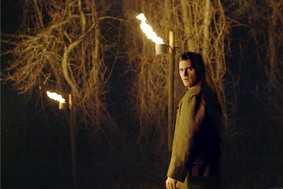
Almost the entire film seems to take place at night, and Burger and his director of photography, Dick Pope, do a fine job playing, literally, with fire, gaslight and shadows. Edward Norton delivers his finest performance since since Spike Lee's 25th Hour as Eisenheim, an illusionist who has mastered the magical arts of East and West, and who discovers a new purpose for his skills on his return to Austria. Norton projects a kind of world-weariness that's mesmerizing in its own way, and that enables Eisenheim to carry off his trickery. Jessica Biel, who plays the object of Eisenheim's affections and, not incidentally, the rumored future crown princess, is luminous, capturing the kind of passion that might well lead a man to sacrifice his career. Paul Giamatti has an interestingly ambiguous role as a compromised police chief in the service of the odious crown prince; although his final scene is perhaps a little obvious, his awakening to the realities of his position is ably sketched.

Saturday, October 07, 2006

Topper


1937, US, directed by Norman Z. McLeod

A featherweight comedy, Topper was a huge hit in its day (though it's a little hard to understand why Depression-era audiences enjoyed the antics of some not-always-sympathetic representatives of the moneyed classes), but it hasn't aged especially well. While there are a few sharp exchanges, and some of the banter-between-the-sexes that characterized the best of the screwball comedies, the very slight plotting and excessive length bog the film down. Cary Grant is adequate, but he's still in the process of developing his onscreen persona, and he's offscreen far too much. By contrast, Roland Young (like Grant, another English transplant) as the eponymous Topper steals most of his scenes, most especially one where he tipsily dances around the room (showcasing, not incidentally, the kind of light stage-comedy skills employed so smoothly by many of the Golden Age's actors). In the smaller roles, Eugene Pallette pops up as a hotel detective (a role much beloved of Old Hollywood that you rarely see these days), while Hedda Hopper appears briefly as a socialite; her gossip-mongering career was taking off around this time, although she had regular acting gigs for another five years. In the unlikely event this one gets a 21st-century remake, you can be sure that there won't be such blithe drunk-driving in the opening scenes.

Sunday, October 01, 2006

The Matador

2005, US, directed by Richard Shepard

Rating: ***

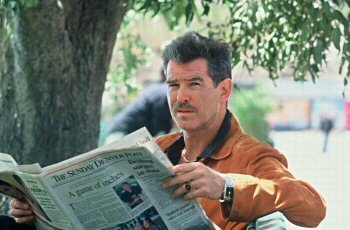
Although it's neither as slick nor as hip as it would like to think, The Matador is lifted well above average by Pierce Brosnan's delightfully rumpled performance as an assassin who's experiencing something of a mid-life crisis. The film's morality doesn't bear much examination - it's queasy at best, and downright tasteless in a montage sequence that outlines Brosnan's global exploits over a six-month period - but there's tremendous fun to be had with Brosnan's characterization of Julian Noble, whose verbal ineptness continually causes offense to those he attempts to befriend. His meeting with the milquetoast Danny Wright (Greg Kinnear) isn't especially convincing but once the two are thrown together, Noble's attempts to come across as a halfway decent human being generate much uncomfortable humour. While John Cusack's similar character in Grosse Pointe Blank was far too cute to be convincing, Brosnan summons up the essential seediness of his chosen profession, turning his Bond and Remington Steele personae on their heads, and showing a considerable grit in the process.

Saturday, September 23, 2006

Memories of Murder

2003, South Korea, directed by Bong Joon-ho


Based on the real-life events surrounding South Korea's first recorded serial killer case in the mid-1980's, Memories of Murder is closer to (very) black comedy than it is to police procedural. While the cops come off pretty well in the average detective film (after all, they usually solve the crime), this movie is unlikely to be a hit even in Korean squadrooms. Any rural police force would be overwhelmed by the events that transpire in the film, but the three detectives at the heart of the case are left to their own devices to a quite remarkable degree, and their investigative methods are, to say the least, unconventional (when not downright incompetent).

There's a strong political point being made here, with broad suggestions that the government of the time was much more interested in suppressing democracy demonstrations than in catching a rapist/killer, but the absence of central investigational oversight is lacking in credibility (and doesn't seem to fit with the facts). That said, the sense of South Korea as a country ill-prepared for its headlong entry into the global economy, and still existing rather pathetically in the shadow of its American benefactor, is powerful, while the portrait of a small town in the grip of fear is generally convincing. Director Bong Joon-ho never quite settles on a unified tone, although he has a knack for atmospherics and off-kilter humour.

Thursday, September 14, 2006

Vera Drake

2004, UK, directed by Mike Leigh

Comfortably Mike Leigh's strongest film since Secrets and Lies, Vera Drake carefully evokes a very specific time in British history - the austere post-war years - as the backdrop for a tale of quiet yet radical rebellion. Imelda Staunton is astonishing, delivering the performance of her career as Vera, a gentle, caring woman who works as a house cleaner and who, in her spare time and in secret, conducts back-street abortions at no charge. Her clear-eyed view of the realities of the world is calculated to sow confusion in the minds of those who disagree with abortion; there's no doubting her integrity and her attempts to restore some kind of dignity to those around her, and her lack of eloquence doesn't prevent her from expressing her views to telling effect. The sense of time and place are brilliantly created through a series of apparently unconnected early vignettes, intermingling scenes of home and workplace life to great effect (one scene where the men discuss 'what kind of war' they had is especially telling); the actors who play Vera's family are uniformly strong, creating a detailed set of character studies. The one downside is Leigh's inability to create rounded middle- or upper-class characters; as in his other films, his class views are so narrow that the upper-class characters, especially, are almost without exception insufferable or unsympathetic. As a consequence, a subplot about a wealthy young woman having an abortion seems heavy-handed, over-emphasizing a point already made subtly throughout the film.

Wednesday, September 13, 2006

Les Dames du bois de Boulogne


1945, France, directed by Robert Bresson

Unlike the austere films that Bresson began to make from 1950 onwards, Les Dames du bois de boulogne drips with the style and melodrama of classical Hollywood (it's not hard to imagine someone like Bette Davis in the role so perfectly played here by María Casares). A tale of very chilly revenge (a society lady takes such exception to the end of her relationship with a rather feckless aristocrat that she engineers his reputation-destroying wedding to a prostitute), the film has dialogue by Jean Cocteau, and it's not hard to see a trace of fairy tale in the conclusion, although it's closer to the redemptive power of the concluding moments of Bresson's own Pickpocket rather than the texture of Cocteau's La Belle et la bête, which was being shot when this film was released. The film's great weakness is the insipid Paul Bernard, who plays the aristocratic lover; Cocteau's occasionally delirious meditations on the turmoils of love fail to convince when uttered by such a bland leading man. It's the same problem that hampers Brief Encounter: the passionate declarations of a passionless individual, but then that, too, isn't entirely uncharacteristic of Bresson, who often favoured remarkably flat performances.

Sisters of the Gion


1936, Japan, directed by Mizoguchi Kenji

A beautiful early feature film from Mizoguchi, which overcame the terribly poor transfer available for viewing [I subsequently saw a restored version], Sisters of Gion is a fascinating portrait of a vanished time in Japanese history, set before the Second World War in Tokyo's geisha district. The film makes clear that this way of life is already disappearing: the two sisters of the title are divided on the proper behaviour expected of a geisha, with one searching for a striving patron, the other loyal to a diminished benefactor. Although the film is bursting with incident - the fate of the two sisters seems to hang in the balance until the final moments - it's shot in a very simple, direct style, with many of the carefully composed long shots, often using frames within frames, for which Mizoguchi is famous. He intersperses that straightforward style with several gorgeous tracking shots, including one that opens the film, which reveal he was already master of the mobile camera. If there's any weakness to the film, it's perhaps the overly didactic ending, which tends to repeat what the director has so eloquently conveyed throughout; it's reminiscent of the conclusion of Sembène's Mandabi, which also crosses the line from account to pamphlet, but in both cases that may be illustrative of filmmakers in the process of finding the voice with which to express their committed social vision.

Sunday, September 10, 2006

Common Wealth


2000, Spain, directed by Alex de la Iglesia (original title: La Comunidad)

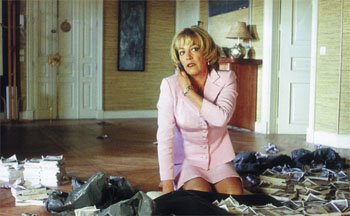
A wacky Hitchcockian riff, Alex de la Iglesia's film is the blackest of comedies, with Carmen Maura as a real estate agent who discovers riches in an old apartment building only to find that the other tenants are determined to get their hands on the money (and they're prepared to take some pretty extreme measures to do so). The opening half-hour, during which the cash is uncovered, is laden with suspense; the direction is taut and the set design is eerily clever. The strange events that follow are amusing but certainly over-extended, straining credibility even in this outlandish genre, though the references to Hitchcock films consistently hit the mark, while de la Iglesia has a devilish sense of humor that pops up at the most unexpected moments. Carmen Maura is a standout in the lead, playing it straight in the midst of a building full of crazies, and clearly enjoying the wild antics; it's great to see that Almodóvar isn't the only Spanish director capable of creating a meaty role for an actress over 50, and a shame that American movies can't follow their lead.

Friday, September 01, 2006

Shark Tale


US, 2004, directed by Bibo Bergeron, Vicky Jenson, Rob Letterman

With the bar set so high by the Pixar films - especially Finding Nemo and The Incredibles - and Dreamworks' own Shrek films, it's hard not to be a little disappointed by Shark Tale: while it zips along nicely, with little wasted time, the basic storyline is a little trite, and the lead character (voiced by Will Smith) is a too hyperactive and self-obsessed to really prove endearing. However, while the overall framework isn't a success (and can't help but suffer when compared to the undersea antics of Finding Nemo) many of the incidental details are extremely enjoyable. Robert de Niro and - especially - Martin Scorsese are entertaining in a Mafia-movie parody (the Scorsese-voiced character has amusingly bushy eyebrows), and even funnier are Ernie and Bernie, a pair of rasta jellyfish, one voiced (for full authenticity) by Ziggy Marley.

Thursday, August 31, 2006

El Bola


2000, Spain, directed by Achero Mañas

Spain's contemporary film production is so dominated, in English-speaking countries at least, by Pedro Almodóvar that it's refreshing to come across a film that eschews his sometimes melodramatic stylings and embraces the gritty realities of a Madrid neighborhood. El Bola (Pellet) is a kid with a rough home life whose friendship with a new kid, Alfredo, seems to offer a form of escape; his friend's unconventional father is especially appealing in comparison to his own authoritarian dad. Although the contrasts between the two homes are occasionally drawn a little too sharply, there's a powerfully humanist impulse behind director Achero Mañas's storytelling, dignifying more than one marginalized character in a manner reminiscent of Benito Zambrano's beautiful 1999 feature Solas. Like that film, El Bola is generally clear-eyed in its view of humanity, steering clear of sentiment while finding a surprising beauty in the small events of everyday life; there's also a powerful critique of the frustrations of ordinary people in their dealings with the irrational workings of officialdom. The performances throughout are excellent: the two young actors who play El Bola and Alfredo are wonderfully natural, and free of the trappings of onscreen cuteness, while Alberto Jiménez is outstanding as Alfredo's father, a part that in less capable hands might well have strained credibility.

Wednesday, August 30, 2006

Fools Rush In


1997, US, directed by Andy Tennant

For every romantic comedy that works, there's are three like this, where it all falls apart: there's no chemistry between the leads, the supporting characters are no fun, and worst of all, it goes on far too long. While Matthew Perry's shtick was enjoyable on Friends, here he's unconvincing as an allegedly hard-charging nightclub designer, while Salma Hayek's performance is awkward; her line delivery is especially distracting, although the clanging script hardly helps (the writers really have a tin ear for the nuances of dialogue at times). The portrait of the intersection of a warm Mexican family and a chilly WASP clan has some potential as it overcomes the initial clichés, but ultimately the film can't do much with the fact that we just don't care about the central pair.

Monday, August 28, 2006

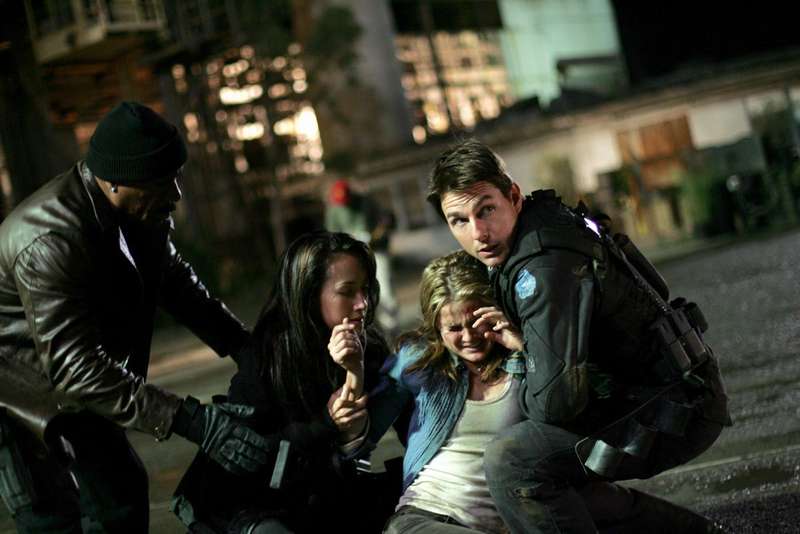
Mission: Impossible III


2006, US, directed by J.J. Abrams

Rating: ***

The third entry in the MI franchise marks a step back up after the silliness of the John Woo-directed second installment; the slow-mo action scenes are mercifully absent, and director J.J. Abrams uses a hand-held camera to capture some of the adrenaline of his TV hits Alias and Lost (his transition to the big screen is pretty successful, too, while his sense of the all-seeing eyes of the CIA-like Impossible Mission Force is of a piece with the mysterious organizations of Alias). This time around, though, the support group is colorless: while Ving Rhames is always enjoyable, his character hasn't developed much from the overgrown teddy bear of previous films, and the remainder of the Tom Cruise-led crew is anonymous. As the villain, Philip Seymour Hoffman has fun, generally refraining from chewing the scenery (it's nice, too, that the film doesn't waste time on a elaborately silly back story; he's bad, and that's about all you need to know).

Saturday, August 12, 2006

From Russia With Love


1963, UK, directed by Terence Young

It didn't take long for the Bond producers to figure out the magic formula, for this second entry in the series is probably the best of all the Bonds. Like its predecessor, it's relatively small in scale: although über-villain Blofeld is introduced, the real threats are in the more down-to-earth forms of Robert Shaw and Lotte Lenya, two of the most memorable henchmen in the 40-year-plus history of the films. Shaw is perfectly cast as a blond ex-army man, credibly suave when required, and equally credibly thuggish when the time comes (especially in a great fight scene in the cramped confines of a train compartment). The exotic location this time around is Istanbul, conjured up with plenty of cinematic charm, and an enjoyable performance from Pedro Armendáriz (in his last film role) as Bond's man on the ground. Although Bond has had just one film to establish his reputation, it's clear that SPECTRE considers him the biggest threat to their activities, and they concoct an elaborate false plot to entrap him -- with Bond happy to take the female bait. The comically over-the-top sets, and even more comical killing methods, of later films are absent here, but Desmond Llewellyn makes his first, brief, appearance as Q, a fixture that is one of the most enjoyably playful aspects of the series.

Friday, August 11, 2006

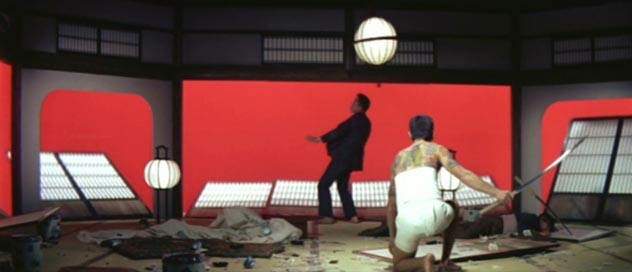
Kanto Wanderer


1963, Japan, directed by Suzuki Seijun

As Tom Mes writes in the DVD liner notes to Kanto Wanderer, this isn't as balls-to-the-wall as some of Seijun Suzuki's later work, but it's a great primer on his subversive experiments within the studio system, experiments that would eventually get him fired from Nikkatsu studios. The core of the film is a pretty conventional story of honor and loyalty among thieves, or more precisely the yakuza. Even as Suzuki throws in some reflection on the changing role of the yakuza in post-war Japanese society, there's no doubt he contributes to the romanticization of the old gangster ways, sympathizing with the old warrior types as they deal with the rise of the oafishly criminal new generation. Suzuki is really more interested, though, in playing with genre form: his lovely widescreen camerawork and brilliant use of interior spaces - most especially in the anti-climactic climax - are the beginnings of a path of consistently playful experimentation. The picture of 1960's Japan, on the cusp of a serious boom, is fascinating; the struggle to retain some of the good of the past, even in the gangster context, is sometimes surprisingly poignant.

Saturday, August 05, 2006

The Nest


2002, France, directed by Florent-Emilio Siri (original title: Nid de guêpes)

Although it's jam-packed full of allusions to other films, The Nest still manages to feel surprisingly fresh, dispensing with the often hackneyed backstories with which action characters are burdened in favour of delivering elaborately choreographed thrills and spills with considerable style (director Florent-Emilio Siri showed similar technical mastery in his American debut, Hostage). Like Hostage, the film's set-up is complex, with intersecting stories, but Siri sketches the details in efficiently; even though the plot depends on a preposterous coincidence, the action is so breakneck that there's no pause for reflection on this at the time. There are obvious reference points in American films like Assault on Precinct 13 and Die Hard, as well as to such Hong Kong actioners as Hard-Boiled (like that film, it does occasionally beggar belief that a small war could take place in an urban location without anyone noticing), although the first 20 minutes are a homage to the masterful French crime flick Du rififi chez les hommes, with its famously silent heist sequence. While it might seem to be something of a bastard child, there's still a definitely local feel to events, with allusions to crimes in the Balkans and the clever use of a Bastille Day background. Though it is, in the end, slick commercial fare, Hollywood could learn a thing or two from this kind of lean performance.

Friday, August 04, 2006

Cure


1997, Japan, directed by Kurosawa Kiyoshi

Like many J-horror movies, Cure is concerned as much with atmosphere as it is with conventional narrative logic. Although it has an obvious affinity with the American film Seven, it lacks that film's ruthlessly unspooling plotline, preferring to concentrate on shadings of mood and background. The who and the how of the film's crimes are revealed early on, with director Kurosawa focusing instead on the far more unsettling 'why?' after a wave of inexplicable murders hits an unnamed Japanese city (the Seven comparison is heightened with the use of an anonymous but grimly run-down location: the decrepit buildings, cold weather and trash-covered beaches are the antithesis of the usual cinematic images of Japan). The agent of the killings comes to see like a kind of urban terrorist, arming new weapons in the most insidious and inexplicable of fashions, such that everyone is suddenly a suspect. Although Cure shares a few too many traits with other J-horror films to be truly original - the pacing and atmosphere are similar to films like Ringu, while there's even a video at the center of the mystery - the chilly camerawork and unsettling use of industrial sounds lift the film well above the standard genre confines, while Kurosawa displays a subversive sense of humor at times, perhaps most notably in his perverse choices of music at certain key moments.

Thursday, August 03, 2006

The Break-Up


2006, US, directed by Peyton Reed

Rating: ***

After seeing The Break-Up I had to go back and watch the trailer again, having formed the impression that this was the usual 90 minutes of problems and all's-well-that-ends-well template; apart from noting that much of the trailer never made it into the movie, it didn't seem like an unreasonable assumption. Instead, this is about as close to the bone as mainstream Hollywood fare gets - and not necessarily the funnybone, although there are some extremely amusing sequences (often of The Office variety: funny and yet painfully embarrassing at the same time). There's real fire and vitriol here as Jennifer Aniston and Vince Vaughn go their separate ways (onscreen) after two years under the same roof, with extended and nasty fights that showcase Aniston's acting skills (already seen in films like The Good Girl and Friends With Money) and Vaughn's ability to deliver astounding chunks of text with nuance and rhythm (part of what made Wedding Crashers so manically funny). There's good support - and consistent fun - from Jon Favreau and Judy Davis (though you'd wish that an actress as fine as Davis had better parts, she has fun with this one), while Vincent D'Onofrio brings his full bag of tics to the part of Vaughn's older brother, and Jason Bateman does well by the role of the one rational friend the pair has left between them. Some fawned over director Peyton Reed's last effort, Down With Love (enjoyable though hardly original: haven't these critics seen the musical episode of Buffy the Vampire Slayer?), but this is much flatter; the script and a bunch of actors who know their stuff do the heavy lifting.

Tuesday, August 01, 2006

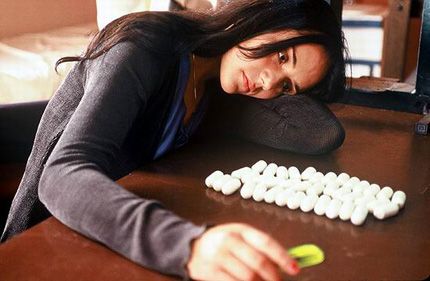
Maria Full of Grace


2004, US/Colombia, directed by Joshua Marston

A stripped-down story of a Colombian woman's experience as a drug mule, Maria Full of Grace is a grimly believable account of the realities of the drug industry at the ground level (we never see beyond those immediately involved with preparing the drug-couriering women). Whether in Colombia or in the US, the film rarely leaves the side of Maria (played with great conviction by newcomer Catalina Sandino Moreno), deftly sketching in small-town Colombian life in the opening stages, and giving an equally vivid picture of Queens's Litte Colombia neighborhood later on. First-time director Joshua Marston has a documentary eye for detail, and it's fascinating to be brought into parts of the world (distant and near) that are usually invisible (the intricacies of the mule's tasks are also conveyed unflinchingly). If the film is lacking in any respect, it's perhaps in its unwillingness to more rigorously reflect on Maria's motivations; the drug-running experience comes to seem like a bizarre kind of self-affirmation, as if the consequences can be shrugged off in the headlong pursuit of the American Dream. That somehow seems like a slap in the face of the truly decent people she encounters.

Thursday, July 27, 2006

Ugetsu Monogatari


1953, Japan, directed by Mizoguchi Kenji

One of those rare films that fully lives up to its advance billing, Ugetsu Monogatari is a unique blend of realism and fantasy, told with great cinematic virtuosity. Set in the 16th century against a backdrop of civil war, the film opens, nonetheless, in a bucolic village, and the first 40 minutes are an exquisite depiction of peasant and family life, focused on tiny details of craftsmanship and family relations; the cooperation between farmer/potter Genjuro and his wife Miyagi is both convincing and deeply moving. Even as her husband senses the opportunities for enrichment created by the still-distant war, Miyagi makes clear her own contentment at her small family's place in the world; Mizoguchi delicately conveys the sense that there's much to lose even in this apparently simple way of life.

The carefully rooted realism of the village sequences ensures that the ensuing developments - as the film departs in directions both mysterious and and tragic - are all the more effectively disturbing. Genjuro's encounter with the mysterious Lady Wakasa (played, to startling effect, by Machiko Kyo) is a wrenching viewing experience; that the depths of Genjuro's betrayal can only be revealed by a fatal obsession says much about Mizoguchi's unsentimental world-view. Visually, the film is a feast, with gorgeously composed shots and a camera that seems constantly on the move, rising high over the action, then prowling at ground level, perhaps never more effectively than in the beautiful shot that accompanies Genjuro's return home, and which perfectly encapsulates the film's otherworldly feel. The Criterion Collection treatment underlines, again, what a shame it is that more of Mizoguchi's films aren't available on DVD [this situation has, happily, improved a good deal since 2006, not least through the efforts of the Criterion Collection].

Tuesday, July 25, 2006

Dr. No


1962, UK, directed by Terence Young

The first Bond movie, despite its exotic trappings, is one of the most restrained in scale: almost all of the action takes place in relatively tiny Jamaica (or on Pinewood sets), rather than the near constant jet-setting that often proved confusing in later movies. While the overall template is already firmly in place - Bond takes on a sinister megalomaniac intent on world domination - many of the flourishes that would later prove so critical to the franchise (Desmond Llewellyn's turns as Q, for instance) have not yet been grafted on.

While the supporting structure is thus not quite as comfortingly familiar, Sean Connery, as Bond, appears to have been born fully formed into the part: from the first moment he appears onscreen, he exudes a charm and assurance that transcends the often rickety plot and the archly incredible villain. Though Ian Fleming's first Bond book had appeared almost a decade previously, Bond seems a perfect 60's hero: he embodies the attractions of the golden age of jet travel, apparently possessed of infinite resources and resourcefulness, and engages in casual sex and even more casual violence in a manner that seems to typify that decade, throwing off the comfortable but dreadfully unexciting 50's with glee. The first 'Bond, James Bond' and the familiar Bond theme remain as stirring as ever, while Ursula Andress's emergence from the sea is one of the franchise's most iconic and enjoyable moments.

Monday, July 17, 2006

Poisson d'avril


1954, France, directed by Gilles Grangier

It’s odd that the disc this film appears on is marketed as part of a collection of films featuring the hugely popular French comic Louis de Funès, since he appears in just two scenes, and his performance, the broadest of caricatures, is hardly his best work. The star of the film is the subtler Bourvil, cast, as so often, in a salt-of-the-earth part; the actors would be reunited a decade later in Le Corniaud and La Grande vadrouille, two of the French box-office’s biggest all-time hits. Although Poisson d'avril is exactly the kind of simple, production-line fare that prompted so much dismissive comment by the nouvelle vague critics and filmmakers (often one and the same) just a few years later, Bourvil’s easygoing charm and the often witty script (with dialogue by the great Michel Audiard, whose phrasing and rhythms cast a long shadow over French popular filmmaking of the 1950’s and 1960’s) ensure that the film remains very watchable. Gilles Grangier, who directed many of Jean Gabin’s later films, gives his actors room to savour the script’s best lines, while there’s a surprising vein of commentary on attitudes to the wartime experience.

Saturday, July 15, 2006

De battre mon coeur s'est arrêté


2005, France, directed by Jacques Audiard (The Beat That My Heart Skipped)

Director Jacques Audiard has carved out one of the most interesting resumes in recent French film, with his own very particular take on noir themes of violence and redemption, and fine skills as both a wordsmith (hardly surprising given that his father was the great dialoguist Michel Audiard) and a director of actors, especially of younger actors like Mathieu Kassowitz, Emmanuelle Devos and, here, Romain Duris. Though Duris has taken on edgy material before, he’s never been more convincing than in this film; the conflict between his professional violence and the calm he seeks in music is brilliantly conveyed in a performance of control mixed with explosive aggression. The plot is taken from James Toback’s 1978 film Fingers, but the adaptation is so seamless that it feels as though it was conceived in the underbelly of Paris, while the addition of a subplot involving a piano tutor who speaks no French is highly effective. Duris's Thomas should be exceptionally unsympathetic, given his unpleasant work in the employ of his slumlord father, but his desire for a better life, and his dedication to what seems like a foolish dream, not to mention the actor’s energy, render the character complex, confusing and appealing. There’s able support, too, from a rumpled Niels Arestrup, the underused Emmanuelle Devos, and Linh Dan Pham (who reveals her own capacity for anger to startling effect) as the piano tutor.

Friday, July 14, 2006

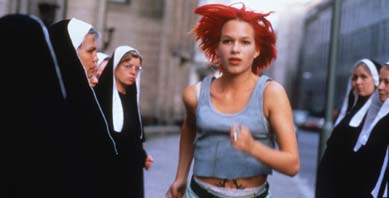
Lola rennt


1998, Germany, directed by Tom Tykwer (Run Lola Run)

Though it's nowhere near as profound as its philosopophical trappings would like you to believe, this remains one of the most sheerly enjoyable European movies of the 1990's. Director Tom Tykwer's fascination with coincidences, intertwined fates and split-second decisions (all present in earlier work like Winter Sleepers) is given full reign here, where the same tale (of a frantic 20-minute search for 100,000 Deutschmarks) is told three times, with the devil in the minor variations, and three profoundly different outcomes. Each version is separated by a brief interlude that fills in some of the back story between Lola (Franka Potente, who burns up the screen) and Manni (Moritz Bleibtreu), the boyfriend she's attempting to get out of trouble. While the pauses take themselves too seriously, they do help to make Manni, in particular, a more appealing character than his ne'er-do-well behaviour might otherwise allow (Moritz Bleibtreu's reserves of charm also help). Tykwer employs a full bag of cinematic tricks, switching camera styles, throwing in amusing photo-journal montages to outline the fates of minor characters, and adding a dash of split-screen action, all set to a frenetic techno beat. Lola rennt is also an essential Berlin film: although Tykwer's fictionalizes the geography (Lola's route is comical to anyone familiar with the Berlin map), the streetscapes of the post-Wall city are appealingly chronicled.

Tuesday, July 11, 2006

The Matchmaker


1997, UK/US, directed by Mark Joffe

Rating: ***

A hefty slice of cliché, The Matchmaker sends Janeane Garofalo, a political staffer, on a wild-goose chase to Ireland in search of her boss's Irish roots. However, she ends up at a local matchmaking festival (yes, they do exist), thereby enabling the filmmakers to lay on the Paddywhackery and loud Yank stereotypes with the thickest of trowels. Since it's a romantic comedy, though, the plot and realism (the Irish love interest is clearly Scottish) are beside the point: like most of its kind, this survives on the peformances, especially those of the supporting characters. While the US actors have pretty thankless roles (with the exception of Garofalo, whose usual spiky wit keeps things just off-balance), there's a small galaxy of fine Irish talent on hand, with Milo O'Shea and Rosaleen Linehan both enjoyable as rival matchmakers, a succession of nerdy looking men playing, well, nerdy men, and Jimmy Keogh performing some scene thieving of the most enjoyable kind as a wildely eccentric Aran islander.

Monday, July 10, 2006

Jaws


1975, US, directed by Steven Spielberg

More than 30 years on, Jaws remains the reference point for the summer movie: virtually nothing since has managed to marry the film's commercial success with the same level of cinematic virtuosity, and surely no other warm-weather blockbuster has had such a profound impact on the language of cinematic thrills. The fact that the big, bad shark looks like an overgrown bathtub toy (once Spielberg decides to reveal the beast: he's sensibly kept under wraps for most of the film, further ratcheting up the tension) is rendered irrelevant by the sense of panic and fear so expertly created. It's all the more disappointing, then, that too many of Spielberg's subsequent movies are beset with a sense of schmaltz that's almost entirely absent from this film; even the film's domestic scenes have a feeling of realism rather than the sentimental gloss so familiar in his later work. The sequences of macho bravado, too, seem to belong more to the work of Spielberg contemporaries like Scorsese or Coppola; beautifully played by Roy Scheider, Robert Shaw and Richard Dreyfuss, they add great depth to the undersea thrills, while Shaw's speech, scripted by John Milius, about the sinking of the USS Indianapolis remains one of the great movie soliloquies.

Sunday, July 09, 2006

Pirates of the Caribbean: Dead Man's Chest


2006, US, directed by Gore Verbinski

Rating: ***

There was much derisory comment when the first Pirates of the Caribbean movie was announced, given that the film was based on a theme park ride, and much surprise when it actually turned out to be quite a decent blockbuster movie. The sequel returns to the theme park origins, proposing thrills and spills aplenty, but a confusing plot and a laundry list of incidents and characters that's less than coherent. That's almost beside the point, however, since these flaws are brushed aside by the headlong action, and the often spectacular set-pieces (as outraegous as it might be to spend $200 million on a movie, it sure looks as though it all ended up onscreen, with stunning locations, large-scale shipboard battles, and the proverbial cast of thousands); my brain knows it's not good cinema, but the rest of me thinks it's too much fun to bother listening to my brain. While Johnny Depp's take on Captain Jack Sparrow inevitably loses some of its freshness this time around, there's a worthy villain in the shape of Davy Jones. The character is an amalgam of traditional and CGI effects, all wrapped around actor Bill Nighy, and the filmmakers do a remarkable job of preserving Nighy's distinctive, and often hilarious, facial expressions despite all of the makeup. Stellan Skarsgård also turns in a decent performance, as Orlando Bloom's old man, underneath layers of repellent sea-bottom materials.

Thursday, July 06, 2006

The Devil Wears Prada


2006, US, directed by David Frankel

Rating: ***

Behind the chiffon and the heels, this is age-old story of a small-town girl making it big in the city - though not always on her own terms. It's the kind of thing that Hollywood excels at - after all, the entire industry is built on dream-chasing - and The Devil Wears Prada is a worthy addition to the genre. Like most films set in the fashion industry, it does try to have things both ways, ridiculing the culture's self-obsessed denizens, yet delighting in the spectacular outfits. Similarly, while there's much comment on the stick-figure imagery of the fashion magazines, it's occasion for celebration when the already lithe Andy Sachs (Anne Hathaway) drops a dress size. Still, it's impossible to dislike a film that elevates cattiness to such heights, especially in the person of Miranda Priestly, a magazine editor who initially appears to be of Cruella de Vil proportions, played with tremendous gusto by Meryl Streep. Ms. Streep has plenty of fun with the character, pursing her lips and issuing orders with the most dismissive of waves (there's also a beautifully played scene of distress that showcases the actress's subtler side, and which provides a fine commentary on the strains and unreasonable expectations imposed on professional women). Ms. Hathaway does fine with the lead role - she's more than capable with fairytale material like this - while Stanley Tucci gives a lovely performance as Andy's one confidant in the cutthroat magazine business. There's a little too much musical montage - at times, it's like Pretty Woman on steroids - but otherwise this is pretty polished fare from a director who cut his fashion teeth on Sex and the City episodes.

Tuesday, July 04, 2006

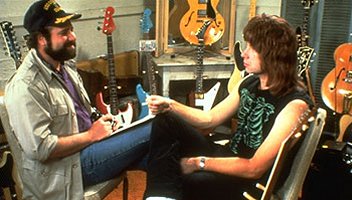
This is Spinal Tap


1984, US, directed by Rob Reiner

Rating: **

Proof that not everything ages well, This is Spinal Tap these days seems horribly dated and, unfortunately, nowhere near as consistently amusing (never mind flat-out funny) as its reputation might indicate. Even at 82 minutes, it sometimes seems tortuous, especially in the repetitive middle patch (when the semblance of a plot is introduced, late on, things pick up somewhat). The fact that the clichés of rock documentaries are so accurately skewered seems almost beside the point: since they are generally so tedious to start with, the notion of replaying them to comic effect is hardly welcome. There are intermittent moments of brilliance (the scene in which they discuss amplifiers that "go up to eleven" remains as funny as ever, for instance), but the characters (unlike those in Christopher Guest's later mockumentaries) are generally so unsympathetic that it's really an effort to remain in their company. Ultimately, too, the filmmakers aren't quite sure what effect they're looking for: the marriage of po-faced interview spoofery and absurdly puerile song lyrics is less than effective.

Monday, July 03, 2006

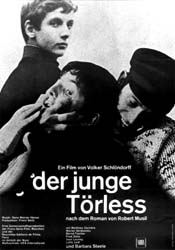
Young Törless


1966, West Germany, directed by Volker Schlöndorff (original title: Der Junge Törless)

Although it's the film that launched the New German Cinema as a critical movement, Young Törless paradoxically has its deepest roots in French cinema; that owes much to director Volker Schlöndorff's cinematic education on the other side of the Rhine (he studied in Paris and worked on films by Resnais and Malle). The scenes of philosophical discussion are the stuff of many a Parisian drama, although in the context of a story of systematic and disinterested bullying in a conservative Austrian boys' school, there's an unavoidable and immediate reference point in recent German history. While the Third Reich hangs over the film, it doesn't obscure the acute dissection of the social order in schools the world over, and the toxic behaviour therein. As the film progresses, the action takes a back seat to lengthy musings on the reasons behind the bullying, discussions that sometimes seem beyond the years of the boys in question. The philosophizing is open-ended enough that it's hard to decipher whether Schlöndorff is making a brave (in 1966) point about the ability of even the mild-mannered to behave in aberrant ways given the right circumstances, or a rather more controversial point (to say the least) about the abject victims of bullying bringing it on themselves; either way, there's no escaping the power of the latter scenes, in which Törless tries to explain his own reasons for participation in the film's key events, and which compel the viewer to examine how he or she would behave in the same situations.

Thirteen Conversations About One Thing


2003, US, directed by Jill Sprecher

Rating: ***

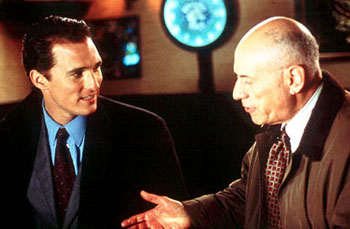
There must be a screenwriting program somewhere that generates movie templates: this film and Crash are cut from remarkably similar interwoven-tales cloth, although the latter film's often coruscating take on race and racism is replaced here with gentler musings on the nature of happiness. Like Crash, the performances raise this film a notch above the ordinary: Alan Arkin, as an often unpleasant cynic, and Matthew McConaughey, who plays that rare beast, the screen lawyer with a conscience, are especially strong, but there is ample support from familiar and unfamiliar players. While the film is interested in exploring what constitutes happiness, there's remarkably little of that emotion on display; indeed, these characters are defined primarily by their ennui and even outright sadness (particularly the character played by John Turturro, whose performance, no doubt prompted by the director, is rather insipid). There's more than a hint of artificiality in the set-up that requires regular interactions between these very different characters, but the pacing is decent and the characterizations generally compelling enough to distract from the credibility issues.

Sunday, July 02, 2006

Ice Age: The Meltdown


2006, US, directed by Carlos Saldanha

Oh, the things you watch when trapped in a plane for four hours. With Pixar setting the bar so high in the age of computer animation, Ice Age: The Meltdown's lack of narrative and visual invention is all the more apparent. The main voice cast is almost completely wasted (why Denis Leary agreed to this sequel is a mystery, since he barely gets a single interesting line), while the funniest sequences in the film generally have little to do with the main action; the running joke about an acorn-obsessed squirrel is far more diverting than the actual plot, while the film only really bursts into life with an inspired vulture-sung rendition of "Food, Glorious Food". Given the success of the Pixar features, it's extraordinary that the Ice Age filmmakers don't make even a cursory effort to ensure their film is interesting to both children and adults, but then again, the near $200 million in box office is dispiriting evidence that they didn't need to bother.

Tuesday, June 27, 2006

Shopgirl


2005, US, directed by Anand Tucker

Rating: ***

It's unfortunate that Shopgirl is pigeonholed as a romantic comedy, since it's far more about mood and tone than ticking off the standard plot elements of that genre. Like the (Steve Martin) novella it is based on, Shopgirl is a slight affair, with the slenderest of plots, but Anand Tucker's careful direction and several appealing performances elevate the film; the limpid shots, carefully constructed colour schemes, musical background and acute sense of big-city loneliness are reminiscent at times of Wong Kar-Wai's In the Mood for Love, in a minor key. Claire Danes delivers her best big-screen performance as a Vermonter transplanted to Los Angeles; while she rejects the life her parents have chosen, she's living in a rut of her own on the West Coast, leaving her prone to the attentions of oddballs. Her suitors are played by Jason Schwartzman (who straddles the fine line between annoying and amusing with some skill) and Steve Martin (who seems determined to eradicate the last traces of the wild and crazy guy with his often unsympathetic sugar daddy portrayal). The air of quiet despair and the gorgeous cinematography create a haunting sense of the anonymity of Los Angeles; while Martin has always been a booster of that city, he's also acutely aware of its human failings.

Monday, June 26, 2006

The Lake House


2006, US, directed by Alejandro Agresti

A preposterous, and very enjoyable, time-travel romance involving a letterbox that connects two people - Keanu Reeves and Sandra Bullock - inconveniently separated by two years, The Lake House is made with the kind of old-fashioned craftsmanship that often seems to have disappeared from Hollywood. The filmmakers are aware of the inherent absurdity of the central conceit and acknowledge this head-on in several amusing early scenes, as if to challenge the viewer to suspend his or her disbelief; the effort is more than repaid, with Reeves and Bullock proving the Speed chemistry was no fluke. While the central story remains consistently engaging, it's in the details that the picture shines: the elegant photography (with gorgeous shots of Chicago's architecture); the well-cast supporting players (Shohreh Aghdashloo, as Bullock's boss, delivers the film's wittiest lines in a lovely bar scene); the shot of Bullock in the hospital corridors, cribbed from the beginning of La Baie des anges, that perfectly underlines the sense that events are spiralling out of control. For all the mediocre movies they've appeared in, Bullock and Reeves have retained their charm; it's nice to see them play actual adults, with adult careers and concerns, while still injecting a hint of Hollywood romance.

Saturday, June 24, 2006

X-Men: The Last Stand


2006, US, directed by Brett Ratner

Rating: **

Although it's easy to dismiss most comic book films as popcorn junk, it's not until you see the work of a journeyman like Brett Ratner that you can finally appreciate what director Bryan Singer brought to the first two films: coherence; effects generally at the service of the action rather than for their own sake; even a reasonably well-worked philosophical underpinning and some decent performances. Here most of that disappears, and, worse, characters who had been developed in the first two films are either given short shrift or disappear entirely (only Ian McKellen seems to have more screen time; Hugh Jackman, Famke Janssen and Halle Berry look like they're there for the paychecks and nothing more, and who could blame them when the script is so bland). Although are there are undoubted moments of entertainment, the action is so absurdly over the top at times (and the body count exponentially higher) that the core of humanity (or mutantity) from the first two films is lost, plus the frisson generated by the conclusion of the second film is wasted in this sequel (the attempts to generate a similar frisson here, both before and after the credits, are far less successful).

Tuesday, June 20, 2006

La Noire de...

1966, Senegal/France, directed by Ousmane Sembène

Generally recognized as the first feature film (at just over an hour) made by a black African director, La Noire de... arrives fully formed, with an angry political conscience and ambitions to critique the colonial and post-colonial experience that are, by and large, met. Of course, Ousmane Sembène was hardly a neophyte, having already published several novels that shed light on colonial, and immediate post-independence, African life. The brief tale of a young African woman who travels to the French Riviera to work as a nanny for a French family who had also employed her in Senegal, the film is an outraged coming-to-consciousness tale, as the young woman evaluates her own self-worth in light of the treatment she experiences at the hand of her employer. Although her ultimate fate is perhaps rather extreme, there's nothing unusual, even today, in some of the daily humiliations experienced; if Sembène's vision is disheartening, that's perhaps especially because little has changed in the relationship between colonizer and colonized in the intervening 40 years. Although Sembène received his formal cinematic training in the USSR, the film is shot through with the influence of the early nouvelle vague films, lending the film an immediacy and power that belie its relative technical limitations.

Monday, June 19, 2006

The Best of Youth

2003, Italy, directed by Marco Tullio Giordana (original title: La Meglio gioventù)

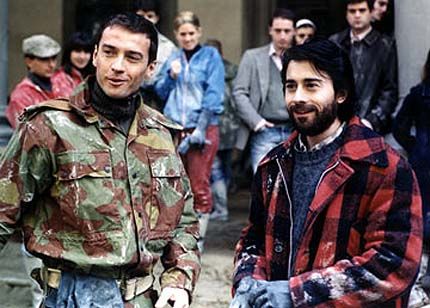
Originally conceived as a mini-series for Italian television, and then given a theatrical release instead, The Best of Youth is a remarkable family saga set against the changes in Italy over the period from 1966 to 2003. While the factual backdrop - the 1966 Florence floods, 1970's student activisim in Turin, the Red Brigades, the assassination of Judge Falcone in Sicily, and so on - is fascinating, the film is ultimately more interested in domestic affairs, most specifically in the portrait of two brothers, Nicola and Matteo, and their divergent careers and outlooks. It's an exceptionally warm, generous piece of work: generous in running time, but also in its view of its main characters, who are given the time and latitude to make mistakes, without ever losing their essential dignity. Over the course of six hours, those characters are so appealing that it's hard to immediately accept the film's most shocking moment: I wasn't able to process that development for several seconds, so jarring was its effect. As with most family dramas, there are inevitable moments of soap opera given the need for continual plot development, while the ending isn't all that hard to predict, but those are minor quibbles given the overall skill and care with which the story is told; the direction has all the hallmarks of old-fashioned craftsmanship. For the most part, the acting, too, is excellent (although some of the actors are a little too fresh-faced to entirely convince in the later stages), while the rich vein of humour conveys the bonds of family and friendship in deeply rewarding fashion.

Wednesday, June 14, 2006

X2


2003, US, directed by Bryan Singer

Less focused than its predecessor, and perhaps a shade less political in the aftermath of 9/11, X2 steps up the sheer popcorn value with a couple of new characters - Alan Cumming as Nightcrawler is an especially strong addition - and several highly entertaining set-pieces. Although director Bryan Singer isn't able to inject the depth he clearly hankers after, he's adept at pacing the action, and as a consequence the film mostly justifies the two-hour plus running time. The us-against-the-world set-up is given a new twist this time around, forcing 'good' and 'bad' mutants to cooperate when faced with an especially nasty human (Brian Cox), with questions of loyalty abounding. Ian McKellen has some lip-curling fun - he teeters on the edge of self-parody, enjoying the vaguely Hannibal Lecter aspects of his imprisonment - but Patrick Stewart's role is underwritten this time around in favor of the younger set; their fight scenes show a clear post-Matrix influence. The conclusion is an odd combination of the deeply unsetttling wrapped in the guise of reassurance, but there's no doubting the atmospheric effect.

Monday, June 12, 2006

Bay of Angels


1963, France, directed by Jacques Demy (original title: La Baie des anges)

Rating: ***

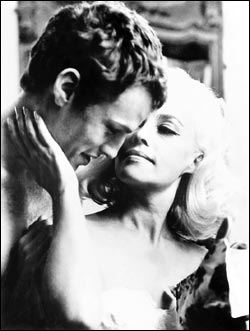
A light concoction whipped up in a couple of days and shot rapidly by Jacques Demy while he dealt with a production delay, La Baie des anges has little of the insight of either his previous Lola or his subsequent, glorious Les Parapluies de Cherbourg. That's not to say the film is without its pleasures: there's nothing wrong, after all, with 80 minutes in the company of Jeanne Moreau, although her character's girlish affectations are occasionally tiresome. She plays a compulsive gambler who links up with the youthful Claude Mann for a spree on the Riviera, in which vast-sounding sums are won and lost; I suspect that the amounts are given in old francs, about as meaningful as being an Italian millionaire in the days of the lira. The film attempts, with some success, to mirror the highs and lows of the gambler's life, although the transformation of the coquettish Moreau into an unpleasantly grabbing gambler each time she passes a roulette table (the effect is quite extraordinary) hardly makes the lifestyle appealing. Mann, for his part, is oddly emotionless, especially given that he's in the company of such a stunning woman; the final shot is quite unconvincing as a consequence, and no match for the wonderful seafront opening, with Michel Legrand's music in full over-the-top flight.

Sunday, June 11, 2006

X-Men


2000, US, directed by Bryan Singer

One of the few consistently absorbing comic-book adaptations of the past decade, X-Men tries to inject an extra layer or two of meaning to the sci-fi action, and while the effort doesn't entirely come off, there's more intelligence here than in the vast majority of popcorn fare (even though the Holocaust allusions don't seem to have been entirely thought through). Although it's a pre-9/11 movie, it's hard, now, to see the film without reference to the climate of fear created since 2001, particularly given the conflict of values that lies at the heart of the film, pitting ordinary humans against their mutant (and thus possessed of unique skills) brethren. While there's plenty of action, particularly near the conclusion, the film is far more concerned with motivations and personal relations than with explosions, which lends the outbreaks of fighting, when they do come, that much more charge. Hugh Jackman is excellent as Wolverine, a conflicted yet (of course) noble mutant, while both Patrick Stewart and Ian McKellen do the English thesp thing with their usual aplomb; Anna Paquin's Rogue is outstanding, both as a character and a performance.

Saturday, June 10, 2006

Zoolander


2001, US, directed by Ben Stiller

Rating: **

The Ben Stiller-Owen Wilson-Vince Vaughn-Will Ferrell axis seems to dominate US film comedy these days, to scattershot effect; the hits (like Wedding Crashers) can be excellent, while the misses (Anchorman) are plain dreadful. Zoolander falls somewhere in the middle, taking a sketch idea and stretching it to feature length. There are sequences of inspired madness in this tale of vacant male models (Stiller and Wilson play rivals), as well as some very funny send-ups of the fashion world (which seems like it's already beyond parody), mixed with less successful patches, particularly most of the scenes involving Will Ferrell (whose character looks like it was one of the models for Tim Burton's new version of Willy Wonka). Stiller's gormless Derek Zoolander is an amusing creation - perhaps especially when he goes home to his family in the coal-mining country of southern New Jersey - with just enough charm to keep him on the right side of annoying, while Wilson's consistently hilarious turn keeps things watchable once the central premise becomes wearing.

Wednesday, June 07, 2006

Les Destinées sentimentales


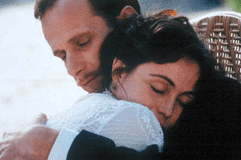
2000, France/Switzerland, directed by Olivier Assayas

The usual ponderous conventions of the period picture are thrown out the window in director Olivier Assayas's absorbing saga of provincial upper-class Protestant life in the first decades of the twentieth century. Assayas's exceptionally mobile camera - so swift-moving that it's almost disorientating, especially in the first hour, which sketches life for the younger set in exuberant fashion - is a counterpoint to the more leisurely set-up favoured by most directors faced with period material (Alain Corneau's series of fixed tableaux in his beautiful but chilly Tous les matins du monde provides a useful contrast). The sense of constant motion is especially heightened when following the character of Pauline Pommerel (Emmanuelle Béart), an independent-minded young woman who acts as a catalyst for change in the set, even staid existence of Jean Barnery (Charles Berling), the son of an industrialist who has chosen a career as a pastor. Although the narrative is occasionally elliptical (Assayas chooses to have more than one key event take place offscreen), and the music is sometimes rather too obvious (particularly in underlining the 'happy' periods in the characters' lives), the sense of a veryparticular time and place (centered around the porcelain industry in Limoges) is exceptional. The film, like Bergman's Fanny and Alexander, wears its period trappings lightly, ensuring they don't get in the way of the action - never better, perhaps, than in the wonderful early scenes at a gala evening, shot with the same immediacy as the central party scene in Assayas's brilliant 1994 film L'Eau froide. The performances are solid to outstanding: Béart has perhaps never been more radiant, such that when her character experiences a downturn, it's like a light going out.

Monday, June 05, 2006

Running Out of Time


1999, Hong Kong, directed by Johnnie To

Johnnie To has proved to be something of a critical darling in the Western press over the past couple of years, with writers desperate to locate the latest auteur in Hong Kong's rampantly commercial cinema (although To hasn't made the job easy by switching between crime thrillers and the kind of Hong Kong comedy that doesn't translate as well to overseas markets). Running Out of Time belongs to the first wave of To crime pics, and like many similar genre entries, the weak, sometimes laughable, plotting is far less important than the often stylish action. The core of the picture is a cat and mouse intrigue involving a crime 'mastermind' (played by Andy Lau) and an unconventional cop (Lau Ching-Wan); their interaction, never especially realistic, becomes actively incredible as the film progresses. To saves things, though, with his fine pacing, never allowing the action to flag, and sharp cinematography (his slick take on Hong Kong's streets was re-cycled, to even better effect, by the directors of Infernal Affairs); both lead actors are strong, too, although some of the comic support is pretty weak from this outsider's perspective.

Index

List of all movies

Most of the images here are either studio publicity stills or screen captures I've made myself; if I've taken your image without giving you credit, please let me know.

About Me

Boston, Massachusetts, United States